There’s a particular kind of conversation that happens at truck stops, farm supply stores, and diesel forums late at night. Someone rolls in with a beat-up Dodge Ram, pops the hood, and an old-timer leans over and says, “What year’s the 12-valve?” That’s not small talk. That’s respect. In the diesel world, certain engines have earned a reputation so solid that talking about them feels less like discussing machinery and more like swapping stories about a trusted working partner.
This article is about those engines — the ones that farmers, fleet operators, ranchers, and everyday Americans have trusted for decades. Not because of flashy spec sheets, but because they show up and keep showing up, long after the paperwork says they should’ve been retired.
Why Diesel Longevity Matters More Than Horsepower Numbers
Before we get into the engines themselves, it’s worth stepping back and asking a simple question: why does this conversation matter? After all, modern gas trucks are more powerful and more refined than they’ve ever been.
The answer, for a lot of working Americans, comes down to total cost of ownership. A diesel engine that runs cleanly past 300,000 miles isn’t just impressive — it’s financially meaningful. You’re not financing a new truck every five years. You’re not rebuilding every season. You’re just maintaining what you already have. According to a 2025 iSeeCars study, diesel-powered heavy-duty pickups occupied eight of the top ten spots for vehicles most likely to surpass 250,000 miles. That kind of staying power matters on a ranch, at a construction site, or behind a gooseneck trailer doing deliveries across multiple states.
With that in mind, let’s talk about the engines that actually earned those numbers.
The 5.9L Cummins 12-Valve: America’s Most Beloved Diesel
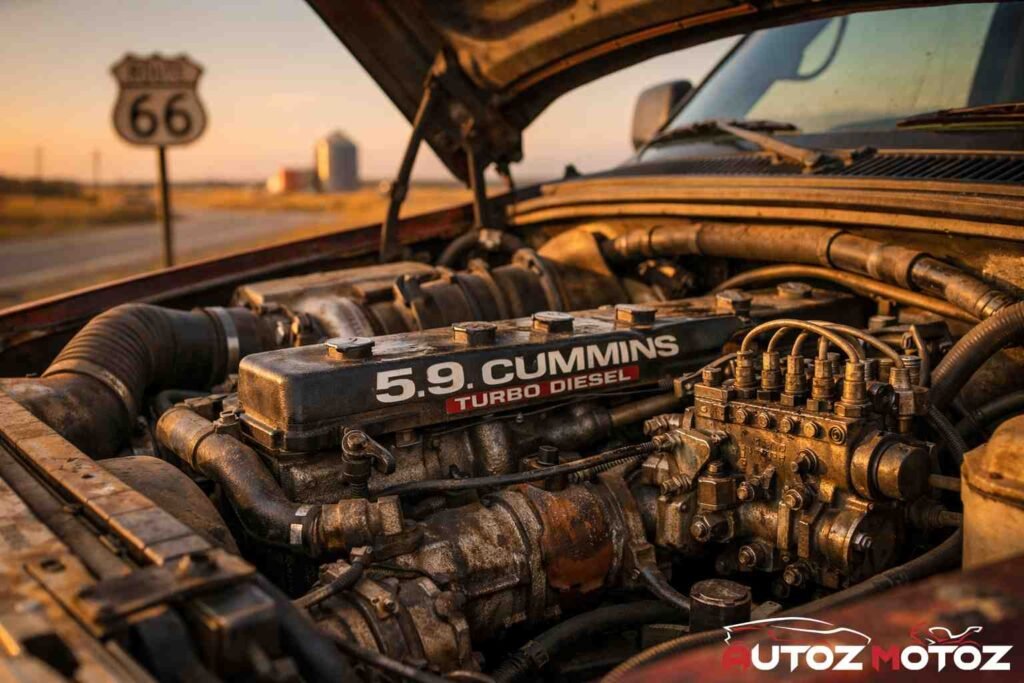
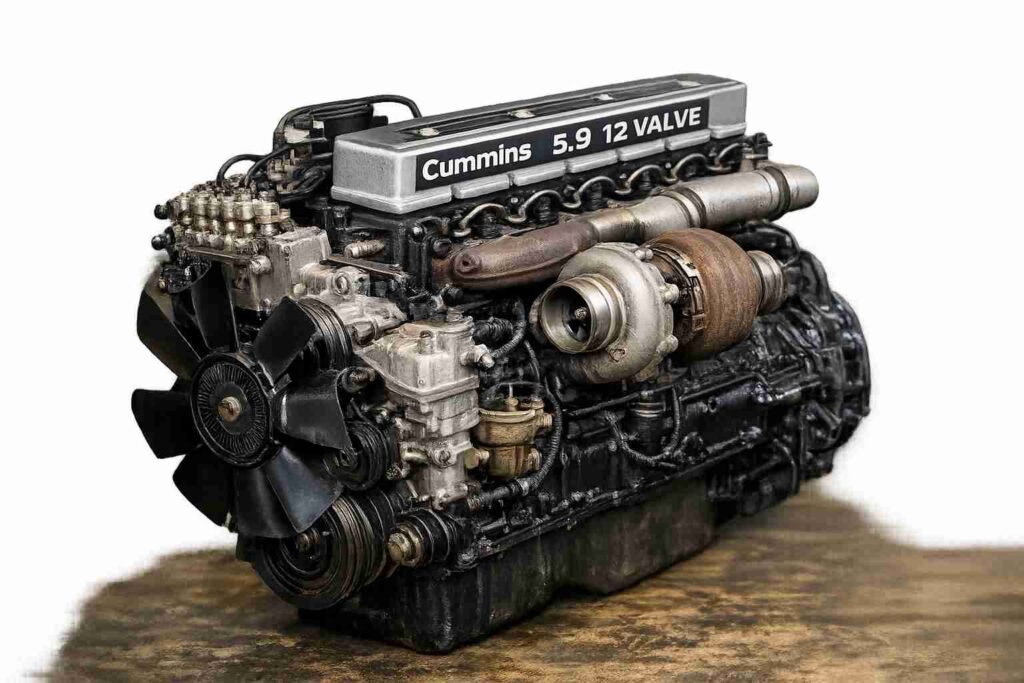
If you spend any real time on diesel forums — places like the Cummins Forum or Reddit’s r/Diesel community — you’ll notice one engine comes up again and again with a level of reverence that borders on devotion. The 5.9L Cummins 12-valve, installed in Dodge Ram trucks from 1989 through 1998, is widely considered the gold standard for long-term reliability in an American pickup truck.
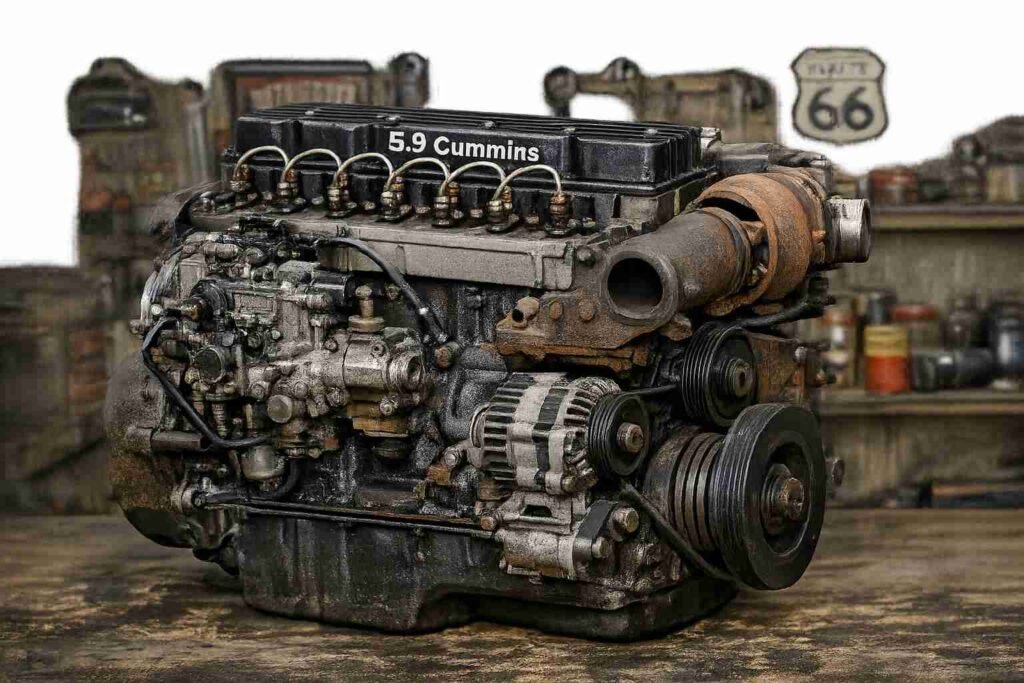
What made it so durable? Part of the answer is simplicity. The 12-valve Cummins ran on a purely mechanical Bosch P7100 injection pump — no electronics to fail, no complicated sensors to chase down at 2 AM in a truck stop parking lot. The cast-iron block, forged internals, and low compression stress meant the engine was essentially built with industrial tolerances in a pickup truck package. Cummins designed it that way because they came from the heavy-duty commercial engine world, and that DNA showed.
Forum members have documented trucks with 1.3 million, 1.5 million, and even beyond on original engines with nothing more than regular maintenance and the occasional wear item. One Cummins Forum thread from longtime owners describes a 1995 12-valve used to haul campers cross-country that crossed 1.5 million miles with only routine servicing and a fuel pump replacement along the way. These aren’t myths — they’re the kinds of stories that get passed around because people saw it happen with their own eyes.
The key weakness worth knowing: the 12-valve has what’s called the killer dowel pin (KDP), a small factory pin in the front gear case that can work loose over time and cause catastrophic engine damage. Fortunately, the fix is cheap and well-documented. Any experienced diesel shop will address it immediately. Once that’s handled, the engine’s other vulnerabilities are minimal. Oil changes, valve adjustments at high mileage, and keeping the fuel system clean are about all it takes.
For anyone who farms, ranches, hauls livestock, or simply needs a truck that doesn’t require babysitting, the 12-valve Cummins remains one of the most cost-effective engines ever put into an American pickup. Used examples still command strong prices today, which tells you everything you need to know about how the market views them.
The 7.3L Ford Power Stroke: Simplicity That Outlasted Its Era
Ford introduced the 7.3L Power Stroke in 1994, and it ran through the 2003 model year. In the twenty-plus years since its production ended, something unusual happened: it didn’t fade into obscurity. Instead, tens of thousands of them are still working daily across farms, construction sites, and commercial fleets throughout the country.
The reason is almost identical to the Cummins story — deliberate simplicity. The 7.3L was built before emissions regulations forced manufacturers to layer complexity onto diesel engines. No EGR system to clog. No diesel particulate filter (DPF) to regenerate. The hydraulic electronic unit injector (HEUI) system it used was unique and a bit unconventional, relying on engine oil pressure to activate the injectors, but it proved extremely durable when properly maintained.
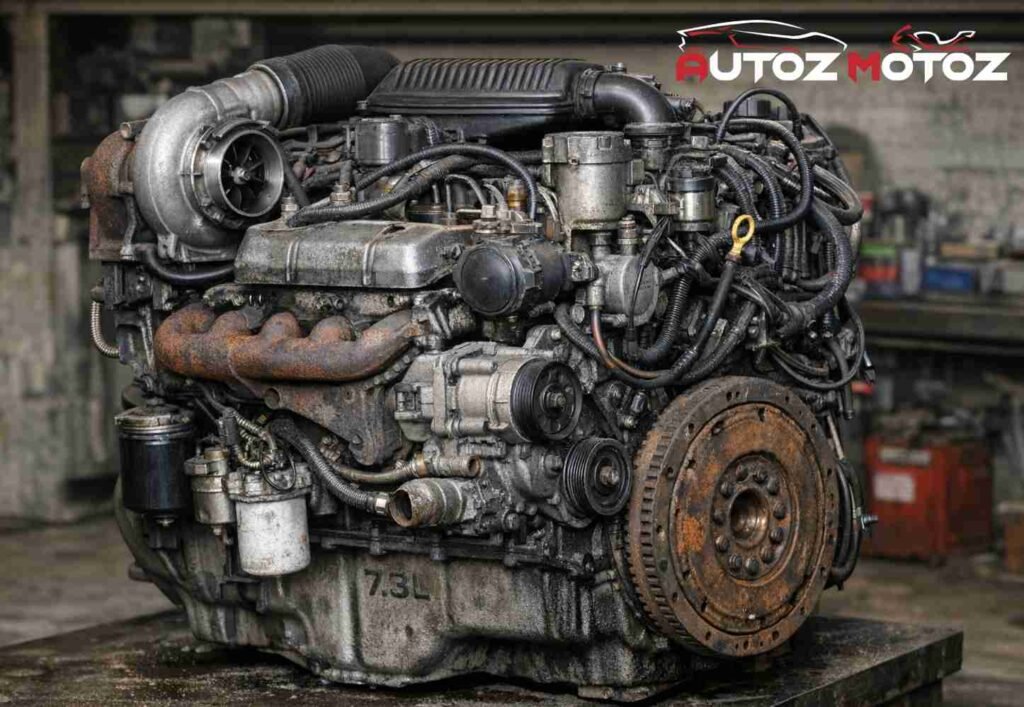
The real-world longevity numbers are staggering. One well-documented story involves an 80-year-old man from Texas named Mr. Freeland, who purchased a 2000 Ford F-350 with the 7.3L Power Stroke brand new and drove it in hot shot delivery work until the odometer read 1.3 million miles — on the original engine block, frame, and suspension components. His maintenance approach was straightforward: change what needs changing, use quality parts, and never skip a service interval.
Beyond that single example, it’s common across Power Stroke forums to see members reporting 400,000 to 600,000 miles on unmodified engines. Even a truck that’s been moderately worked tends to push 300,000 miles without significant engine repairs, provided the oil was changed and the cooling system was watched. The common failure points — the camshaft position sensor, under-valve-cover wiring harnesses, and high-pressure oil system — are well-understood, affordable to repair, and thoroughly documented by the aftermarket community.
The 7.3L does have one generational caveat worth mentioning. From the 2001 model year onward, Ford switched from forged steel connecting rods to powdered metal rods in some builds. For stock engines, this doesn’t matter much. For anyone pushing modified power beyond 450 horsepower, the earlier 1994–2000 trucks with forged rods are the smarter buy. That said, even the later trucks in stock form have proven themselves over and over in long-haul commercial use.
Where the 7.3L falls short compared to modern engines is obvious — it’s not particularly powerful by today’s standards, and fuel economy is modest. But if your goal is reliability and total miles between serious repairs, few engines in American truck history have matched it.
The 6.6L Duramax LBZ: The Modern Milestone
While the Cummins and Power Stroke represent a pre-emissions era of simpler engineering, the 6.6L Duramax LBZ — produced from 2006 through 2007 in GM’s Silverado and Sierra HD trucks — represents the sweet spot of modern capability before emissions complexity became a serious burden.
The LBZ arrived after GM and Isuzu had already worked through the early teething issues of the original LB7 Duramax (which had injector problems) and the LLY (which ran hot under heavy load). By the time the LBZ reached production, the 6.6L platform was well-sorted. It produced around 360 horsepower and 650 lb-ft of torque from the factory — genuinely competitive numbers even by current standards — and did so with a level of mechanical integrity that impressed even skeptical diesel technicians.
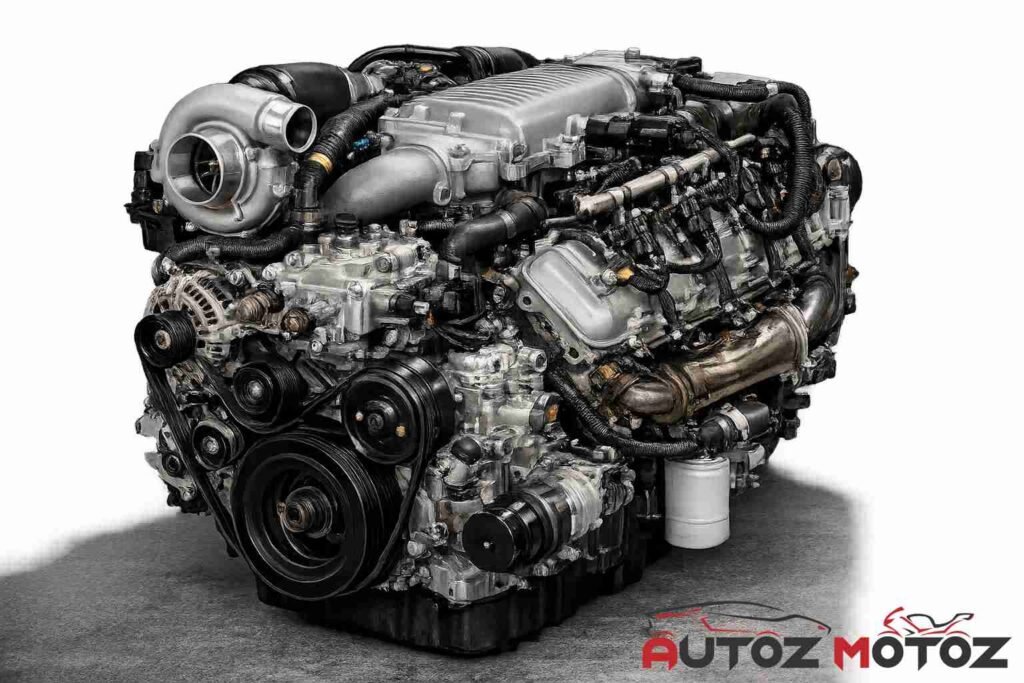
What makes the LBZ particularly significant is that it was the last Duramax produced before the Allison-combined package required emissions hardware that created new failure points. The 2007.5 LMM that followed added a DPF. The LBZ had none of that. Combined with the robust CP3 injection pump, solid forged internals, and a well-matched Allison 1000 automatic transmission, the LBZ became the benchmark that diesel enthusiasts used for years when evaluating which modern truck engine was worth buying.
Owners who have used LBZ-equipped trucks in commercial work regularly report 300,000 to 400,000 miles without engine rebuilds, and it’s not unusual to find examples approaching 500,000 miles in fleet use. The engine responds well to conservative tuning, handles heavy towing with composure, and has an aftermarket support network that remains active and well-stocked more than fifteen years after production ended.
The most common LBZ issues center on the water pump, fuel injectors at very high mileage, and the EGR system — though unlike later Duramax variants, the LBZ’s emissions components are relatively manageable. Regular coolant service and fuel filter changes go a long way toward keeping these engines running indefinitely.
Before You Buy That Diesel Truck — Read This Table First
| Engine | Years Made | Found In | Peak Power | Known For | Million Mile Capable? | Emissions Hardware | Best For | Weak Spot | Community Rating |
|---|---|---|---|---|---|---|---|---|---|
| 5.9L Cummins 12-Valve | 1989–1998 | Dodge Ram 2500/3500 | 215 hp / 440 lb-ft | Pure mechanical simplicity | ✅ Yes — documented | ❌ None | Farmers, ranchers, budget buyers | Killer Dowel Pin (KDP) — cheap fix | ⭐⭐⭐⭐⭐ Legend |
| 7.3L Ford Power Stroke | 1994–2003 | Ford F-250/F-350 | 275 hp / 525 lb-ft | Bulletproof HEUI system | ✅ Yes — 1.3M+ documented | ❌ None | Hot shot haulers, fleet work | CPS sensor, UVCH wiring | ⭐⭐⭐⭐⭐ Legend |
| 6.6L Duramax LBZ | 2006–2007 | GMC Sierra / Chevy Silverado HD | 360 hp / 650 lb-ft | Last clean Duramax before DPF | ✅ Yes — 500K+ fleet verified | ⚠️ EGR only | Towing, commercial hauling | Water pump, injectors at high miles | ⭐⭐⭐⭐⭐ Cult Status |
| 6.7L Cummins | 2007–Present | Ram 2500/3500 | 420 hp / 1,075 lb-ft | Modern torque king | ✅ Yes — 400K+ fleet confirmed | ✅ EGR + DPF + DEF | Heavy towing, long haul | Early EGR/DPF issues (pre-2013) | ⭐⭐⭐⭐½ Workhorse |
| 6.7L Ford Power Stroke | 2011–Present | Ford F-250/F-350/F-450 | 500 hp / 1,200 lb-ft | Ford’s full in-house diesel comeback | ✅ Yes — fleet proven | ✅ EGR + DPF + DEF | Max towing, construction fleets | EGR cooler (early builds) | ⭐⭐⭐⭐½ Fleet Favorite |
| 6.6L Duramax L5P | 2017–Present | GMC Sierra / Chevy Silverado HD | 470 hp / 975 lb-ft | Most refined Duramax ever built | 🔄 Accumulating data | ✅ Full emissions suite | Daily driver + heavy towing | Emissions complexity | ⭐⭐⭐⭐ Modern Leader |
The Modern Big Three: Where Things Stand Today
It would be incomplete to discuss American diesel engines without addressing what’s powering trucks rolling off dealer lots right now. The conversation has evolved considerably, but reliability has actually improved in recent years as manufacturers worked through the growing pains of emissions-era engineering.
The 6.7L Cummins, currently found in Ram 2500 and 3500 trucks, has built a strong reputation over its production run that began in 2007. Early versions occasionally showed EGR and DPF-related issues, but later generations addressed these systematically. Ram owners in commercial hauling work — hot shot drivers, construction contractors, livestock haulers — frequently praise the 6.7L’s towing capability and overall engine durability. Many fleet operators report clearing 400,000 miles in commercial use with factory-spec engines.
Ford’s 6.7L Power Stroke, introduced in 2011, effectively restored the brand’s diesel credibility after the troubled 6.0L and 6.4L years. Unlike those engines, the 6.7L was designed entirely in-house by Ford rather than sourced from Navistar, and the result showed. Commercial fleets running 6.7L Super Duty trucks commonly accumulate hundreds of thousands of miles without significant powertrain failures. In fact, Ford’s Super Duty drivetrain pairing of the 6.7L with the 6R140 transmission is now considered nearly bulletproof in fleet applications.
GM’s current 6.6L Duramax L5P, offered since 2017, is the most powerful and refined Duramax ever built, producing 470 horsepower and 975 lb-ft of torque. It’s also the most emissions-compliant, and while that complexity introduces potential failure points, GM’s management of the platform has been solid. Long-term reliability data continues to accumulate positively, particularly in fleet settings where consistent maintenance is enforced.
What Actually Determines Whether a Diesel Engine Lasts
Here’s the part that often gets overlooked in engine comparison debates: the engine itself is usually not the limiting factor. Maintenance is.
A 5.9L Cummins that’s been neglected — oil changes skipped, fuel filter ignored, coolant never flushed — will not last. Conversely, a 6.0L Power Stroke, often cited as one of Ford’s most troublesome diesels, can reach 300,000 or more when the EGR cooler is properly upgraded and oil changes are performed on schedule. The engine is only half the story. The person behind the maintenance schedule is the other half.
The diesel community understands this at a practical level. On forums, experienced owners don’t just talk about which engine they chose — they talk about which oil they run, how often they change fuel filters, what coolant additive they use, and whether they let the engine warm up before loading it hard in cold weather. That culture of attentiveness is a significant reason why so many of these engines reach mileage figures that would be considered impossible in a gasoline engine.
From a practical standpoint, anyone shopping for a used diesel truck should prioritize service history over everything else. A 12-valve Cummins with 350,000 documented miles of careful maintenance is a far better buy than a 150,000-mile example with no records and an unknown past.
FAQ
What is the most reliable American diesel engine ever made?
The 5.9L Cummins 12-valve holds that title in the eyes of most diesel owners, and it has for decades. Produced from 1989 to 1998 and dropped into Dodge Ram 2500 and 3500 trucks, this engine earned its reputation through pure mechanical simplicity. No electronic controls, no sensors to chase, and no emissions hardware to fail. Just a cast-iron block, forged internals, and a Bosch P7100 mechanical injection pump that was already proven in commercial truck applications long before it ever saw a pickup. With proper maintenance, these engines routinely outlast everything around them.
Can a diesel engine really last one million miles?
It sounds like a tall tale until you start digging into the diesel community and find the documentation. The 5.9L Cummins 12-valve and the 7.3L Ford Power Stroke are the two engines most commonly associated with million-mile achievements, and both have real owners with real service records to back it up. These aren’t rebuilt engines or showpieces — they’re working trucks that hauled loads, towed trailers, and ran daily routes until the odometer rolled past numbers most gasoline engines never approach. The secret, as most of those owners will tell you, was never skipping a maintenance interval.
What is the killer dowel pin on a 5.9L Cummins 12-valve?
It’s the one thing every prospective 12-valve buyer needs to know about before handing over money. The killer dowel pin — commonly shortened to KDP — is a small locating pin pressed into the front timing gear case at the factory. Over time and miles, that pin can work itself loose. If it drops into the gear train, the resulting damage is catastrophic and expensive. The good news is that the fix is well under a hundred dollars in parts and takes a competent shop less than an afternoon to complete. It’s considered standard preventive maintenance on any 12-valve, and no experienced diesel mechanic will let it go unaddressed.
Why is the 7.3L Power Stroke still so popular?
Because it refuses to die, and owners know it. Ford built the 7.3L Power Stroke from 1994 through 2003, right before emissions regulations started forcing manufacturers to add EGR systems, diesel particulate filters, and all the complexity that came with them. The 7.3L had none of that. Its hydraulic electronic unit injector system was unconventional but proved incredibly durable when the oil was kept clean and changed on schedule. Decades after production ended, tens of thousands of these trucks are still working every single day on farms, job sites, and commercial routes across the country. That kind of staying power speaks louder than any spec sheet.
What makes the 6.6L Duramax LBZ special?
Timing, mostly. The LBZ arrived in 2006 and ran through 2007, landing right at the intersection of modern performance and pre-DPF simplicity. GM and Isuzu had already ironed out the injector issues from the original LB7 and the heat management problems from the LLY by the time the LBZ reached production. What dealers started selling was a well-sorted, 360-horsepower diesel with 650 lb-ft of torque, a robust CP3 high-pressure injection pump, forged internals, and the legendary Allison 1000 automatic transmission backing it up. The 2007.5 LMM that followed added a diesel particulate filter. The LBZ never had to. That single fact turned it into a sought-after platform that commands strong resale prices to this day.
Which modern diesel truck engine is most reliable in 2026?
Both the 6.7L Cummins and the 6.7L Ford Power Stroke have earned strong reputations in real-world commercial use, and choosing between them often comes down to which truck platform fits your needs better. Ram’s 6.7L Cummins, continuously refined since its 2007 introduction, now produces over 1,000 lb-ft of torque and has built a solid track record in fleet and commercial hauling applications. Ford’s 6.7L Power Stroke, developed entirely in-house after the difficult 6.0L and 6.4L years, has restored the brand’s diesel credibility completely. Fleet operators running both engines regularly report clearing 400,000 miles in commercial service without major powertrain failures. Either one, properly maintained, is a serious long-term investment.
What is the biggest factor in diesel engine longevity?
The engine gets most of the credit, but the owner deserves most of it. Maintenance discipline — specifically oil change frequency, fuel filter replacement, coolant condition, and how the engine is treated during cold starts — determines how long any diesel engine lasts far more than brand or displacement. A neglected 5.9L Cummins will not outlast a carefully maintained 6.0L Power Stroke, even though conventional wisdom says otherwise. The diesel owners who consistently hit high mileage are the ones who treat their service schedule like a non-negotiable commitment, not a suggestion. Buy the right engine, but more importantly, be the right owner.
Final Learn
American diesel engines have earned their reputation the hard way — through decades of work in real conditions, under real loads, in the hands of people who couldn’t afford for them to fail. The 5.9L Cummins 12-valve, the 7.3L Power Stroke, the 6.6L Duramax LBZ, and the modern successors that followed each of them represent a tradition of engineering that prioritizes durability above almost everything else.
That tradition is alive and well. As long as someone needs to haul something heavy from one place to another and needs a machine they can count on to get there and back, the American diesel engine will have a reason to exist — and plenty of devoted owners to keep it running.

Technical precision in motorcycles, cars, and automotive gear is established by Nahid Hassan through rigorous evaluation. Performance-driven reviews and high-value affiliate insights are consistently curated at AutoZMotoZ to ensure reader trust. Absolute integrity is maintained in every analysis, with a focus on original and human-verified data.