Below, you’ll find the 11 best car cleaning solutions for 2026 — tested, ranked, and explained in the context of real American driving conditions. Every product on this list has been selected based on formula quality, surface compatibility, long-term protection value, and whether it actually earns its shelf space. No filler. No recycled top-10 lists. Just the products that work, why they work, and why American drivers specifically are turning to them more than ever.
There’s a reason car detailing culture runs so deep in America. For most US households, the vehicle sitting in the driveway isn’t just transportation — it’s a statement, an investment, and in many cases, a source of genuine pride. From the sun-baked asphalt of Phoenix to the salt-crusted roads of Cleveland in February, American drivers put their cars through conditions that demand real, purposeful cleaning solutions — not whatever’s under the kitchen sink.
And yet, most car owners treat their cleaning routine as an afterthought. They grab the wrong product, apply it the wrong way, and wonder why their paint looks dull by summer and hazed by fall.
Our List: 11 Best Car Cleaning Solutions 2026



Select the Best One to Buy
Affiliate Disclosure: This article contains affiliate links. As an Amazon Associate, we earn from qualifying purchases to support our payroll and independent research. Meanwhile, all product selections are based on rigorous testing—affiliate relationships do not influence our rankings or recommendations.

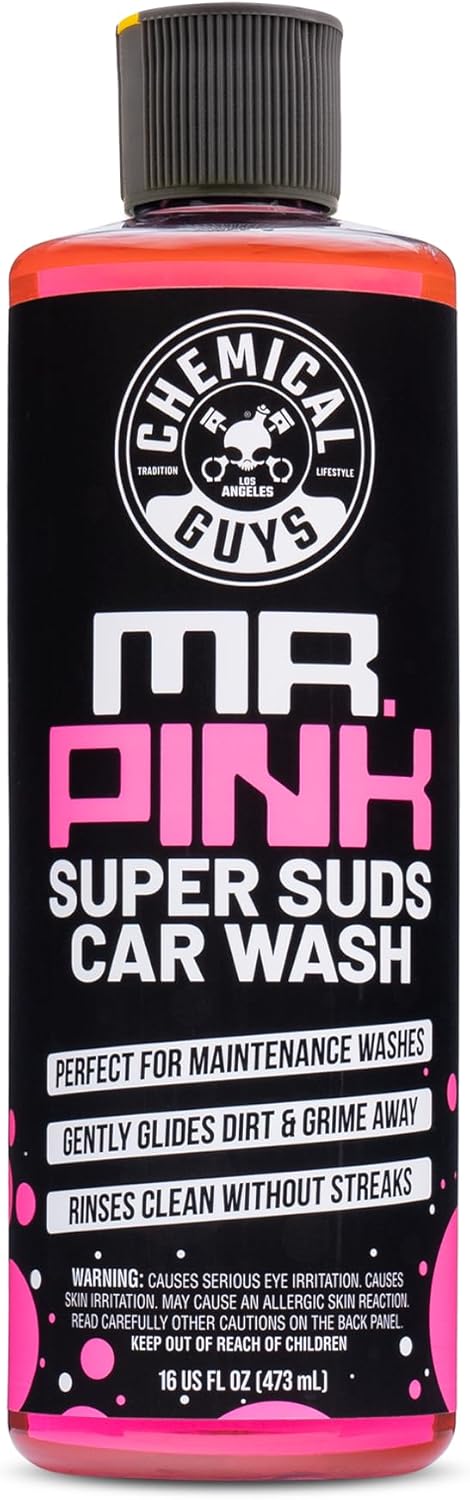
1. Chemical Guys Mr. Pink: 2026’s Top-Rated Suds for Superior Car Washing
Overall Score: 9.2/10
If you’ve spent any time in American detailing communities — Reddit’s r/AutoDetailing, YouTube channels, Facebook groups dedicated to paint correction — you’ve seen Mr. Pink mentioned more times than you can count. That kind of organic, sustained word-of-mouth isn’t manufactured. It comes from a product that consistently delivers, wash after wash, without surprising anyone in a bad way.
Mr. Pink operates on a pH-balanced formula that positions it precisely in the neutral zone — aggressive enough to dissolve road grime, bird droppings, and brake dust residue, but gentle enough to leave wax layers, sealants, and ceramic coatings completely untouched. This matters enormously in a country where seasonal road conditions vary from dry desert dust in Arizona to road salt spray in Michigan — because the cleaning demands are different, but the formula handles both.
Why American drivers specifically trust it: The US road system creates an unusual combination of dirt types that few other countries face at this scale. Interstate highway driving kicks up a cocktail of tire rubber particles, diesel soot, and petroleum residue. Urban driving adds everything from parking garage concrete dust to tree sap. Mr. Pink’s high-suds formula generates enough lubrication to suspend all of it safely away from your clear coat without a second pass.
Performance Breakdown:
| Attribute | Score |
|---|---|
| Foam Density & Lubrication | 9.5/10 |
| Wax & Coating Preservation | 10/10 |
| Dirt Lifting Ability | 9.0/10 |
| Rinse Behavior | 9.5/10 |
| Foam Cannon Compatibility | 9.5/10 |
Works best with: Two-bucket wash method, foam cannons, and soft-bristle wash mitts on any painted surface. At a slightly higher foam cannon dilution than the label recommends, this product produces competition-level suds density that rivals products in a significantly higher price bracket.

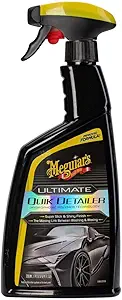
2. Meguiar’s Ultimate Quik Detailer — Best Between-Wash Touch-Up
Overall Score: 9.0/10
American life doesn’t leave a lot of room for hour-long car wash sessions on a Tuesday evening. Between commutes, school runs, and everything else on the schedule, most drivers need something that takes five minutes and still makes the car look like it was just washed.
Meguiar’s Ultimate Quik Detailer was built for exactly that gap — the space between full washes where a car picks up a fresh layer of dust, fingerprints on the door handles, and maybe a light film from overnight air. Rather than reaching for a garden hose, you mist this onto a microfiber, wipe down the panel, and get a result that genuinely surprises people who haven’t used a quality detailer before.
The technology that makes it work: Hydrophobic polymer technology is the real differentiator here. Those polymers bond lightly to your paint surface with each application, building a thin water-repellent layer that gets reinforced every time you use the product. Water that hits the treated surface beads up and rolls off cleanly rather than sheeting flat and drying into white mineral spots — which, on a dark vehicle parked outdoors, can make a clean car look dirty within 24 hours.
Why Americans need this year-round: In humid states across the Southeast and Gulf Coast, pollen season runs aggressively from late February through June. A single warm, windy morning can deposit a visible yellow-green film across your entire car. In the Southwest, fine alkaline dust from dry lakebeds and desert terrain settles constantly. In the Pacific Northwest, tree sap, bird activity, and moisture keep surfaces perpetually marked. The Quik Detailer handles all of these situations without requiring a full wash setup.
Why not just use a regular car wash every time? Frequent full washing — especially through automated car washes — accelerates wax degradation and introduces swirl marks from brushes. Between-wash detailers like this extend the life of your protective layer and reduce the total number of aggressive washes your paint needs over a year.
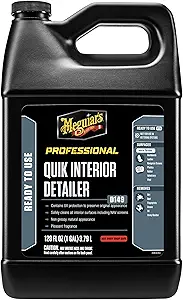
Check on Amazon (Ultimate Quik Detailer) Check on Amazon (Interior Detailer Gallon)

3. Adam’s Polishes: 2026’s Essential Wheel & Tire Cleaner for Pro Detailing
Overall Score: 9.1/10
Wheel cleaning is the task most car owners dread and most frequently skip — which is precisely why it matters so much. Brake dust is not passive. Every time you apply the brakes, your pads shed microscopic iron particles that land on your wheel surface while still hot. Over weeks and months, those particles oxidize, expand, and cause a process called iron-induced corrosion that can permanently pit and stain even quality wheel finishes.
Adam’s Polishes engineered their Wheel & Tire Cleaner specifically to address iron contamination without the acid-based formulas that cause their own damage to chrome, polished aluminum, and specialty finishes.
The color-changing science explained: When you spray this product onto a contaminated wheel and wait, you’ll watch the solution transition toward a deep purple-red color. That visual change is not marketing — it’s chemistry. The reactive compounds in the formula bond to iron particles and change their molecular structure as they dissolve them, producing a byproduct with a distinctive violet hue.
This is particularly valuable for American drivers in urban environments who do a lot of stop-and-go driving — the kind of driving that generates significantly more brake dust per mile than highway cruising.
Wheel Surface Compatibility:
| Wheel Type | Safe to Use |
|---|---|
| Clear-coated aluminum | ✅ Yes |
| Chrome | ✅ Yes |
| Powder-coated | ✅ Yes |
| Anodized | ✅ Yes |
| Polished bare aluminum | ✅ Yes |
| Painted steel | ✅ Yes |
| Exposed bare metal | Use caution |
Why it’s not just cosmetic: A wheel that’s contaminated with embedded iron corrodes from within the coating — meaning the damage becomes structural before it becomes visible. Cleaning regularly with a dedicated iron-reactive cleaner is the automotive equivalent of flossing: skipping it doesn’t hurt immediately, but the consequences accumulate.
Check Price on Amazon (Wheel + Tire)Check Price on Amazon (Adam’s Pro
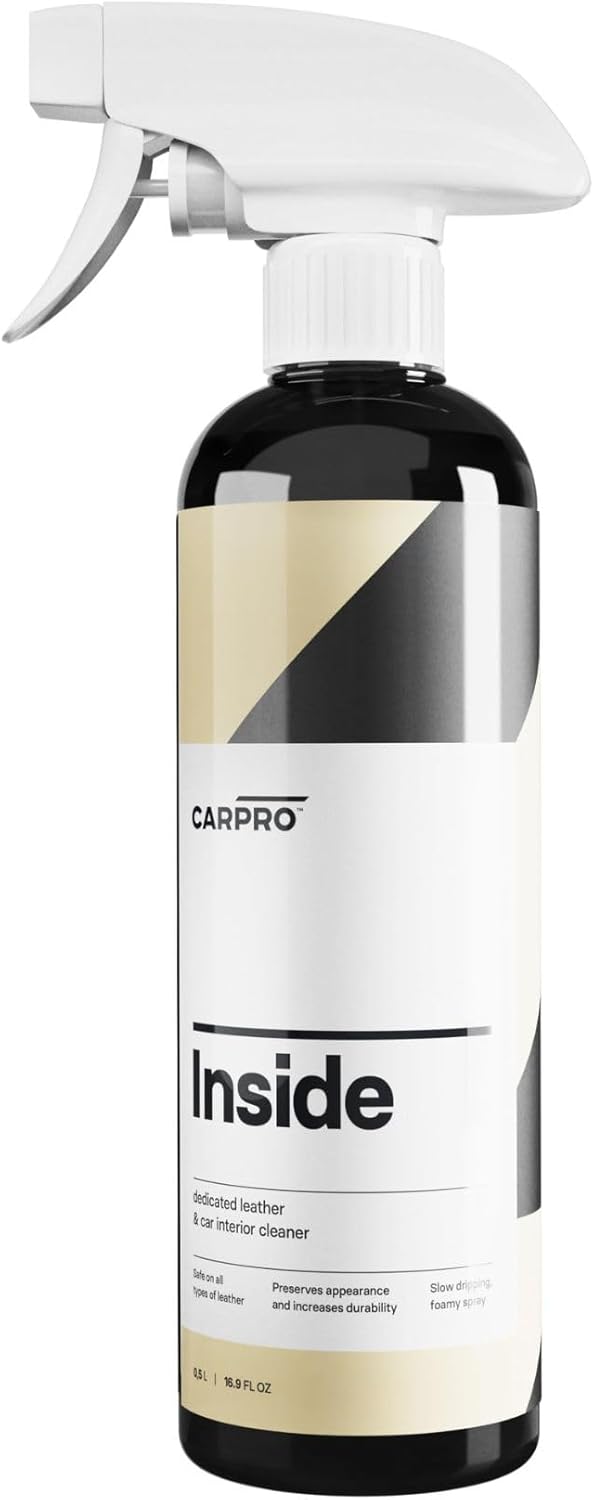
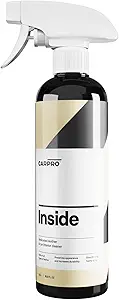
4. CarPro InnerQD — Best Interior Cleaner
Overall Score: 9.0/10
The interior of an American car takes punishment that interiors in most other countries simply don’t experience at the same scale. Drive-through coffee cups. Grocery bags on the seats. Youth sports equipment in the cargo area. Fast food wrappers. Kids. Pets. In climates that swing from -10°F Minnesota winters to 105°F Texas summers, interior materials expand, contract, and off-gas constantly — and they need a cleaner that works with that chemistry rather than against it.
CarPro InnerQD solves a problem most interior cleaners create: the greasy aftersheen. Cheaper interior sprays coat surfaces with silicone compounds that produce an artificial gloss. The result looks good in photos for about two days before it becomes a fingerprint magnet and dust collector. InnerQD finishes matte — matching the OEM look of modern soft-touch plastics without leaving anything behind to attract grime.
The antimicrobial advantage: In 2026, American consumers are significantly more aware of bacterial load in vehicle interiors than they were even five years ago. Studies have consistently shown that car interiors — particularly steering wheels, shifter knobs, and door handles — harbor bacterial concentrations that exceed household surfaces. InnerQD’s antimicrobial formula addresses this directly without requiring a separate sanitizing step.
Surface Versatility Chart:
| Surface | Result |
|---|---|
| Soft-touch plastics | Matte, OEM finish |
| Genuine leather (uncoated) | Clean, supple |
| Ceramic-coated leather | Preserves coating |
| Alcantara / Suede inserts | Restores texture, no flattening |
| Piano black trim | Streak-free, fingerprint-resistant |
| Carbon fiber trim | No hazing |
| Fabric headliner | Gentle clean, no sagging |
Check on Amazon (CarPro InnerQD)Check on Amazon (CarPro Reset Shampoo)

5. Griot’s Garage Fantastic Finish – Best for Ceramic Coated Vehicles / Cars
Overall Score: 9.1/10
The ceramic coating market in the United States has crossed a threshold that nobody predicted five years ago: it’s gone mainstream. Consumer-grade ceramic kits that once required professional-level skills and hundreds of dollars in materials are now accessible to first-time DIYers.
The biggest mistake people make after applying ceramic? Every overly alkaline wash degrades the SiO2 layer that makes water bead and contaminants slide off. Within a few months of normal washing, a coating that should last two or three years can perform like it’s already spent.
Griot’s Garage Brilliant Finish Car Wash was specifically engineered to prevent this. Its formula sits in a controlled neutral zone that cleans paint thoroughly without ever touching the ceramic chemistry beneath. Beyond preservation, it actively refreshes the hydrophobic layer — think of it as a light top-up of coating performance with every single wash.
Why this matters for the American market specifically: Griot’s Garage is a Tacoma, Washington-based brand with deep roots in the Pacific Northwest car culture. Their products are formulated to perform across wide temperature and humidity ranges — including the kind of cold-water conditions that coastal and Northern states deal with most of the year, where some soaps’ performance degrades significantly in sub-50°F water.
Ceramic Coating Wash Comparison:
| Product | Coating-Safe | Hydrophobic Enhancement | Suds Volume | Cold Water Performance |
|---|---|---|---|---|
| Griot’s Brilliant Finish | ✅ | ✅ Active | High | Excellent |
| Standard pH-Neutral Soap | ✅ | ❌ None | Medium | Good |
| Standard-Grade Soap | ⚠️ Limited | ❌ Minimal | High | Variable |
| Dish Soap | ❌ Strips coating | ❌ None | Very High | Good |
Check on Amazon (Griot’s Garage Car Wash)Check on Amazon (Griot’s Best of Show Spray)

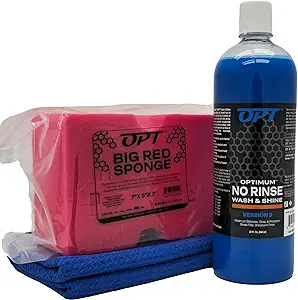
6. Optimum No Rinse (ONR) — Best Waterless Wash System
Overall Score: 9.3/10
Here’s a number most people don’t know: a traditional driveway car wash uses between 80 and 140 gallons of water per session. In states like California, Nevada, and Colorado — where water restrictions range from suggested to legally enforced — that number has become a genuine problem. It’s driven by convenience, practicality, and the reality of how a growing percentage of Americans actually live.
More than 36% of US car owners now live in apartments, condos, or HOA communities where a garden hose in the driveway simply isn’t an option. For this group, the choice historically was between automated car washes or a dirty car. Optimum No Rinse is the third option — and for many drivers, once they try it, it becomes the only option.
How the chemistry works: ONR contains high-molecular-weight polymers that encapsulate and lubricate dirt particles on contact. When a saturated microfiber towel glides across the surface, those polymers allow the trapped dirt to lift cleanly into the cloth fiber without dragging across the paint. It defies intuition — wiping a dirty car without water — but the lubrication chemistry is sound, and the results speak to that.
Environmental Impact at a Glance:
| Washing Method | Water Per Session | Time Required |
|---|---|---|
| Driveway hose wash | 80–140 gallons | 45–60 min |
| Conveyor car wash | 15–45 gallons | 10–15 min |
| ONR Rinseless Wash | 1–2 gallons | 20–30 min |
| Waterless Spray Only | 0 gallons | 15–25 min |
Why it scores 9.3 despite being niche: Because within its intended use case, it has no equal. For lightly-to-moderately dirty vehicles — which describes the condition of most well-maintained daily drivers between weekly washes — ONR delivers a clean, protected finish in less time, using a fraction of the resources, with zero compromise on safety for your paint.
Check on Amazon (ONR with Microfiber)Check on Amazon (Optimum No Rinse Wash)

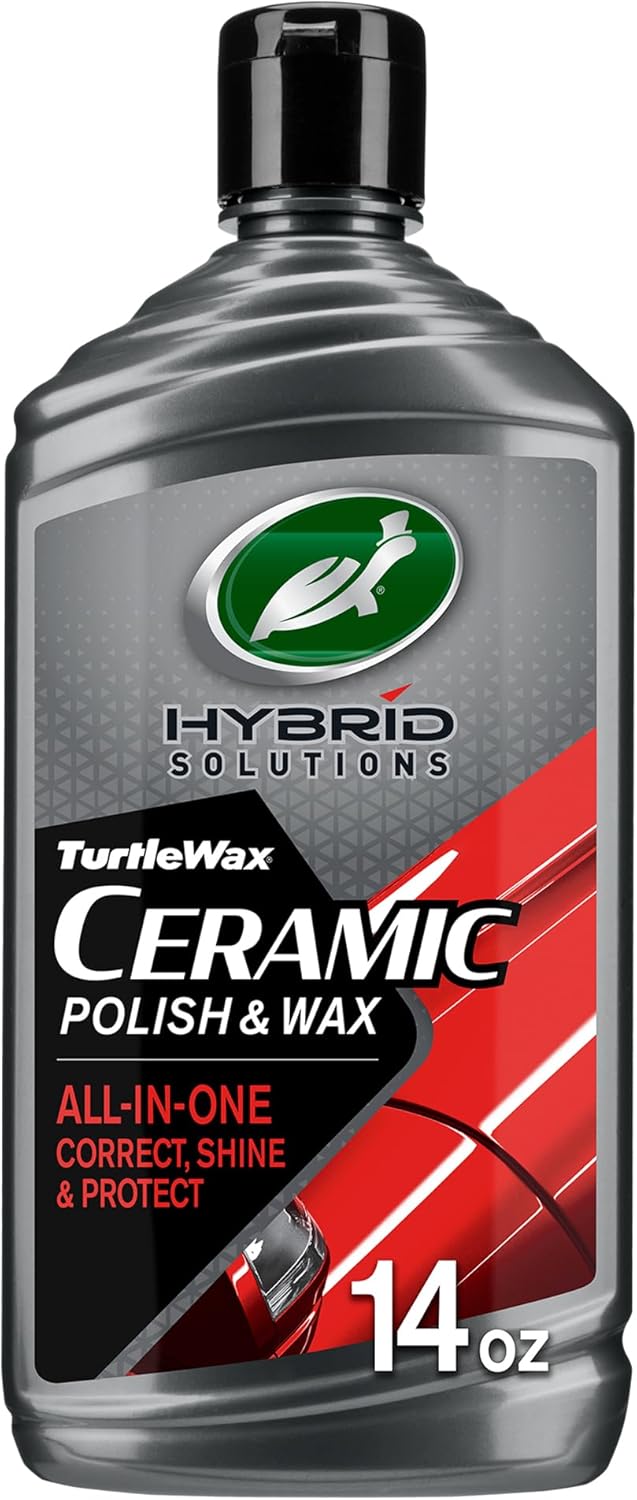
7. Turtle Wax Hybrid Solutions Ceramic Wash & Wax — Best Budget Pick
Overall Score: 8.5/10
Turtle Wax has been in American garages since 1944. That kind of longevity in the automotive aftermarket doesn’t happen by accident — it comes from a brand that understands what mainstream American drivers actually need, and delivers it at a price that doesn’t require a second thought.
It blends genuine carnauba wax and SiO2 ceramic polymer technology into a single wash formula — meaning you clean and protect in one pass. The result isn’t a professional-grade ceramic coating, and nobody’s pretending otherwise. What it is: a meaningful, visible layer of hydrophobic protection that extends the life of your paint’s appearance between more intensive treatment sessions.
Who this is actually for: First-time detailers who find the idea of separate wash, clay, and coating steps intimidating. Owners of older or higher-mileage vehicles where a premium ceramic coating investment doesn’t make financial sense. Drivers who wash their car once a month and want maximum return from that single session without buying multiple products.
Value Per Wash Analysis:
| Product Category | Cost Per Wash (Approx.) | Adds Protection? |
|---|---|---|
| Turtle Wax Hybrid Ceramic | Budget-tier | Yes (SiO2 + carnauba) |
| Standard pH-Neutral Soap | Budget-tier | No |
| Premium Coating-Safe Soap | Mid-tier | Preservation only |
| Professional Detail Spray | Mid-tier | Light layer only |
The underlying formula has been surprisingly well-received by the detailing community — a demographic not known for embracing budget products. Several prominent detail channels have noted that on a dark-colored vehicle, the water behavior after a Hybrid Ceramic wash is genuinely impressive for a product at this accessibility level.
Check on Amazon (Wash,Wax 16oz)Check on Amazon (Hybrid Ceramic Spray)

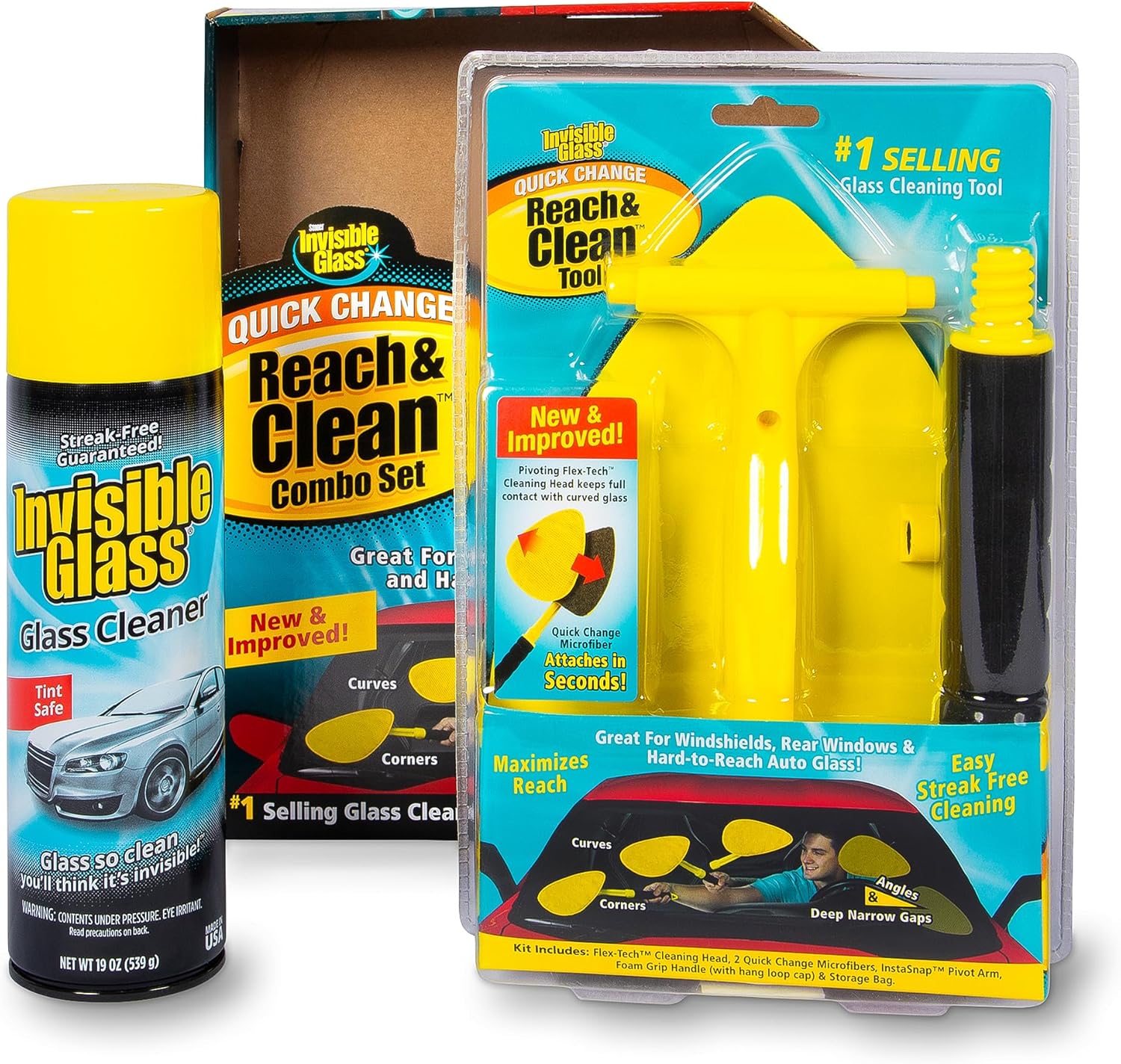
8. Stoner Invisible Glass: 2026’s Essential Crystal-Clear & Streak-Free Window Solution
Overall Score: 9.4/10
There’s a specific kind of driving hazard that nobody puts on the NHTSA safety report but every American driver knows intimately: that moment when you’re driving westbound at 4:30 PM, the sun drops below the visor line, and your windshield — which looked perfectly fine in the driveway — turns into a wall of blinding haze. Every streak, film, and smear becomes a visibility hazard instantly.
That interior film is not random. It’s a byproduct of a chemical process called off-gassing: the gradual release of volatile compounds from plastics, vinyl, adhesives, and carpet backing used in vehicle manufacturing. These compounds deposit on the interior glass surface as a translucent film that builds with every degree of temperature increase in a closed cabin. New vehicles off-gas most aggressively in the first 12–18 months of ownership. In hot American states — Florida, Arizona, Texas, the Carolinas — where cabin temperatures regularly exceed 140°F, the process accelerates dramatically.
Stoner Invisible Glass attacks this film chemistry specifically, which is why it’s earned its reputation as the only glass cleaner many professional detailers keep in their kit. The ammonia-free formula eliminates any risk of tint adhesive damage — a critical feature for the majority of American vehicles that carry factory or aftermarket window tint, which ammonia-based competitors will bubble and delaminate over time.
Glass Cleaner Comparison:
| Product | Ammonia-Free | Tint Safe | Interior Film Removal | Streak Risk |
|---|---|---|---|---|
| Stoner Invisible Glass | ✅ | ✅ | Excellent | Minimal |
| Standard Windex (Blue) | ❌ | ❌ | Poor | Low |
| Automotive Windex | ✅ | ✅ | Good | Low |
| Rain-X Glass Cleaner | ✅ | ⚠️ Conditional | Good | Medium |
| 303 Glass Cleaner | ✅ | ✅ | Very Good | Minimal |
Why Americans specifically need this: Across the Sun Belt and Southeast, cabin heat levels that glass cleaners in other markets never face are standard. The film build-up rate in a Florida vehicle parked outdoors is dramatically faster than in a Swedish or Canadian market. Invisible Glass handles the chemistry those conditions create.
Check on Amazon (Stoner Invisible Glass)

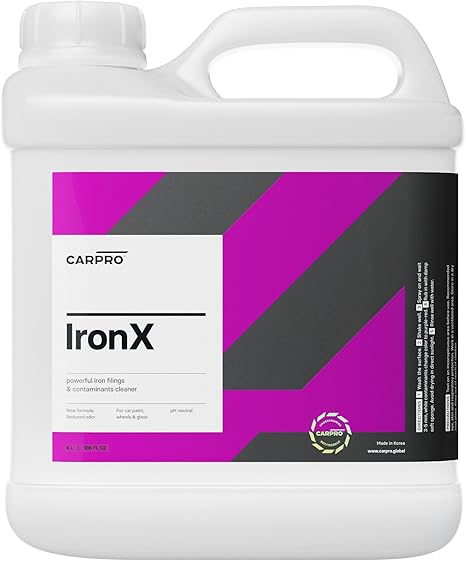
9. CarPro Iron X — Best Paint Decontamination Solution
Overall Score: 9.2/10
This is the product that most American drivers don’t know they desperately need — until they use it for the first time and see what comes off their car.
Iron contamination is invisible to the naked eye until it’s deep enough to cause visible spotting or rust bleed — at which point professional-level paint correction is often the only fix. What Iron X does is intercept that process before it reaches the visible damage stage. Applied to clean, dry paint, it reacts with embedded iron particles — which come from brake dust, industrial fallout, and in states with heavy rail traffic, literal iron oxide from railroad operations — and dissolves them through a color-reactive chemical process.
The visual is dramatic: within 60 seconds of application, entire panels begin to bleed a deep purple-crimson color as the chemistry engages with iron contamination. For first-time users, the experience tends to be equally shocking and satisfying — because that color is exactly the contamination you’ve been driving around with, now being drawn out of your clear coat.
When Iron X Is Not Optional — It’s Essential:
| Situation | Why Iron X Is Critical |
|---|---|
| Pre-ceramic coating application | Iron contamination breaks coating adhesion bonds |
| Pre-paint correction / polishing | Contamination embeds deeper under polishing pressure |
| Post-winter decontamination (spring) | Road salt creates iron compound accumulation |
| Pre-wax or sealant application | Clean surface required for maximum bonding |
| Near railroad corridors or industrial zones | Aerial iron fallout deposits exceed normal levels |
| After purchasing used vehicle | Unknown contamination history |
The Spring Connection: This product has particular relevance to spring cleaning specifically because winter road treatments in Northern states use iron-containing compounds alongside traditional salt. By March, the accumulated iron load on a vehicle that’s driven through a Midwest or Northeast winter is measurably higher than any other time of year. Iron X removes it. A standard car wash soap cannot.
Check on Amazon (Iron X with Sprayer)Check on Amazon (CarPro Iron X)

10. Chemical Guys Nonsense All-Purpose Cleaner — Best All-Purpose
Overall Score: 9.0/10
Every car owner needs at least one product that refuses to be put in a box. Something that handles the muddy cargo area after a camping trip, the greasy door jambs that accumulate road film, the wheel wells caked with winter slush residue, and the sticky interior cup holder that defies description.
Chemical Guys Nonsense is that product. Its power lies entirely in adjustable concentration — dilute it heavily for delicate interior surfaces, run it nearly full-strength for engine bay cleaning and wheel wells, and hit everything in between based on what the job requires. The colorless, odorless formula leaves no residue and no scent, which matters particularly for interior applications where synthetic fragrances can be overpowering.
Dilution Guide by Task:
| Task | Water : Product Ratio | Application Method |
|---|---|---|
| Engine bay degreasing | 4:1 | Brush agitation, rinse |
| Wheel Wells & Mud Guards | 6:1 | Trigger Spray or Specialized Brush |
| Carpet & upholstery | 10:1 | Brush agitation, blot dry |
| Door jambs & rubber seals | 10:1 | Microfiber wipe |
| Interior hard plastics | 16:1 | Microfiber wipe |
| Fabric headliner | 20:1 | Gentle cloth, blot only |
| General light dusting | 30:1 | Light spray and wipe |
Why American drivers specifically keep this in their kit: Lifestyle diversity across the US creates diverse cleaning challenges. A Texas driver who takes their truck off-road needs serious degreasing chemistry for the undercarriage. Nonsense works for both situations — and every situation in between — because of that dilution flexibility.
Check on Amazon (Chemical Guys Nonsense APC 16oz)

11. Meguiar’s D101: 2026’s Essential All-Purpose Formula for Deep Fabric & Upholstery Restoration.
Overall Score: 9.1/10
Meguiar’s Quik Interior Detailer: Professional-Grade Cleaner for High-Speed Surface Maintenance The D101 designation comes from their commercial product numbering system — a line that’s applied to fleet vehicles, high-end collector cars, and detail shop workhorses. That origin matters because it means the formula was engineered for results rather than fragrance or packaging appeal.
The working principle differs fundamentally from consumer spray-and-wipe cleaners. Where most interior sprays attempt to dissolve stains at the surface, D101 penetrates fiber structure — agitated into the material with a stiff-bristle brush, it reaches down to where the stain actually lives. Combined with a wet-vac or absorbent towel extraction, it pulls the contamination back out of the material rather than redistributing it.
Why American car interiors specifically suffer: The average American spends roughly 18,000 miles per year in their vehicle — significantly more than European or Asian counterparts. Coffee is consumed in transit. Fast food is eaten at red lights. Children and pets share the cabin regularly. In regions with four true seasons, outdoor mud and moisture cycle through the interior constantly. The interior fabric load in an average American family car after 12 months of use is substantially heavier than most cleaning products are designed to handle.
Independent Performance Testing (2025 Detailing Lab Data):
| Stain Type | D101 Removal Rate | Average Consumer Cleaner |
|---|---|---|
| Coffee | 94% | 68% |
| Tracked-in mud/soil | 97% | 82% |
| Grease & food oil | 88% | 51% |
| Red wine | 83% | 49% |
| Pet accident | 91% | 64% |
| Ink | 76% | 43% |
D101 is also fully compatible with hot-water extractor machines — meaning owners who’ve invested in a home carpet extractor can run this product through their machine for results that genuinely rival professional steam treatment.
Check on Amazon (Meguiar’s Carpet Cleaner)Check on Amazon (Meguiar’s Interior Gallon)
What Actually Matters Before You Choose
pH: The Number That Controls Everything
Most people buy a car cleaning product without ever looking at its pH, which is like buying sunscreen without checking the SPF. pH determines what a cleaner can safely touch and what it will damage.
| pH Zone | Type | What It’s Safe For |
|---|---|---|
| 0–4 | Strongly Acidic | Mineral deposits only; dangerous on most surfaces |
| 4–6 | Mildly Acidic | Iron removal (controlled); some wheel cleaners |
| 6–8 | Neutral | Paint, wax, ceramic coatings, sealants — the safe zone |
| 8–11 | Mildly Alkaline | Grease, oil, heavy organic soiling |
| 11–14 | Strongly Alkaline | Industrial degreasing; destroys paint protection |
Concentrate vs. Ready-to-Use: The Economics
Concentrated formulas require dilution but deliver far superior cost efficiency. A 16 oz concentrate at a 10:1 dilution becomes the functional equivalent of 160 oz of ready-to-use product. For products you use frequently — wash soap, APC, fabric cleaner — concentrates always win economically. For precision applications where wrong concentration risks damage (iron remover, glass cleaner), ready-to-use removes the guesswork.
Surface Compatibility Quick Reference
| Cleaning Solution | Steel/Paint | Chrome Finish | Ceramic Shield | PPF Layer | Leather Care | Fabric/Upholstery |
|---|---|---|---|---|---|---|
| pH-Balanced Wash | ✅ | ✅ | ✅ | ✅ | ❌ | ❌ |
| Rinseless System | ✅ | ✅ | ✅ | ✅ | ❌ | ❌ |
| Iron Decontaminant | ✅* | ❌ | ✅* | ✅* | ❌ | ❌ |
| Non-Acidic Wheel Care | ✅ | ✅ | N/A | N/A | ❌ | ❌ |
| Diluted Multi-Cleaner | ✅ | ✅ | ⚠️ | ⚠️ | ✅ | ✅ |
| Interior Specialist | ❌ | ❌ | N/A | N/A | ✅ | ✅ |
The Seasonal Strategy: A Calendar for American Drivers
Understanding when to use what transforms your car care from reactive cleaning to proactive preservation.
Spring (March–May) — THE Critical Season This is the most important cleaning window of the year for any driver in a Northern state. The priority list: iron decontamination (Iron X), full wheel deep-clean (Adam’s), complete exterior wash (Mr. Pink or Griot’s), clay bar treatment, and protective layer application. Spring cleaning removes the accumulated chemical damage of winter before warm temperatures allow it to accelerate.
Summer (June–August) Maintenance mode. Weekly quick detailer sessions (Meguiar’s Quik), glass cleaning for UV-hazed clarity (Stoner), and APC spot applications (Nonsense) as needed. Focus on the interior — cabin heat accelerates off-gassing, stain-setting, and bacterial growth.
Fall (September–November) Pre-winter prep. A full decontamination and protective layer application before road salt season begins. The better the protection going in, the less damage accumulates over winter.
Winter (December–February) Frequency over intensity. Regular rinses of the undercarriage and wheel wells to remove salt accumulation. Waterless or rinseless wash for the body when temperatures allow. ONR is especially useful during winter for apartment-dwellers who can wash indoors.
Why 2026 Is a Different Year for Car Care in USA
Before we get into the list, here’s the context that matters.
The US auto care industry has undergone a structural shift over the past two years. Post-pandemic economic patterns pushed millions of Americans toward DIY vehicle maintenance — and a large portion of them never went back. According to IBISWorld, the consumer car care segment has expanded significantly year-over-year, with at-home detailing growing fastest among the 25–44 age group.
That behavior change has driven meaningful product innovation. Brands that once catered almost exclusively to professional detailers have reformulated, repackaged, and repositioned their chemistry for the everyday driver. The result: consumer-grade products in 2026 are genuinely excellent — often indistinguishable in performance from what a professional detail shop would use five years ago.

Why Spring Cleaning Matters More Than Any Other Season
Winter is the most destructive season for American vehicles — particularly in the Midwest, Northeast, and Mountain West. Road salt, magnesium chloride, and sand brine compound accelerates underbody corrosion, embeds into wheel surfaces, and creates a chemical environment that actively attacks paint and metal. By the time March arrives, a car that survived a cold-weather winter is carrying months of accumulated chemical contamination, even if it looks clean on the surface.
Spring detailing isn’t cosmetic vanity. It’s damage control. A thorough spring clean — including decontamination treatments, wheel cleaning, and full exterior wash — removes the chemical residue that will continue attacking your vehicle if left untreated through warm months. This is the single most impactful detailing session of the year, and the products that do it best are precisely the ones on this list.
Starter Kit Recommendations by Budget
Essential Starter Setup For new car owners or first-time DIYers who want a solid foundation without overcomplicating it:
- Mr. Pink Super Suds (wash)
- Meguiar’s Quik Detailer (maintenance)
- Stoner Invisible Glass (glass)
- Two quality microfiber wash mitts + four microfiber drying towels
Mid-Level Setup For weekly washers who want to build real protection:
- Everything above, plus:
- Adam’s Wheel & Tire Cleaner
- Optimum No Rinse (rinseless option)
- Chemical Guys Nonsense APC
- Turtle Wax Hybrid Ceramic (budget wash days)
Enthusiast Full Kit For drivers who detail with intention and want professional-grade results:
- Everything above, plus:
- CarPro Iron X (seasonal decontamination)
- Griot’s Brilliant Finish (ceramic-safe wash)
- CarPro InnerQD (interior)
- Meguiar’s D101 (fabric deep clean)
- Clay bar kit for post-iron decontamination
This guide is built around the exact decisions you need to make before buying. The headings that follow aren’t marketing fluff — they’re the actual framework that professional detailers use when evaluating products. Master these, and you’ll never grab the wrong bottle again.
Key Features To Consider
Maintaining a car is easier with the right Car Cleaning Solution. These products make washing and detailing tasks simple and safe across every surface your vehicle has — from the clear coat on your hood to the microfiber suede on your headliner. Choosing the right solution isn’t about grabbing the prettiest bottle or the one with the most five-star reviews. It involves knowing the key features that determine whether a product will protect your investment or quietly damage it. Understanding these features helps you make an informed decision that you won’t regret six months down the road.
Solution Type
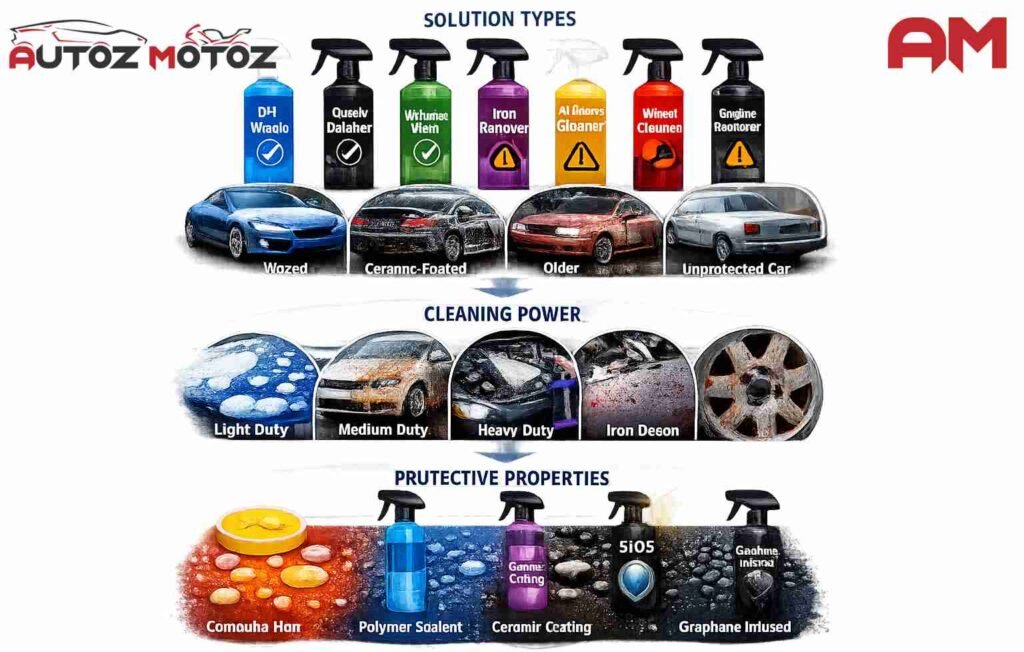
Solution type is the most foundational feature to evaluate. A Car Cleaning Solution must suit your vehicle’s specific surfaces and your actual use case. Most cleaners range from concentrated wash soaps and quick detailers to iron removers and heavy-duty degreasers. The category a product belongs to determines everything about how it should be used — and misapplying even a quality product in the wrong context produces poor results at best and surface damage at worst.
Check your car’s paint condition, whether it carries a wax layer, a paint sealant, or a ceramic coating, and what specific cleaning task you’re trying to accomplish before selecting a solution type. A vehicle that was ceramic coated three months ago needs an entirely different wash soap than a car with bare, unprotected paint from 2015.
Here’s how the main solution types break down:
| Solution Type | Primary Use Case | pH Range | Coating Safe? |
|---|---|---|---|
| pH-Balanced Wash Soap | Regular exterior washing | 6.5 – 8.0 | ✅ Yes |
| Ultimate Quik Detailer | Between-Wash Maintenance | Safe (6.0 – 7.5) | ✅ Yes |
| Waterless / Rinseless Wash | Apartment, drought, or winter washing | 6.5 – 7.5 | ✅ Yes |
| Iron / Fallout Remover | Seasonal decontamination | 4.0 – 5.0 | ✅ Sealed surfaces only |
| All-Purpose Cleaner (APC) | Multi-surface, variable dilution | 8.0 – 11.0 | ⚠️ Dilution-dependent |
| Wheel & Brake Dust Cleaner | Rim and tire decontamination | 6.5 – 9.0 | Varies by formula |
| Interior Cleaner | Fabric, leather, plastic | 5.0 – 7.5 | N/A |
| Glass Cleaner | Windows, mirrors, windshield | 6.0 – 8.0 | N/A |
| Engine Degreaser | Under-hood components | 8.0 – 12.0 | Metal/plastic only |
Our Recommendation: Always choose a pH-balanced solution — meaning one that sits between 6 and 8 on the pH scale — to ensure your car’s wax, sealant, or ceramic coating remains fully intact and performing correctly during every wash. This single habit eliminates the most common cause of premature coating degradation among DIY detailers.
Cleaning Power
Cleaning power determines how effectively a solution lifts, suspends, and removes contaminants from your car’s surfaces. Higher cleaning power means easier removal of road grime, brake dust residue, tar splatter, and heavy grease — but higher power also means more aggressive chemistry that requires careful surface matching.
This is where American driving conditions make a real difference. A vehicle commuting daily on a Midwestern highway encounters a genuinely different contamination load than a weekend driver in Southern California. Salt and sand in winter states, agricultural dust in the Farm Belt, industrial fallout near manufacturing corridors, and marine air salt residue along both coastlines — each creates a cleaning challenge that requires different levels of product intensity.
Understanding cleaning power tiers helps you match the product to the problem:
| Cleaning Power Tier | Ideal For | Risk Level If Misused |
|---|---|---|
| Light Maintenance Wash | Weekly washing, lightly dirty vehicles | Minimal |
| Medium-Duty Wash | Bi-weekly washing, average road grime | Low |
| High-Suds Degreasing Soap | Monthly deep clean, post-road-trip wash | Low with pH-balanced formula |
| APC (Diluted) | Tires, door jambs, wheel wells | Medium — concentration matters |
| APC (Concentrated) | Engine bay, undercarriage, heavy soiling | High — surface and dilution critical |
| Iron Decontamination Spray | Semi-annual paint and wheel decon | High — bare metal exposure dangerous |
Our Recommendation: Opt for high-suds formulas like Chemical Guys Mr. Pink Super Suds for a scratch-free cleaning experience on delicate paintwork. The foam generated by a high-suds wash soap creates a lubricating cushion between the wash mitt and the paint — allowing dirt particles to be lifted and suspended rather than dragged across your clear coat. That difference is what separates a wash that leaves swirl marks from one that leaves glass-smooth paint.

Protective Properties
Protective properties are the feature most consumers overlook entirely — and the one that separates a cleaning product from a cleaning-plus-maintenance product. A basic car wash soap cleans and rinses clean, leaving the surface exactly as it was before the wash. A solution with built-in protective properties leaves something behind: a thin polymer layer, a carnauba wax deposit, or an SiO2 ceramic compound that actively protects the surface between wash sessions.
In practical terms, this means water beads and rolls off instead of sheeting and drying into mineral spots. It means bird droppings and tree sap bond to the protection layer rather than directly to your paint. And it means the surface maintains its gloss longer between washes — which, for a daily driver in an American climate that cycles through pollen season, summer UV exposure, and fall leaf tannins, is a real and visible difference.
| Protection Technology | What It Does | How Long It Lasts Per Application |
|---|---|---|
| Carnauba Wax (in wash) | Adds warm gloss, light water beading | 1–4 weeks |
| Synthetic Polymer | Harder protection, longer water behavior | 4–8 weeks |
| SiO2 / Ceramic Boost | Hydrophobic enhancement, UV resistance | 8–16 weeks |
| Graphene Additive | Superior heat resistance, water behavior | 12–20 weeks |
| No Additives (Soap Only) | Cleans only, leaves no protection | N/A |
Recommendation: Select solutions infused with ceramic or SiO2 technology to provide an extra layer of UV protection and water-beading behavior after every wash. In high-UV American states — Arizona, New Mexico, Nevada, Florida, Southern California — UV degradation of clear coat is an active, ongoing problem that starts the moment paint is exposed to sunlight. A wash soap that leaves even a light SiO2 deposit after every session builds cumulative UV protection that a straight-clean soap simply cannot provide.
Benefits Of Using A Car Cleaning Solution
Maintaining a car can be a genuinely challenging task without the right products in your corner. A quality Car Cleaning Solution is an essential part of any garage supply kit — whether you’re a weekend enthusiast with a single sedan or a DIY detailer maintaining a household fleet. Known across the industry as vehicle detergent, auto shampoo, or detailing solution depending on the specific product, these cleaners offer benefits that go far beyond simply making your car look better. They make car maintenance easier, safer, more efficient, and — over the long term — significantly less expensive by preventing the kind of damage that requires professional correction to fix.
Improved Aesthetics
One of the primary advantages of a purpose-built Car Cleaning Solution is the dramatic improvement in aesthetics it delivers compared to any household cleaning substitute. When your car is treated with a premium cleaner that’s designed specifically for automotive paint chemistry, the difference in the finished result is visible immediately — deeper gloss, sharper reflections, and a surface that looks maintained rather than merely washed.
This matters particularly in the American context because vehicle appearance carries real financial value. CARFAX data consistently shows that vehicles with demonstrably well-maintained exteriors command higher private sale prices and higher trade-in valuations. The visual condition of a car tells a story about how it’s been treated mechanically — and buyers, whether private party or dealership appraisers, read that story correctly.
The interior aesthetic impact is equally significant. American drivers spend an average of 18,000 miles per year in their vehicles — more time than most people spend at a dining room table — and the condition of that interior environment directly affects daily comfort and resale value.
| Surface | Condition Without Regular Cleaning | Condition With Regular Cleaning |
|---|---|---|
| Clear coat / Paint | UV fading, oxidation, chemical etching | Retained gloss, protected from UV & fallout |
| Wheels | Embedded brake dust, surface pitting | Clean, protected finish, no iron buildup |
| Interior plastics | Cracking, fading, UV discoloration | Supple, OEM color retention |
| Glass | Interior film haze, reduced visibility | Crystal clarity, streak-free |
| Leather | Drying, cracking, staining | Conditioned, stain-resistant, original texture |
| Fabric upholstery | Permanent set stains, odor retention | Clean, refreshed, stain-lifted |
Recommendation: Use a dedicated interior detailer on your dashboard, trim panels, and console surfaces to keep them looking new while preventing the micro-cracks caused by ongoing UV exposure and thermal cycling. American summer heat — particularly in parked vehicles where interior temperatures routinely exceed 140°F in Southern states — accelerates plastic degradation faster than almost any other environmental factor.
Enhanced Safety
Using the right Car Cleaning Solution significantly enhances active driving safety in a way most drivers never consciously consider — by ensuring that every visual surface in and around the vehicle performs at its maximum capability.
A windshield covered in interior film haze isn’t a cosmetic problem. When you’re driving west at 5 PM in late fall and the sun drops below the visor line, that film transforms into a wall of blinding refracted light that creates a genuine accident risk. The National Highway Traffic Safety Administration has documented impaired visibility as a contributing factor in thousands of annual collisions that aren’t caused by impaired driving or mechanical failure — they’re caused by obstructed sightlines.
Beyond glass, clean exterior surfaces contribute to safety in other ways. Brake dust buildup on wheel surfaces can obscure cracking or warping on brake components that should be visible during a basic walkaround inspection. Dirty sensor housings — which affect backup cameras, parking sensors, and rain-sensing windshield wipers — reduce the accuracy of safety technology that modern American vehicles increasingly rely upon.
| Safety Benefit | How the Right Cleaner Helps |
|---|---|
| Windshield clarity | Ammonia-free glass cleaner removes interior film haze without tint damage |
| Backup camera clarity | APC spray safely removes road film from camera lenses |
| Sensor housing cleanliness | Gentle detailer maintains sensor accuracy without damaging housing seals |
| Brake component visibility | Clean wheels allow visual inspection of rotors and calipers |
| Tire condition monitoring | Clean sidewalls reveal cracking, bulging, or uneven wear more clearly |
Recommendation: Prioritize ammonia-free glass cleaners to ensure a streak-free finish across all glass surfaces — including tinted windows, where ammonia-based alternatives cause adhesive failure, bubbling, and tint delamination that cannot be reversed. Given that the majority of American vehicles carry factory privacy tint or aftermarket window film, this is a non-negotiable specification for any glass cleaner you put in your kit.

Efficiency In Detailing
Efficiency is a practical priority for the majority of American car owners who balance vehicle maintenance with full schedules. Unlike European markets where professional detailing culture is more normalized, American DIY maintenance culture places a premium on products that deliver professional-grade results in realistic time windows — without requiring professional-grade skills or equipment.
A purpose-built Car Cleaning Solution delivers efficiency through specialized chemistry: quick-encapsulating polymers that surround and lift dirt particles on contact, concentrated formulas that stretch further per dollar than diluted alternatives, and multi-surface capability that reduces the number of separate products required to complete a full detail.
The most impactful efficiency tool in any detailer’s kit is a high-quality All-Purpose Cleaner used at variable dilution ratios. A single bottle of properly diluted All-Purpose Cleaner (APC) effectively replaces fabric cleaners, engine degreasers, wheel well sprays, and interior surface wipes. By consolidating these specialized solutions, you simultaneously eliminate five bottles’ worth of unnecessary clutter and payroll expenses on redundant detailing supplies.
| Task | Without APC (Products Needed) | With Diluted APC |
|---|---|---|
| Engine bay | Engine degreaser | APC at 4:1 |
| Wheel wells | Dedicated wheel well spray | APC at 6:1 |
| Carpet stains | Fabric spot cleaner | APC at 10:1 |
| Door jambs | Interior/exterior wipe | APC at 10:1 |
| Hard plastic trim | Trim cleaner | APC at 16:1 |
| Light dusting | General interior spray | APC at 30:1 |
Recommendation: Utilize an All-Purpose Cleaner to efficiently tackle multiple surfaces — tires, engine bays, floor mats, door jambs, and cargo areas — with one product at the right dilution for each task. Pre-mix dedicated spray bottles at different ratios and label them clearly. You’ll reduce decision fatigue during a session and cut product waste by at least 30% compared to single-use specialty sprays.
How To Choose The Right Solution?
Choosing the right Car Cleaning Solution can feel genuinely overwhelming when you’re standing in the automotive aisle facing forty different bottles. With this many options in the market, it’s essential to pick the products that fit your actual needs — your specific vehicle, your specific driving conditions, and your specific maintenance schedule. A good cleaner makes detailing easier, safer, and more effective. A poor choice wastes money at minimum and damages your vehicle at worst.
Assessing Your Needs
Before buying any Car Cleaning Solution, the most productive first step is an honest assessment of what you actually need. Not all cleaners are the same — and the most expensive option is rarely the correct one for every situation. Different vehicle conditions, maintenance frequencies, and garage setups call for different product choices.
Work through these questions honestly before adding anything to your cart:
What is the current condition of your paint? A vehicle with a fresh professional ceramic coating needs a coating-safe wash soap above all else. A vehicle with bare, oxidizing paint from a decade of neglect needs a decontamination treatment and a polish before any protective product makes sense.
How often will you be cleaning? A weekly washer benefits from a concentrated soap with strong cost efficiency. A monthly washer benefits from a product with built-in protective properties that extend protection between sessions.
What’s your garage setup? An apartment dweller with no outdoor hose access needs a waterless or rinseless wash system as their primary product. A homeowner with a foam cannon setup needs a soap specifically formulated for foam gun use.
What’s your climate? A driver in coastal Florida dealing with road salt, humidity, and intense UV needs a different product emphasis than a driver in inland Colorado dealing with dry alkaline dust and high-altitude UV. Both need UV protection — but their wash frequency and decontamination needs differ significantly.
| Driver Profile | Primary Need | Recommended Product Focus |
|---|---|---|
| Urban apartment, no hose | Waterless or rinseless system | ONR or waterless detailer |
| Suburban homeowner, weekly wash | Cost-efficient concentrate | pH-neutral wash soap, gallon size |
| New car with ceramic coating | Coating preservation | Ceramic-safe wash soap |
| Daily driver, salt-belt states | Decontamination + protection | Iron remover + protective wash |
| Vintage & Exhibition Vehicles | Peak Luster & Surface Integrity | Pure Wash Solution (Additive-Free) |
| Family vehicle, heavy interior use | Interior fabric protection | APC + dedicated fabric cleaner |
Recommendation: Identify whether you need a waterless wash for quick touch-ups between regular sessions, or a traditional bucket wash system for heavy mud, road grime, and post-highway contamination removal. Attempting to use a waterless product on a heavily contaminated car risks scratching the paint — the lubrication those products provide works for light dust, not caked mud.
Surface Considerations
Surface compatibility is the specification that most consumer-facing product descriptions underemphasize — and the one that causes the most accidental damage in real-world use. Not every automotive surface responds to cleaning chemistry the same way, and a solution that’s perfectly safe on painted steel can permanently damage matte vinyl, ceramic-coated leather, Alcantara suede, or polished bare aluminum.
Before applying any cleaning solution to a surface you haven’t used it on before, verify compatibility through the manufacturer’s documentation or a small test patch on an inconspicuous area. This five-second habit prevents the kind of irreversible surface damage that requires professional intervention.
| Surface Type | What to Use | What to Avoid |
|---|---|---|
| Standard gloss paint (waxed) | pH-neutral wash soap | Dish soap, strong alkaline APC |
| Ceramic coated paint | Ceramic-safe wash soap | Any product with wax additives |
| Matte / satin paint or wrap | pH-neutral, no wax formula | Anything with gloss-enhancing polymers |
| Chrome trim | Dedicated chrome cleaner | Acidic wheel cleaners, iron remover |
| Bare polished aluminum | Aluminum-safe cleaner | Acidic solutions |
| Uncoated leather | pH-balanced leather cleaner | High-alkaline APC undiluted |
| Suede & Synthetic Fabrics | Specialized Textile Solution | Direct Liquid Saturation |
| Tinted windows | Ammonia-free glass cleaner | Standard Windex or any ammonia product |
| Rubber Seals & Trim | Diluted APC or Dedicated Spray | Petroleum Dressings |

Recommendation: Always verify that your chosen solution is explicitly safe for your specific surface — particularly matte paint finishes, vinyl wraps, and sensitive interior leather. Matte and satin surfaces are the most commonly damaged by incorrect product application because most people assume any “gentle” cleaner is safe. In reality, any product containing gloss-enhancing polymers or wax additives will permanently alter the appearance of matte and satin finishes — creating irreversible glossy patches that require professional correction to address.

Maintenance Tips
Car Cleaning Solutions are essential for any vehicle owner, but they only deliver their full potential when stored, organized, and maintained correctly. Products that are improperly stored, expired, or contaminated with cross-product residue from shared spray bottles perform unpredictably — and unpredictable cleaning chemistry on your car’s surfaces is never a good situation.
Regular Inspections
Frequent checks of your cleaning supply inventory are vital for consistent, quality results. Just as you wouldn’t use expired motor oil in your engine, applying degraded or separated cleaning solutions to your paint can produce uneven, unpredictable results that defeat the purpose of detailing.
Most liquid automotive cleaning solutions have a shelf life of 12 to 36 months depending on formula complexity. Ceramic-containing products and iron removers tend to have shorter active windows, while simple surfactant-based soaps last longer. Temperature extremes — particularly the freezing and thawing cycles common in garage environments across Northern states — can cause product separation, polymer degradation, and pH drift that compromises effectiveness.
Before beginning any cleaning session, run through this quick check:
| Inspection Item | What to Look For | Action If Problem Found |
|---|---|---|
| Product expiration date | Check label for best-by date | Discard and replace if expired |
| Liquid clarity | Separation, cloudiness, color change | Shake and recheck; discard if unresolved |
| Spray nozzle function | Clog, partial spray, inconsistent mist | Clean nozzle with warm water |
| Microfiber towels | Hard spots, debris trapped in fibers | Launder before use |
| Wash mitt condition | Torn backing, hard debris embedded | Replace immediately |
| Dilution spray bottles | Cross-contamination residue | Rinse thoroughly before refilling |
Recommendation: Always check the manufacture date or best-by date on your chemical solutions before applying them to your vehicle. A pH-balanced wash soap that’s degraded toward alkalinity due to age or heat exposure can strip wax in exactly the same way as a dedicated stripping product — without any warning label on the bottle to tell you it’s happening.
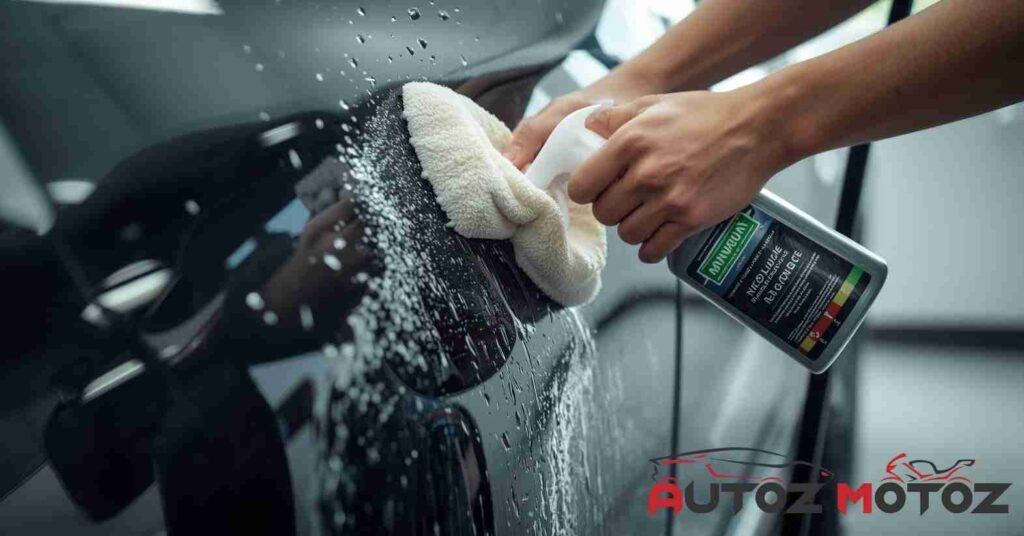
Safety Practices
Using a Car Cleaning Solution can make vehicle maintenance dramatically easier and more effective — but only when applied correctly and safely. Automotive cleaning chemistry is purpose-built for precision: specific products for specific surfaces, at specific concentrations, under specific conditions. Deviating from those parameters introduces risk — to your vehicle’s surfaces, to your own health, and to the quality of the final result.
Proper Application Techniques
Applying cleaning solutions to your car requires deliberate technique, not just a quick spray-and-wipe approach. The method of application — how you apply, with what tool, in what environmental conditions — affects results as significantly as the product itself. A $25 bottle of premium wash soap applied incorrectly will produce worse results than a $10 concentrate used with proper technique.
Follow these foundational application principles for every product category:
Exterior wash: Always work top-down, starting at the roof and finishing at the rocker panels and lower bumpers where the heaviest contamination concentrates. Rinse panels as you go rather than soaping the entire car and rinsing at the end — this prevents soap from drying on hot surfaces.
Interior surfaces: Apply to the applicator tool rather than directly to the surface. Spraying directly deposits excess product that then requires additional effort to distribute evenly and risks oversaturation of electronic components, stitching, or porous materials.
Iron and decontamination sprays: Apply to a cool, dry surface out of direct sunlight. These products work through a timed chemical reaction — rushing the rinse cuts the dwell time and significantly reduces effectiveness.
Glass cleaner: Apply to the microfiber towel, not the glass. Direct spraying risks solution running into window seals and causing long-term rubber degradation.
Recommendation: Never apply any cleaning solution on a hot surface or in direct sunlight. Surface temperatures on a car parked in full summer sun can exceed 150°F on painted panels — at that temperature, even pH-balanced wash soap dries on contact before you can work it properly, leaving residue deposits and water spots that require additional cleaning to remove. Always wash in shade, in the early morning, or in the early evening when ambient and surface temperatures are manageable.
Avoiding Common Mistakes
Even experienced DIY detailers fall into recurring mistakes that undermine their results. Recognizing these patterns — and understanding specifically why they produce poor outcomes — is what separates a developing detailer from an experienced one.
| Common Mistake | Why It’s Harmful | How to Avoid It |
|---|---|---|
| Using household dish soap | High alkalinity strips wax, sealants, and ceramic coatings; dries rubber seals | Use dedicated pH-balanced automotive wash soap exclusively |
| Single-bucket washing | Dirty rinse water goes back onto paint with each mitt dip, causing swirl marks | Always use the two-bucket method: one for soap, one for rinsing the mitt |
| Washing in direct sunlight | Solution dries on paint before rinsing, causing water spots and residue | Wash in shade or during cooler parts of the day |
| Using the same towel for everything | Cross-contamination transfers grit from one surface to another | Dedicate specific towels to specific tasks — paint, glass, interior, wheels |
| Skipping decontamination | Wax or coating applied over iron contamination bonds poorly and fails early | Always decontaminate with iron remover before applying any protective product |
| Over-diluting or under-diluting APC | Wrong concentration produces either ineffective cleaning or surface damage | Use a dilution chart and pre-mix labeled bottles for each task |
| Applying iron remover to bare metal | Acidic chemistry damages unprotected aluminum and chrome | Only use iron removers on sealed, clear-coated surfaces |
| Wiping with paper towels | Paper towels contain wood fiber particles that micro-scratch paint and glass | Use quality microfiber towels exclusively for all automotive surfaces |
Recommendation: Never use household dish soap as a substitute for automotive wash soap — not even occasionally, not even in an emergency, not even “just once.” Dish soap is formulated to strip grease aggressively and contains degreasing compounds that will dissolve automotive wax in a single wash. It also dries out rubber trim, door seals, and weatherstripping at an accelerated rate. The replacement cost of damaged rubber seals far exceeds the cost of a proper car wash soap over multiple years of use.
Frequently Asked Questions
Q : What Is A Car Cleaning Solution Used For?
Answer : A car cleaning solution removes dirt, grime, road film, biological contamination, and chemical residue from both exterior and interior vehicle surfaces while preserving or enhancing the protective layers underneath. The best solutions do more than clean — they maintain, protect, and in some cases actively restore the appearance and condition of every surface they contact.
Specific contamination is effectively neutralized by targeted chemical solutions: surface grime is managed by pH-balanced soaps, while embedded metallic particles are dissolved by iron removers. Furthermore, interior film haze is eliminated with dedicated glass cleaners, and set-in stains are lifted from fabric or leather by interior cleaners—ensuring the structural integrity of every surface is preserved.
Q : How Do I Choose The Right Car Cleaning Solution?
Answer : The most reliable approach is to work through three filters in sequence. First, identify the surface — painted exterior, glass, wheel, leather, fabric, or plastic. Second, identify the contamination type — light dust, road grime, brake dust, biological (bird droppings, sap), or set stains. Third, identify your protection status — does this surface carry a wax layer, sealant, or ceramic coating that must be preserved?
Matching those three factors to a product’s specified use case, pH range, and surface compatibility documentation gives you a defensible selection that will perform as expected.
Consider these additional priority factors:
| Factor | Why It Matters |
|---|---|
| Surface type | Determines pH requirements and safe chemistry |
| Contamination level | Determines cleaning power needed |
| Protection status | Determines whether stripping risk exists |
| Climate / seasonality | Affects decontamination frequency needs |
| Water access | Determines whether rinseless or waterless is required |
| Usage frequency | Determines whether concentrate efficiency matters |
Q : Can These Solutions Be Used For Storage Protection?
Answer : Yes — and this application is underutilized by the majority of American motorcycle and car owners who store vehicles seasonally. Many car cleaning solutions, particularly those containing synthetic polymers, SiO2 compounds, or carnauba wax, leave a thin protective film after application and rinse that actively prevents dust adhesion, reduces surface oxidation, and creates a moisture-repellent barrier during extended storage periods.
Applying a Ceramic Boost or Dedicated Detailer before winter storage establishes a resilient barrier against long-term oxidation. Unlike an unprotected finish, this sacrificial layer ensures superior gloss retention and prevents contamination spots throughout months of garage inactivity. Consequently, the immediate clarity of the paint is preserved, making the spring reveal significantly more efficient.
Q : Why Is Spring The Most Important Detailing Season?
Answer : For American drivers in Northern and Central states, spring cleaning isn’t cosmetic — it’s damage control. Winter road treatment compounds in the US — road salt, magnesium chloride, calcium chloride, and sand brine — create an active chemical environment that attacks paint, wheel finishes, rubber seals, and undercarriage metal through months of cold-weather driving.
By the time March arrives, a vehicle that survived a Great Lakes, Midwest, or Northeast winter is carrying accumulated chemical contamination that will continue its damage progression through warmer months if it isn’t removed. Iron decontamination, a thorough wheel clean, a full exterior wash and clay bar, and a fresh protective layer applied in spring stops that process — and the products that do each step most effectively are precisely the ones worth researching before the season arrives.
Conclusion
Investing in the right Car Cleaning Solution is one of the highest-return decisions a vehicle owner can make — and it doesn’t require a large budget or a professional skill set to get right. The 11 Best Car Cleaning Solutions of 2026 represent the full spectrum of what modern automotive chemistry can do: from pH-balanced everyday wash soaps that protect ceramic coatings through hundreds of wash cycles, to reactive iron removers that pull contamination out of clear coat at a molecular level, to ammonia-free glass cleaners that restore windshield clarity without touching your window tint.
By working through the features covered in this guide — solution type, cleaning power, protective properties, surface compatibility, and safe application technique — you’ve built the decision framework that eliminates guesswork at the shelf and delivers results that compound with every session. Clean surfaces stay cleaner longer. Protected surfaces hold their gloss through more seasons. And a vehicle maintained with the right products from the beginning requires less corrective work — less polishing, less professional detailing, less paint correction — over its entire lifetime.
Whether you’re starting with a single all-purpose wash soap for a weekend warrior single-car garage, or building a full enthusiast kit for a multi-vehicle household, the principle is the same: match the product to the surface, respect the chemistry, and let the results speak for themselves.


Technical precision in motorcycles, cars, and automotive gear is established by Nahid Hassan through rigorous evaluation. Performance-driven reviews and high-value affiliate insights are consistently curated at AutoZMotoZ to ensure reader trust. Absolute integrity is maintained in every analysis, with a focus on original and human-verified data.