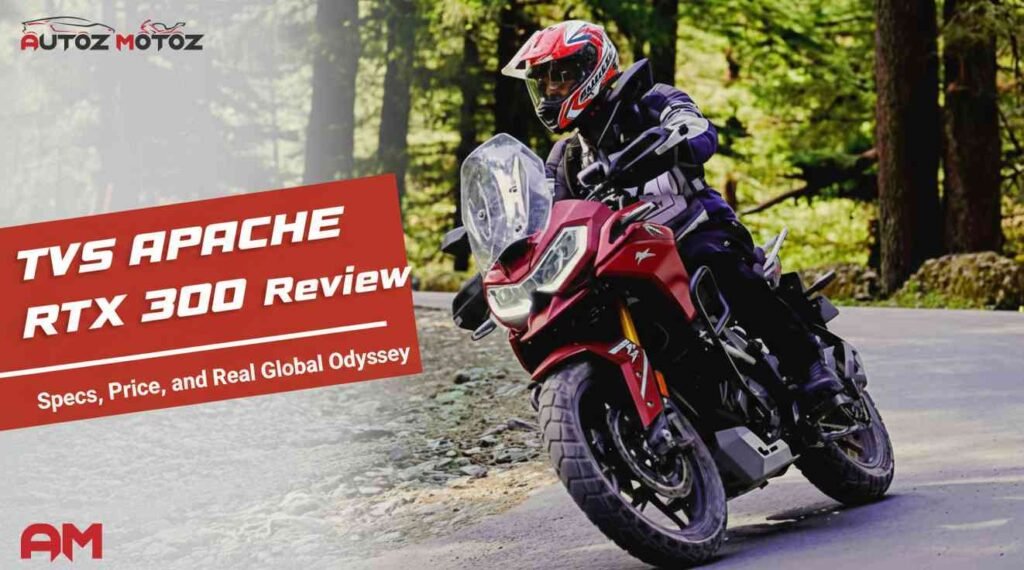
At AutozMotoz, we have tracked the TVS Apache RTX 300 from its earliest rumors to this first ride. To evaluate its true potential, we headed to the rugged, high-altitude trails of the Indian Himalayas—the ultimate environment for testing any serious dual-purpose machine.
The long-standing assumption that high-displacement engines are essential for adventure riding is being dismantled. The arrival of capable, lightweight singles—including the KTM 390 Adventure, CFMoto Ibex 450, and the revamped Royal Enfield Himalayan—proves that the sub-500cc class is a deliberate choice for those prioritizing nimble handling over bulk.
While some expected a rehanged BMW G 310 GS, TVS developed the unique RT-XD4 engine architecture. Delivering 36 PS and 28.5 Nm of torque, it stands toe-to-toe with the Kawasaki Verses-X 300 and Honda CRF300L Rally. However, the real breakthrough is found in its structural design.
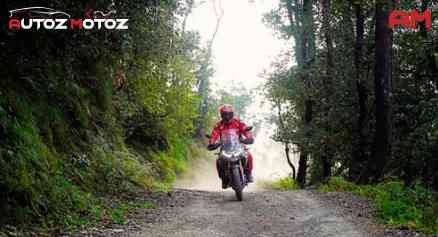
The RTX 300 utilizes a high-strength steel trellis chassis that remained exceptionally poised during our 100km trek across broken pavement and loose shale. With 180mm of suspension stroke and 200mm of clearance, this motorcycle is engineered for genuine backcountry exploration, not just the adventure look.
OVERVIEW TOPICS
TVS Apache RTX – 300
- The TVS Global Legacy
- The Heart of the Machine – PROS & CONS
- Dynamics & Control
- Suspension Architecture & Dampening
- Engineering & Performance
- The RT-LSC Digital Ecosystem: Tech & Features
- Electronic Oversight & Logic
- Visual Presence: A Middleweight in Disguise
- Chassis Architecture & Control
- Global Availability & The North American Outlook
- International Reach
- Market Analysis & Expert Verdict
- Final Disclosure : A New Benchmark for Accessible Adventure?
- Frequently Asked Questions
- Conclusion
The TVS Global Legacy
Although the TVS brand is a fresh face in the North American market, its engineering legacy spans more than a century. Founded in 1911, the company has transformed into a global industrial powerhouse, currently operating in over 90 countries and managing five world-class manufacturing centers worldwide.

TVS RTX 300
To appreciate the scale of their manufacturing, the firm produces close to 4 million units annually. While a large volume of this production centers on functional city commuters, the “Premium” lineup—specifically the 300cc–310cc range—is where the company’s competitive heritage is most apparent. After evaluating the Apache RTR 310 streetfighter and the RR 310 sportbike in a racing environment, it is clear that their engineering standards now meet the highest global performance criteria.
The Best Motorcycle Gloves
for the 2026 Season
Read the Review →
The BMW Connection & Technical Evolution
A major turning point in the brand’s contemporary timeline is its strategic collaboration with BMW Motorrad. This alliance resulted in the shared development of the G 310 family—including the R, GS, and RR models—successfully combining German design principles with high-efficiency manufacturing processes.
However, the new RTX 300 signifies a distinct break from that shared history. Rather than re-using the familiar 310cc engine, this adventure-focused platform utilizes a unique 299.1cc single-cylinder engine. This decision reflects a dedicated push to enhance the power-to-weight ratio and low-end torque, specifically tuned for the challenges of long-range travel and difficult off-road terrain.
The Heart of the Machine – PROS & CONS
A specialized 299.1cc liquid-cooled, four-stroke single-cylinder engine has been engineered to serve as the structural heart of the RTX 300. This specific displacement represents a calculated departure from the 310cc architecture utilized in previous collaborative ventures. Performance-wise, a reliable 36 PS is produced at 9,000 rpm, while a peak torque of 28.5 Nm (21 lb-ft) is achieved at the 7,000 rpm mark.
For the seamless transfer of power, the engine is paired with a six-speed gearbox that incorporates an assist-and-slipper clutch system. Moreover, the standard integration of a bi-directional quickshifter acts as a notable market disruptor, as such sophisticated electronic features are traditionally found only on higher-displacement motorcycles.
Transmission & Gear
Four-stroke single-cylinder engine has been engineered to serve as the structural heart of the RTX 300. This specific displacement represents a calculated departure from the 310cc architecture utilized in previous collaborative ventures. Performance-wise, a reliable 36 PS is produced at 9,000 rpm, while a peak torque of 28.5 Nm (21 lb-ft) is achieved at the 7,000 rpm mark.
For the seamless transfer of power, the engine is paired with a six-speed gearbox that incorporates an assist-and-slipper clutch system. Moreover, the standard integration of a bi-directional quickshifter acts as a notable market disruptor, as such sophisticated electronic features are traditionally found only on higher-displacement motorcycles.
Dynamics & Control
An assertive, rally-inspired silhouette is projected by the RTX 300, providing a physical presence that rivals much larger motorcycles. By utilizing a high-tensile trellis architecture, the frame is specifically tuned for stability during high-speed transit while the agility required for intricate off-road paths is carefully preserved.
Moreover, the cockpit is shielded by an aerodynamically refined windscreen and a sculpted fuel tank. Through this ergonomic integration, wind resistance is effectively deflected during highway cruising, while a slender mid-section is maintained to allow for intuitive, standing control on the footpegs.
- Seat Elevation: An 835mm height is utilized, featuring a tapered junction to ensure ground reach is easily managed.
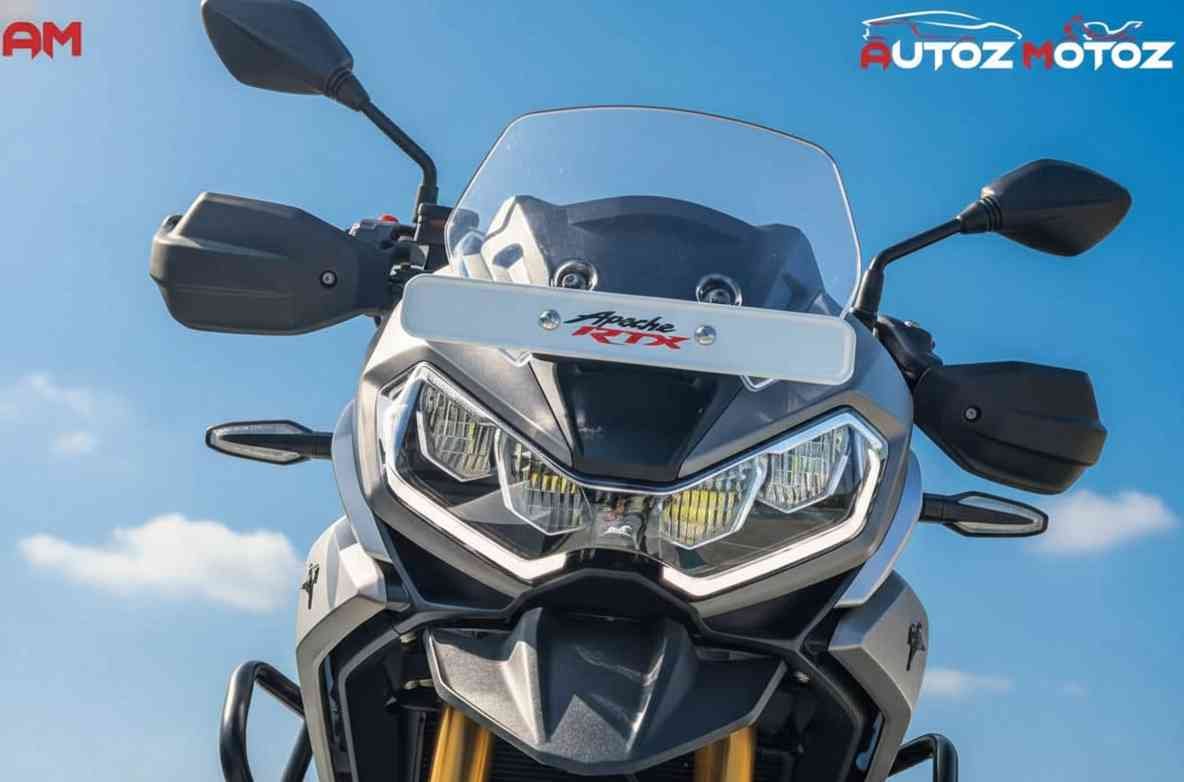
- Lighting Tech: A distinctive Quad-LED headlamp array is fitted, optimized for superior depth and peripheral vision on unlit trails.
- Utility Build: Factory-fitted crash guards and a high-mounted exhaust system are included to ensure ground clearance and water-wading potential are maximized.
Suspension Architecture & Dampening
The mechanical foundation of the RTX 300 is established upon a high-tier hardware suite, prominently featuring 41 mm fully adjustable upside-down (USD) telescopic forks—a premium specification rarely encountered within the 300cc category. This front-end assembly is harmonized with a rear monoshock utilizing a floating piston architecture for stabilized dampening. Consequently, a substantial 7 inches (180 mm) of travel is delivered by both components, ensuring the setup remains meticulously calibrated for fluctuating terrain.
Furthermore, throughout the evaluation phase, impressive progression was demonstrated by the suspension—even when subjected to a rider weight of 200 lbs (90 kg). High-energy transitions were managed with ease, and bottom-out resistance was consistently maintained. While a sophisticated visual touch is contributed by the gold-anodized finish, the authentic value is found in the capacity to precisely refine front-end dynamics according to individual rider requirements.
Braking, Wheels, and Geometry
A foundation for the chassis is provided by star-pattern alloy wheels, which are encased in Eurogrip tires utilizing a specialized rubber compound. Deceleration is managed by a 320 mm front disc coupled with a fixed caliper, while a 240 mm rear disc is paired with a floating caliper. Furthermore, rider safety is governed by a standard dual-channel ABS system, through which rear-wheel intervention can be deactivated to facilitate greater control during off-road maneuvers.
Dimensions and Weight Distribution
A 56.3-inch (1,430 mm) wheelbase is utilized by the machine, which simultaneously offers a generous 7.8 inches (200 mm) of ground clearance. While a comfortable reach is provided by the 32.8-inch (835 mm) saddle height for riders standing 6 feet tall, the ability to plant both feet firmly may be found challenging by those with shorter inseams.
With a curb weight of approximately 396 lbs (180 kg), the mass of the RTX 300 is carried with a slight forward bias, which is influenced by the positioning of the 3.3-gallon (12.5-liter) fuel tank. Accordingly, the addition of luggage or rear-mounted equipment serves as an effective strategy to balance the weight distribution, thereby achieving more neutral handling characteristics.
The Best Motorcycle Backpacks
Tested for 2026
See the Top Picks →
Engineering & Performance
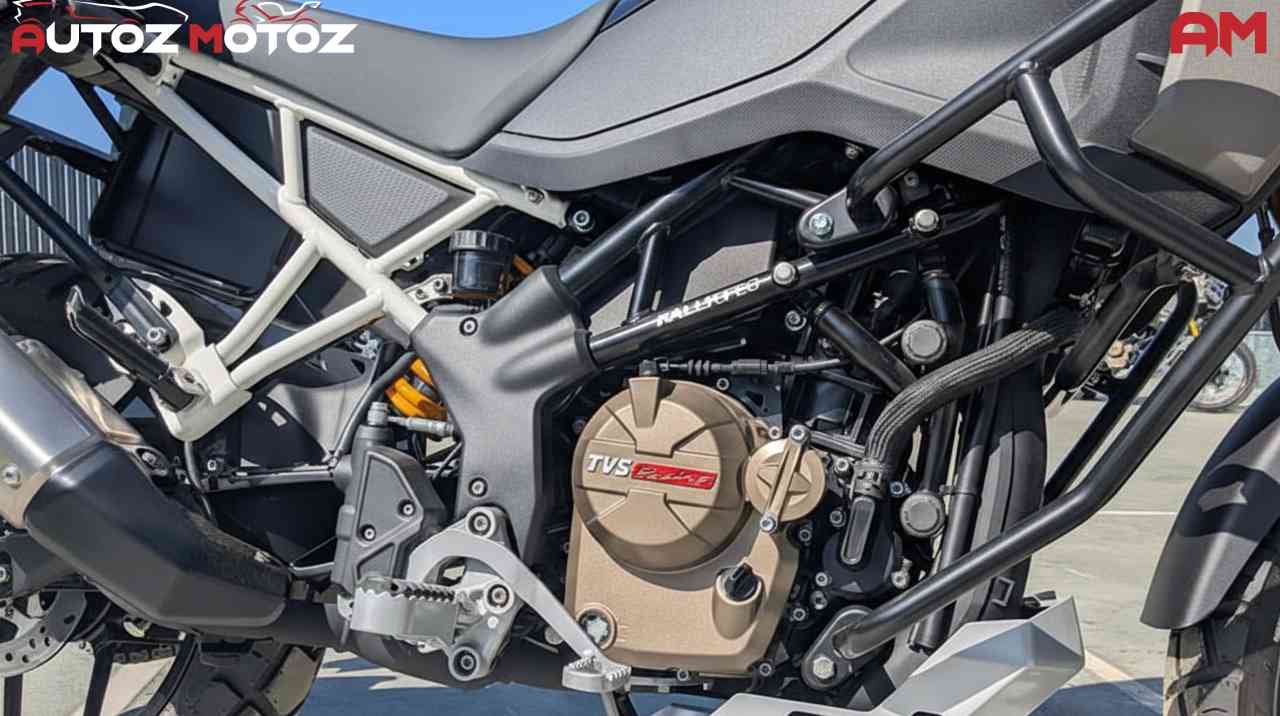
A specialized 299.1cc liquid-cooled single serves as the engineering foundation for this platform. By utilizing a reverse-inclined cylinder layout, mass is centralized and intake efficiency is optimized, enabling the motorcycle to deliver agile handling during complex off-road navigation.
Furthermore, low-end tractability has been prioritized in the development of the power unit, ensuring that steady torque is provided to prevent stalling in dense mud or heavy traffic. Although short ratios are featured in the initial gears to assist with steep inclines, a smooth 110 km/h cruising speed is comfortably maintained by the drivetrain.
Gear transitions are facilitated by a bi-directional quickshifter paired with an assist-and-slipper clutch, allowing for fluid operation even under aggressive throttle. While a degree of mechanical feedback is felt once the tachometer exceeds 7,000 RPM, the tuning is clearly directed toward long-distance durability and touring versatility.
The RT-LSC Digital Ecosystem: Tech & Features
In a move that challenges the luxury segment, the TVS RTX 300 comes equipped with a comprehensive electronics package dubbed the RT-LSC (Long Distance, Safety, and Comfort) suite. This system isn’t just about flashy screens; it’s a functional toolkit designed for the modern cross-continental traveler.
Rider Modes & Electronic Intervention
Four distinct engine maps—Tour, Rally, Urban, and Rain—are featured on the machine, providing specialized calibration for diverse riding conditions. Furthermore, these configurations are reinforced by a sophisticated safety framework that includes:
- Rally-Spec ABS: Controlled slides on loose surfaces are facilitated by this setting, ensuring stability is maintained without sacrificing off-road performance.
- Switchable Traction Control: Rear-wheel slip is meticulously managed by this system, which can be adjusted or deactivated depending on the terrain.
- Electronic Cruise Control: This feature is established as a true rarity within the 300cc category; consequently, physical fatigue is significantly reduced during extended highway transit.
The Hub: 5-Inch TFT & Connectivity
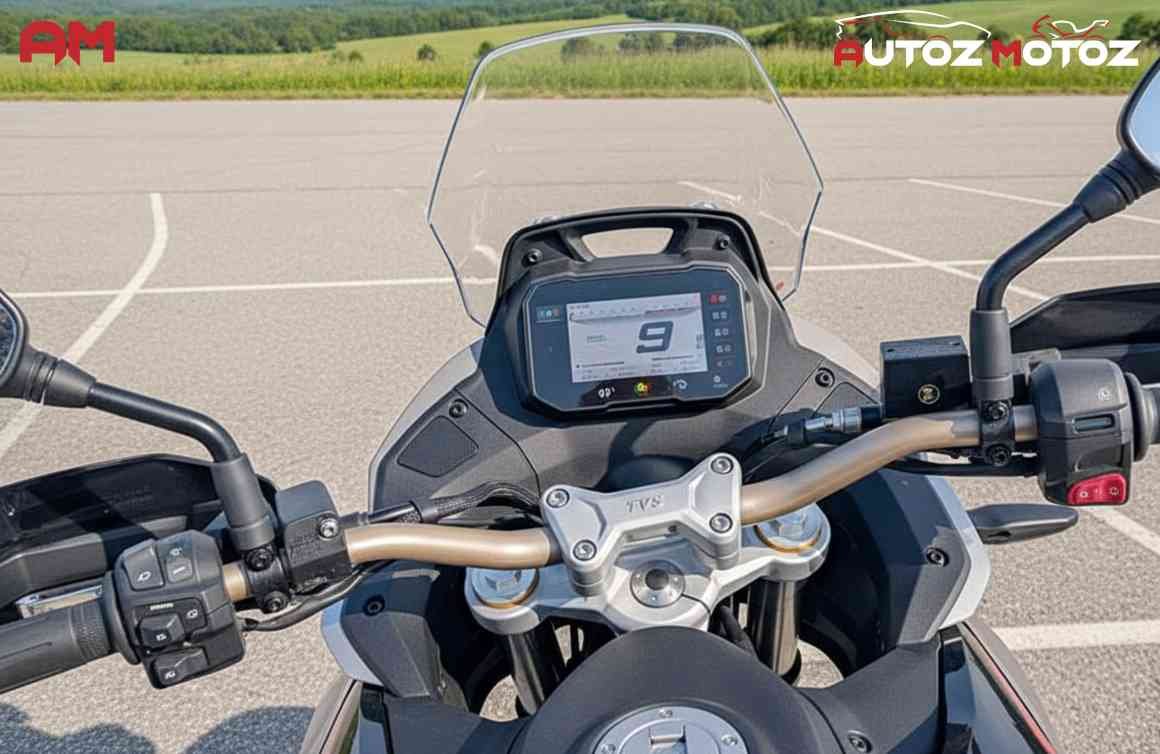
A 5-inch Bluetooth-enabled TFT display serves as the nerve center for the motorcycle. Beyond the presentation of standard telemetry, high-end integrations—such as Google Maps mirroring, GoPro synchronization, and digital document storage—are offered by the system. Furthermore, for those who select the higher-specification variants, a Tire Pressure Monitoring System (TPMS) is included, providing a layer of security that is frequently omitted in the lightweight adventure category.
Moreover, through the proprietary SmartXonnect ecosystem, over 38 distinct functionalities can be accessed by the rider. These features range from detailed ride telemetry analysis to “last-parked” location tracking, ensuring that a comprehensive digital experience is maintained throughout the journey.
Engineering vs. Experience
From the perspective of the rider, the TFT display is established as the standout feature of the cockpit. Particularly impressive is the adaptive brightness functionality, which is transitioned seamlessly by the system as the environment shifts from intense midday glare to the deep shadows of a forest.
Nevertheless, a technical inconsistency regarding the Traction Control (TC) system was revealed during the evaluation process. Even when the system was manually deactivated to facilitate off-road maneuvers, electronic intervention was occasionally triggered during high-slip scenarios. While this may be categorized as a pre-production software “niggle,” it remains a characteristic to be monitored. Consequently, this is identified as an area where a future firmware update could effectively transform the motorcycle from a “safety-first” platform into a legitimate “Rally-ready” machine.
Is a 50cc Dirt Bike
Good Enough for Adults?
Read The Verdict →
Electronic Oversight & Logic
The cockpit environment is anchored by a vertical 5-inch TFT display, which is driven by the SmartXonnect infrastructure. Moving beyond basic notification alerts, the system is designed to support comprehensive map mirroring and native GoPro synchronization, facilitating the effortless recording of journeys without the need for manual camera calibration.
- 6-Axis IMU Integration
- Lean-Sensitive ABS
- Full Screen Casting
- Electronic Cruise Control
A 6-axis IMU is utilized as the digital foundation, whereby safety interventions are modulated based on the lean angle of the machine. For technical off-road exploration, the Rally Profile is provided, allowing the rider to completely bypass rear-wheel ABS for the execution of controlled slides on loose terrain.
Physical fatigue during long-range transit is mitigated through an electronic Cruise Control system. Although the system is optimized for highway stability in the upper gears, it is valued as a critical comfort feature for transcontinental journeys. Through this digital integration, the motorcycle is transformed from a utilitarian commuter into a sophisticated companion for global expeditions.
Visual Presence: A Middleweight in Disguise
Upon initial inspection, the displacement category is defied by the TVS RTX. A physical footprint significantly larger than that of its 300cc contemporaries is possessed by the machine, effectively commanding a road presence typically associated with middleweight adventure tourers.
Furthermore, a “global rally” aesthetic is embraced by the design language, incorporating subtle stylistic cues reminiscent of icons like the Triumph Tiger and the Honda Transalp. A sharp semi-fairing, which houses distinctive twin LED headlamps, serves to anchor the muscular stance. Consequently, an aggressive, “predatory” facial expression is granted to the front fascia, ensuring it remains highly visible among a sea of standard single-lamp commuters.
Ergonomics & Practical Utility
The “Rider Triangle“—defined by the critical geometry between the handlebars, seat, and footpegs—is arguably established as the motorcycle’s most significant attribute. Through a neutral positioning, a diverse range of rider statures is accommodated, whereby comfort for extended highway transit is maintained while a slender profile is preserved for standing maneuvers during technical off-road segments.
Furthermore, several standard equipment highlights are featured:
- Protection: Engine safety is ensured by integrated crash bars, while a robust rear luggage rack is provided for touring utility.
- Comfort: Wind protection is delivered by a tall, aerodynamically refined windshield, which is paired with a supportive split-seat configuration.
- Control: High leverage is afforded by wide handlebars, allowing the 396 lb machine to be flicked through tight corners with minimal effort.
Palette & Finishes
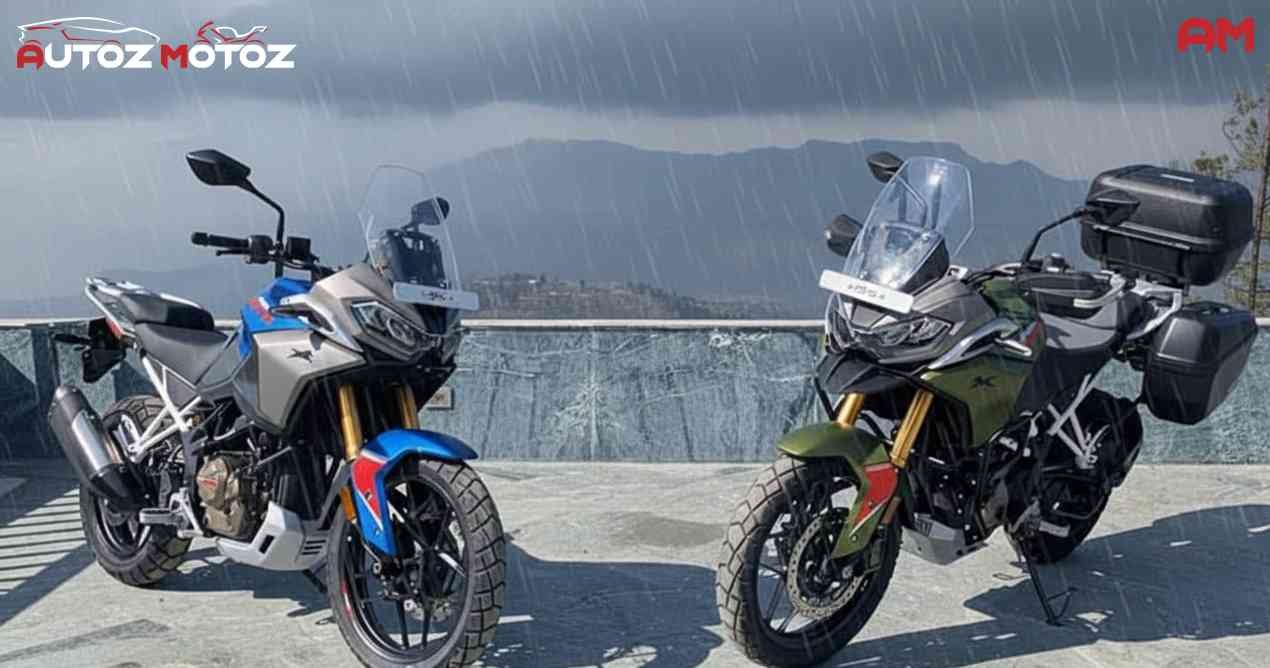
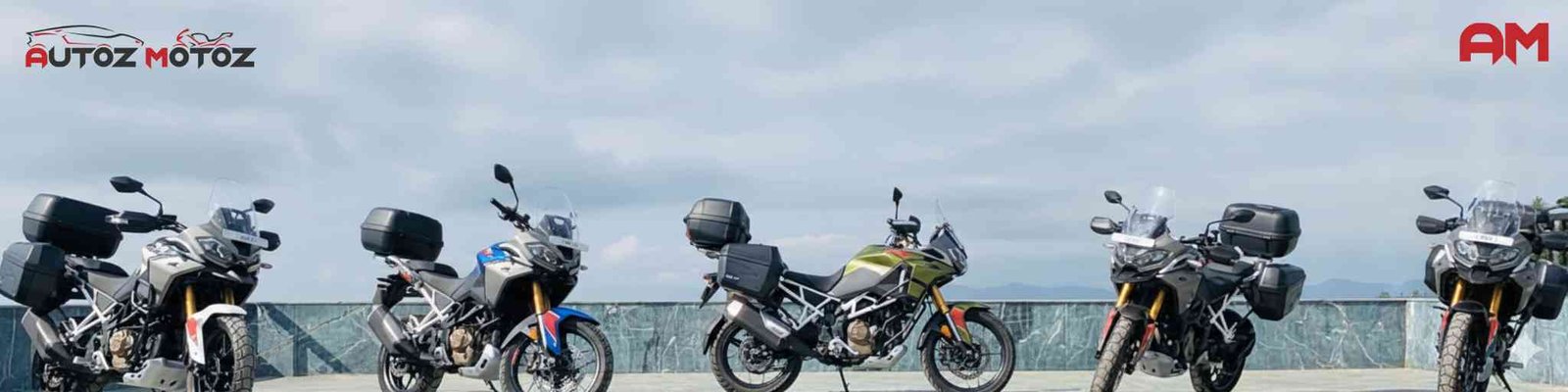
For the 2026 model year, five distinct colorways are offered for the RTX 300: Viper Green, Tarn Bronze, Metallic Blue, Lightning Black, and Pearl White. While a classic, premium aesthetic is conveyed by the Metallic Blue, the rugged, “earth-conquering” ambitions of the machine are emphasized by the Viper Green.
Furthermore, a high standard of quality control is suggested by the overall fit and finish, with textures and panel tolerances that effectively rival those of European competitors. Ultimately, the motorcycle is engineered to appear just as integrated when parked in a contemporary urban center as it does when layered in dust at a secluded mountain trailhead.
Essential Winter Maintenance
for the 2026 Season
Protect Your Bike →
Chassis Architecture & Control
Structural integrity is anchored by a balanced chassis, which has been engineered specifically for high-travel versatility. Equipped with WP suspension, the machine is provided with 180mm of travel at both ends, ensuring that vibrations from fractured tarmac are neutralized and composure is maintained on rugged gravel paths.
Full adjustability for both compression and rebound is offered by the Built To Order (BTO) variant. Consequently, the platform can be stiffened for heavy luggage loads or softened for technical mountain passes, whereby the geometry remains optimized regardless of the varying terrain.
Braking performance is characterized by a progressive initial bite, delivered through a 320mm disc and radial caliper. By avoiding an overly aggressive front-end grab, superior modulation is facilitated on loose surfaces. Through this deliberate tuning, the necessary feedback is provided to navigate wet or muddy environments without triggering premature ABS intervention.
Global Availability & The North American Outlook
In its primary market, a highly competitive entry point has been established for the base variant, priced at approximately US$2,375. Consequently, the RTX 300 is positioned as one of the most accessible adventure platforms currently produced by a Tier-1 manufacturer.
The Norton Gateway: USA & Canada
For enthusiasts in North America, a unique path to ownership is being paved. Rather than a direct entry under the TVS banner, the brand’s regional presence is being channeled through Norton USA LLC. Incorporated in Delaware in November 2025 as a wholly owned subsidiary of the iconic British marque—which is owned by TVS—this entity serves as the strategic beachhead for the North American market.
However, a realistic timeline should be maintained by prospective buyers. The establishment of a robust dealership network and the necessary service infrastructure across the USA and Canada is recognized as an extensive undertaking. While the entity has been officially registered, the latter half of 2026 or early 2027 is projected as the window when the TVS RTX 300 will become readily available on showroom floors.
The Best Women’s Pants
Top-Notch Gear for 2026
View Best-In-Class Picks →
International Reach
Beyond the borders of North America, a swift rollout is anticipated across the 80+ nations where an active presence is maintained by TVS Motor Company. Throughout the 2026 calendar year, availability is expected by enthusiasts in the following key regions:
- Europe: Operations are being expanded within Germany, Italy, Turkey, and Spain.
- Latin America: Distribution is set to be strengthened across Brazil, Argentina, Colombia, and Mexico.
- Southeast Asia: The machine is being introduced to markets including Indonesia, Malaysia, Thailand, and the Philippines.
- Africa: Sales are projected to grow through established partnerships in South Africa and neighboring territories.
Market Analysis & Further
A paradigm shift in the entry-level adventure category for 2026 is represented by the Apache RTX 300. Through a comprehensive technical assessment, it is revealed that a platform offering premium features at a disruptive price point has been successfully engineered by TVS, effectively undercutting traditional rivals while the electronic suite of higher-displacement machines is exceeded.
From the standpoint of professional testing, the inclusion of fully adjustable USD forks and a bi-directional quickshifter within this price bracket is considered unprecedented. Although a slight front-heavy bias may be presented by the 180 kg kerb weight during slow-speed technical maneuvers, a predictable and authoritative experience is ensured for the cross-continental tourer by the linear power delivery.
This machine is not merely identified as a “budget” choice; rather, it is viewed as a calculated, high-utility investment. For the rider by whom a robust, tech-forward ADV is sought—bypassing the inflated premiums of established competitors—the RTX 300 is positioned as the most logical acquisition in the current 300cc market.
AutozMotoz
“Four wheels move the body; two wheels move the soul.”
The Best Half-Helmets
Tested for the 2026 Season
View Safety Ratings →
Short Comparison
| Specification | TVS RTX 300 | KTM 250 ADV | Suzuki V-Strom |
|---|---|---|---|
| Peak Power | 36 PS | 31 PS | 26.5 PS |
| Torque | 28.5 Nm | 25 Nm | 22.2 Nm |
| Electronics | Quickshifter | Basic ABS | Standard |
| Global Est. | $2,375 | $2,870 | $2,365 |
Final Disclosure : A New Benchmark for Accessible Adventure?
A significant milestone in the evolution of approachable adventure touring is represented by the TVS Apache RTX 300. Through a disciplined commitment to a “weight-first” philosophy, a platform has been developed that serves as an ideal bridge for two distinct riding segments. Novice riders are provided with a forgiving, lightweight entry into off-road exploration, while seasoned veterans are offered a refined “downsizing” option—a flickable machine that prioritizes maneuverability without sacrificing the core ADV experience.
What truly distinguishes the RTX 300 is the density of the technological suite integrated into its chassis. In a market segment where compromises are frequently expected by consumers, a comprehensive package has been delivered by TVS, including a bi-directional quickshifter, an assist-and-slipper clutch, and a sophisticated 5-inch TFT interface with map mirroring.
When a spec-for-spec comparison is performed against established rivals—such as the KTM 250 and 390 Adventure series—it is observed that the RTX 300 provides a modern electronic array that would typically justify a premium valuation. Instead, the market is remarkably undercut by this platform, which maintains a competitive edge through its 180 kg kerb weight and a linear power delivery of 36 PS. This balance of high-end utility and accessibility ensures that the RTX 300 is positioned not just as a budget alternative, but as a primary contender for the modern adventurer.
The Norton Legacy and Global Support
The timing of this launch is recognized as highly significant. Through the leveraging of engineering insights gained from their BMW partnership—which recently surpassed the 200,000-unit production milestone—and the prestige of their Norton Motorcycles acquisition, TVS is no longer viewed merely as a high-volume manufacturer. Instead, the company is firmly established as a sophisticated global contender.
The “After-Sales” Frontier
However, it is acknowledged that the hardware represents only half the battle. As the brand enters the North American and European markets through the Norton nameplate (specifically via the newly incorporated Norton USA LLC), the ultimate test will be found in the “after-sales” experience. For the RTX 300 to achieve sustainable success, the strategic focus must now be shifted toward the construction of a reliable, long-term dealership network. This infrastructure is required to honor the heritage of the brands it represents while providing the parts supply and technical support demanded by Western riders.
The Best Hitch Carriers
Tested for 2026 Hauling
Check Weight Capacities →
Frequently Asked Questions: TVS Apache RTX 300
Q. Is the highway touring capability of the TVS RTX 300 considered sufficient?
A: Yes, a versatile mid-capacity experience is delivered by the RTX 300. Through its 299.1cc engine, cruising speeds of 110–120 km/h (70–75 mph) are maintained comfortably without excessive vibration. Consequently, it is established as a solid choice for both weekend expeditions and daily transit.
Q. How is the RTX 300 priced in comparison to the KTM 390 Adventure?
A: The RTX 300 is positioned as a high-value alternative. Although more raw power is offered by the KTM, the RTX 300 is presented at a significantly lower price point—approximately US$2,375. Thus, it is viewed as the superior financial acquisition for riders by whom modern technology is sought without the “premium brand” tax.
Q. What real-world fuel efficiency (MPG) is achieved by the RTX 300?
A: Based on early evaluations and rider feedback, an average of 70–80 mpg (approx. 30–35 kmpl) can be expected. Naturally, these figures are influenced by riding aggression and the frequency of stop-and-go urban traffic.
Q. Is the RTX 300 recommended as a beginner motorcycle for taller adults?
A: Absolutely. Surprisingly upright ergonomics are featured on the RTX 300. Unlike aggressive supersports, a comfortable posture is allowed by the seat height and peg positioning for taller riders. Furthermore, the manageable power delivery ensures that novice riders are not intimidated.
Q. Is Dual-Channel ABS included as standard on the TVS RTX 300?
A: Yes, safety is prioritized in the engineering of this model. Dual-channel ABS is featured as standard, whereby confident braking performance is provided on wet or uneven surfaces. This inclusion is recognized as a major selling point within this specific price bracket.
Q. What maintenance costs are associated with the RTX 300?
A: TVS is globally recognized for affordable ownership. Routine services—including oil changes, chain adjustments, and filter replacements—are performed very cost-effectively. Because the power unit is not overly stressed, high long-term reliability is anticipated alongside low spare part expenditures.
Q. Can a pillion passenger be accommodated comfortably by the RTX 300?
A: While a rider-focused design is primarily maintained, the pillion seat is considered adequate for short to medium distances. If long-distance touring with a passenger is planned, the acquisition of aftermarket seat cushions is recommended for enhanced comfort.
Conclusion
During the time spent in the saddle, it is observed that the trade-offs are minor when weighed against the sheer value provided by the platform. While a brief period of adaptation is required for the 180 kg (396 lb) kerb weight and the slight front-heavy bias, a reliable foundation for both urban commuting and light trail work is offered by the standard dual-channel ABS and the versatile “Rally, Tourer, Xtreme” DNA.
Furthermore, for the rider by whom mechanical substance is prioritized over mere brand prestige, the RTX 300 is established as a high-utility investment. A balanced, “big bike” experience is delivered, effectively proving that an overpayment for a capable 300cc adventure-style machine is unnecessary in the current economy.

Technical precision in motorcycles, cars, and automotive gear is established by Nahid Hassan through rigorous evaluation. Performance-driven reviews and high-value affiliate insights are consistently curated at AutoZMotoZ to ensure reader trust. Absolute integrity is maintained in every analysis, with a focus on original and human-verified data.