
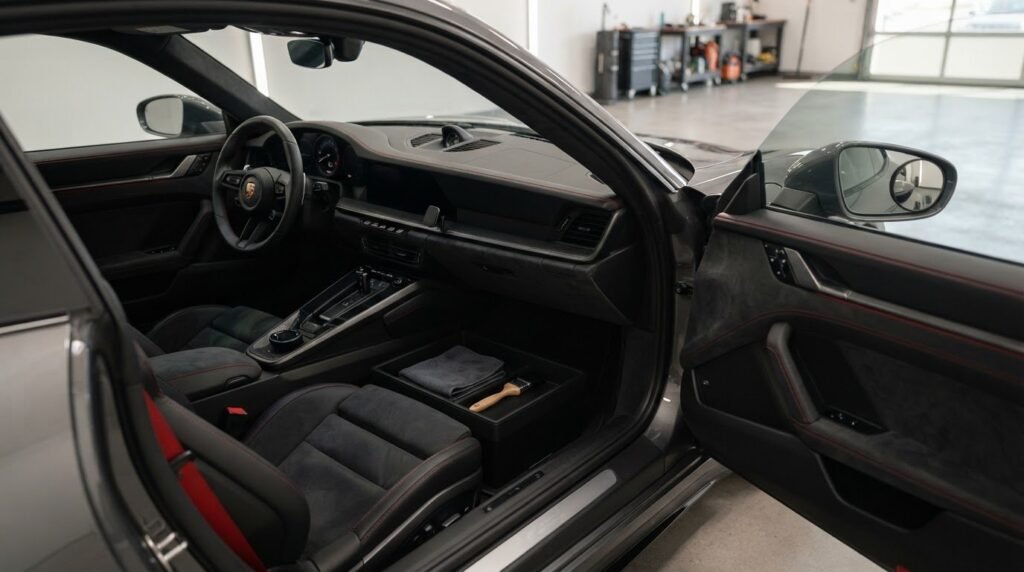
Useful car accessories reviews do more than praise clever gadgets. They show whether an accessory makes driving safer, tidier, or more convenient without getting in the way. Storage hooks, organizers, and other cabin add-ons can solve everyday annoyances, but anything that obstructs a seat belt or airbag zone is the wrong trade-off.
A handy organizer or phone mount can seem like an easy upgrade, but fit and placement matter as much as the feature list. This guide compares practical options for safer driving, a cleaner interior, and smarter storage, while explaining what to avoid around belts and airbags.
We’ll look at blind-spot mirrors and phone mounts, cleaning tools and air fresheners, then focus on storage and convenience accessories that help keep loose items under control. The aim is simple: choose gear that earns its place in the cabin, not another gadget that gets in your way.
Key Takeaways
- Keep accessories clear of seat belts and airbag deployment areas, and prioritize cabin safety over extra features.
- Choose mirror and phone-mount setups that improve visibility without adding distractions or blocking your view.
- Match cleaning tools and fresheners to the mess or odor you’re tackling, rather than relying on a one-size-fits-all fix.
- Use storage accessories to secure loose items and reduce clutter, while considering how each one fits in your vehicle.
1. Accessories that may interfere with airbags or seat belts
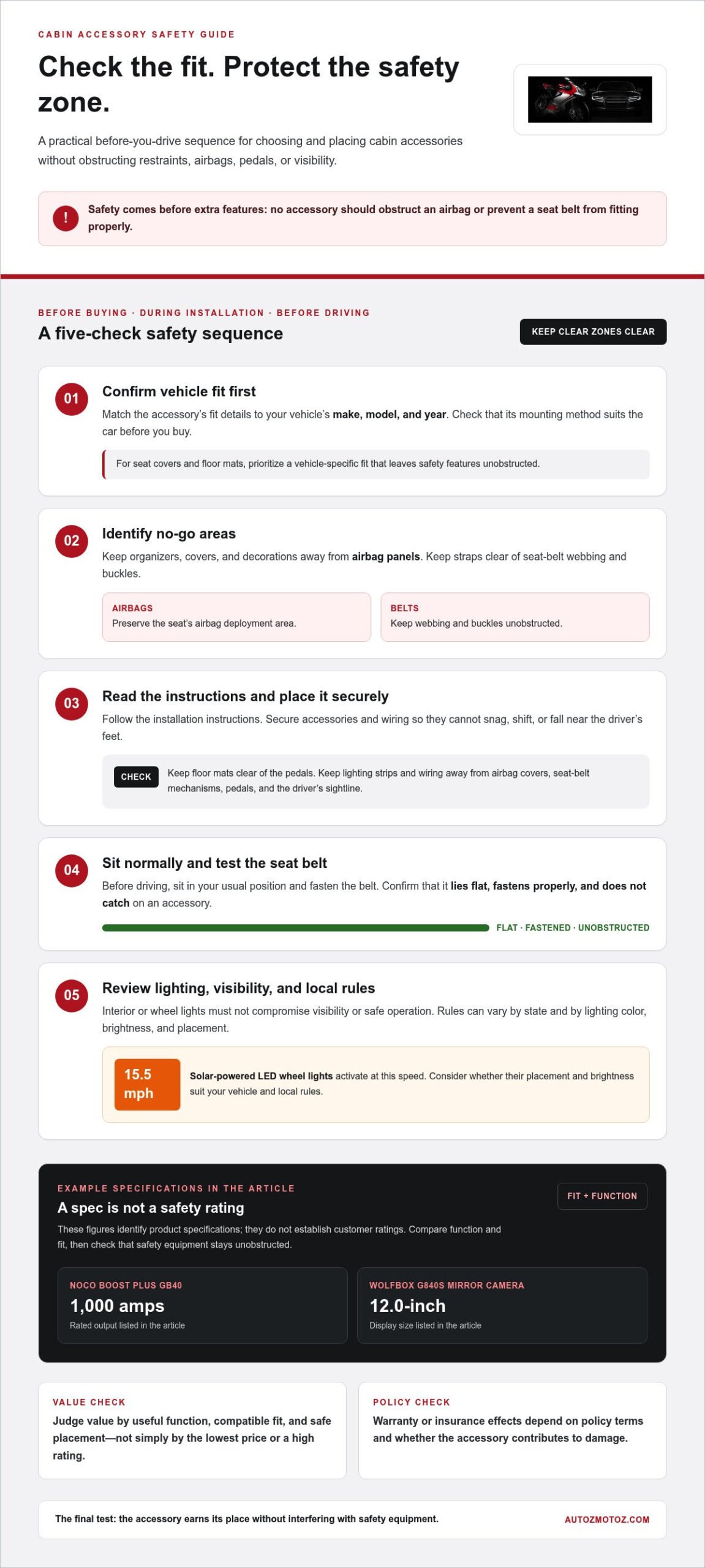
A useful accessory should never obstruct an airbag or prevent a seat belt from fitting properly. Avoid placing organizers, covers, or decorations over airbag panels, and keep straps clear of belt webbing and buckles. Before driving, sit in your usual position and check that the belt lies flat and fastens without catching on an accessory.
Interior LED lighting can add visibility inside the cabin, but placement matters. Keep strips and wiring away from airbag covers, seat-belt mechanisms, pedals, and the driver’s sightline. Govee LED Car Lights are one example of interior lighting; secure any wiring so it can’t snag or fall near the driver’s feet. Wheel lights need the same practical scrutiny: solar-powered LED wheel lights activate at 15.5 mph, so consider whether their placement and brightness suit your vehicle and local rules.
For 2026, a practical accessory shortlist includes the NOCO Boost Plus GB40, rated at 1,000 amps, and the Wolfbox G840S mirror camera, with its 12.0-inch display. These examples have clear specifications, but those figures don’t establish customer ratings. For reliability, compare the stated function and fit, then assess whether the accessory leaves restraints and safety equipment unobstructed.
For seat covers and floor mats, prioritize a vehicle-specific fit that leaves safety features unobstructed. A cover should preserve the seat’s airbag deployment area, while a mat should stay clear of the pedals. TuxMat floor mats are one example, but fit and secure placement matter more than a high rating alone.
Value comes from useful function, compatible fit, and safe placement, not simply the lowest price. Since accessory costs vary by product, compare features and fit rather than treating price as proof of quality.
Which accessories are legal in each U.S. state? Rules can vary by state and by lighting color, brightness, and placement. Interior or wheel lights should never compromise visibility or safe operation.
Aftermarket compatibility depends on the vehicle’s make, model, year, and the accessory’s mounting method. Warranty or insurance effects depend on policy terms and whether the accessory contributes to damage.
Before buying online, match the listing’s vehicle-fit details to your car, read the installation instructions, and make sure the accessory won’t block a belt, airbag panel, pedal, or the driver’s view.
2. Blind-spot mirrors and phone mounts
A small blind-spot mirror can reveal more of the lane beside your car, but placement decides whether it helps. The K Source Fit System Blind Spot Mirror-C0400 is one example; adjust it to show adjacent traffic without losing the main mirror’s view. Set your regular mirrors first, then position the add-on to cover the remaining blind area. Treat it as an extra view, not a replacement for checking around the vehicle before changing lanes.
Phone mounts need the same practical test: can you see the screen briefly without blocking the road? The iOttie Easy One Touch Wireless 2 is a named mount option. Position a mount where it doesn’t obscure your forward view, controls, or airbag areas. Check that the phone stays secure over rough pavement and that reaching for it doesn’t pull your attention away from driving.
For phone mounts, chargers, and dash cams, a useful shortlist includes the iOttie Easy One Touch Wireless 2 and Scosche PowerVolt 60W charger. The charger can bring a device to 50% capacity in about 30 minutes. For a dash cam, prioritize a stable mount, a clear view of the road, and controls that don’t invite fiddling while driving.
Wireless charging reduces cable clutter, but the phone must sit correctly on the charging surface. A loose fit can interrupt charging. With a USB-C cable, make sure the connection is secure and the cable stays clear of the shifter and pedals. Test the setup while parked before relying on it during a drive.
A dashboard anti-slip pad is a simple alternative to a fixed mount, but it shouldn’t become a place for loose objects that can slide around. Useful car accessories reviews compare visibility, mounting stability, and charging convenience together. Choose a setup that keeps your device accessible while leaving your attention on traffic.
Consider whether the placement keeps your phone visible and secure without blocking controls or encouraging you to reach across the cabin. Check the fit while parked before driving.
3. Car cleaning tools and air fresheners
A fresh scent won’t remove the spill, damp fabric, or crumbs causing an odor. Start by clearing trash, vacuuming debris, and cleaning the affected surface with a product suited to its material. For routine exterior care, wash the vehicle about every two weeks, and more often after driving on salted winter roads. A fragrance works best as a finishing touch, not a cover-up for grime.
For upholstery, dashboards, and glass, use separate cloths to avoid moving dirt between surfaces. The Rag Company Edgeless 245 microfiber cloths come in a pack of 25, giving you clean cloths for different tasks. Autoglym Bird Dropping Wipes come in a pack of 10 and offer a compact option for removing fresh bird mess. Follow each product’s directions, and avoid rubbing grit across paint or glass.
Crumbs in seat seams call for a narrow vacuum nozzle, not another scented accessory. The Fanttik Slim V8 Apex portable vacuum is rated for up to 19,000 Pa of suction, weighs about 1.1 lbs, and charges through USB-C in around 2.5 hours. Those details help you judge whether it suits quick cabin cleanups and whether its charging routine fits your use. For dusty windshields, the AstroAI cleaner has an extendable handle stretching from about 13 to 21 inches.
Odor removal starts with finding the source: check floor mats, seat creases, cup holders, and damp areas. Ozium Air Sanitizer Spray comes in a 3.5-ounce size, but fragrance alone won’t clean a stained surface or remove trapped debris. Ventilate the cabin and follow the label directions when using any spray. Keep liquids away from screens, switches, and other sensitive cabin surfaces.
Choose cleaning products for the task, not their bold packaging claims. A vacuum handles loose debris, microfiber lifts surface dust, and a glass tool reaches awkward windshield areas. Comparing these practical details makes car accessories reviews more useful than a simple list of popular scents or gadgets.
4. Car storage and convenience accessories
Cabin storage works best when it contains everyday items without creating new hazards. Headrest hooks can hold shopping bags upright, but hanging loads shouldn’t block your view or swing toward passengers. Treat any weight ratings as limits, not targets, and keep heavy bags low and secure.
A trash can solves a different problem: wrappers and receipts stop migrating under seats. The HOTOR car trash can has a stated capacity of 2 gallons. Place it where passengers can reach it without stretching across the cabin, and empty it before loose rubbish spills during a turn. A smaller can may fit better in a compact interior, while a larger one suits regular family trips.
Convenience accessories also have narrow jobs. The Car Chap lip-balm holder fits tubes up to 3/4-inch wide, keeping one small item from disappearing between seats. LED Cup Holder Lights offer up to eight hours of battery life, but they shouldn’t distract the driver or crowd cup space. The Car Steering Wheel Tray is for use when parked, not while driving; keep food and devices stowed before moving.
What do reviewers say about portable jump starters and tire inflators? The NOCO Boost Plus GB40 is rated at 1,000 amps and can start most 12V gasoline engines up to 6.0 L and diesel engines up to 3.0 L. For a tire inflator, compare its power source, hose reach, pressure display, and storage footprint, then match its capabilities to your vehicle’s needs.
Make storage decisions in this order: identify what needs a home, choose an accessory that fits the cabin, then test whether it stays secure and clear of restraints, pedals, and sightlines. That’s the useful angle in reviews and comparisons of automotive accessories: a tidy cabin matters only if the gear remains practical in real use.
AutozMotoz: Reviews and comparisons of automotive accessories and products
AutozMotoz publishes reviews and comparisons of automotive accessories and products to help you weigh practical features against everyday needs. Use these comparisons when deciding between options for a tidier cabin, easier cleaning, or more convenient storage. A useful review makes the trade-offs clear: how an accessory fits, what job it handles, and whether it could interfere with safe use. This perspective helps you distinguish genuinely useful gear from features that sound impressive but add little to your drive. Use the comparisons alongside your vehicle’s fit requirements and the safety considerations covered above, then choose accessories that suit how you actually use your car. Explore automotive accessory reviews and comparisons at AutozMotoz.
Make your next upgrade earn its place
Before choosing another cabin gadget, name the problem you want it to solve. Is it clutter, a hard-to-reach phone, or a mess that keeps coming back? That simple filter makes car accessories reviews more useful: focus on fit, function, and everyday use instead of getting sidetracked by feature lists. Consider how an accessory fits into your routine, and make space for it only if it genuinely helps.
Small, deliberate upgrades tend to make more sense than filling the cabin with add-ons. AutozMotoz offers reviews and comparisons of automotive accessories and products, giving you another way to weigh your options before deciding what belongs in your vehicle. Explore AutozMotoz’s accessory reviews and comparisons, then choose the gear that suits your drive. A thoughtful pick can make every trip feel a little more sorted.
Frequently Asked Questions
Which car accessories offer the best value for money?
Choose accessories for useful function, compatible vehicle fit, and safe placement rather than the lowest price alone. Storage options should stay secure and clear of restraints, pedals, and sightlines.
How much do popular car accessories cost in the United States?