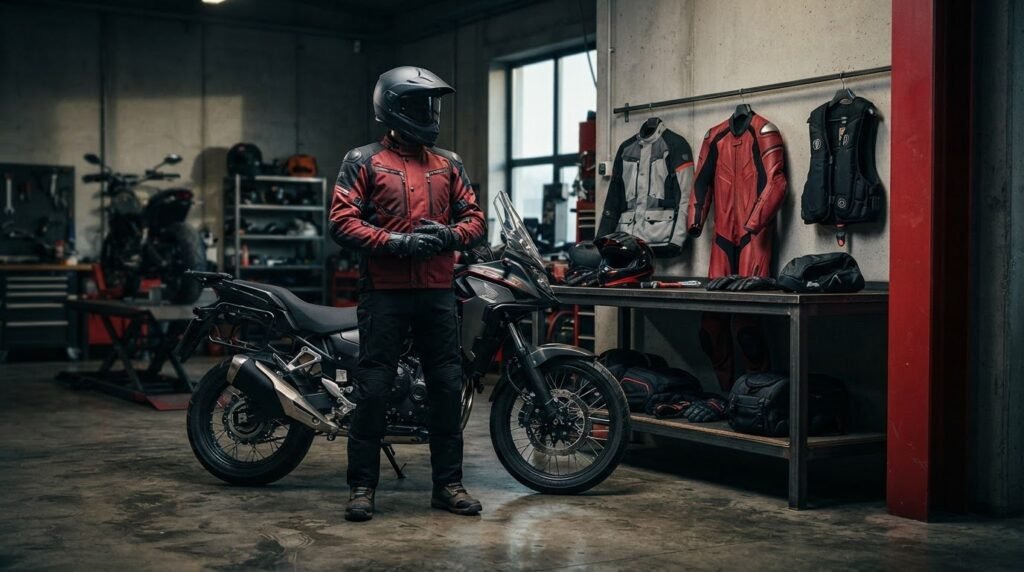
The safest-looking motorcycle gear isn’t automatically right for your ride. Useful motorcycle gear reviews compare protection, fit and real-world comfort, because a jacket, helmet or suit works best when it suits how and where you ride.
You already know the trade-off: more coverage can mean more heat, while lighter gear may be easier to wear but less suited to certain conditions. This guide explains how jackets, trousers and suits compare, what to look for in helmets and airbag vests, and how fit and ventilation affect everyday use. You’ll get a practical way to weigh safety features against comfort, weather and riding style, without treating marketing claims as the whole story. Whether you’re choosing protective layers for a commute or comparing options for a hot-weather ride, the focus is on what each type of gear does well, where it involves compromises, and what to examine before deciding.
Key Takeaways
- Compare jackets, trousers and suits by protective coverage, fit and riding conditions, not appearance alone.
- Learn what helmet safety labels and practical features can tell you before choosing a lid.
- See how ventilation, layering and suit design affect comfort when the weather heats up.
- Weigh the added coverage of an airbag vest against how it fits and feels over your riding gear.
- Use reviews to judge real-world trade-offs across gear and motorcycle choices, rather than relying on marketing claims.
Product reviews of jackets, trousers and suits
A useful review compares protective coverage, fit and comfort in riding position. Look beyond a jacket’s styling to its garment rating, armour placement and intended conditions.
Long-Term Jacket Testing
A useful long-term review tracks how a jacket performs after repeated rides, not just how it feels on day one. Check whether closures still work smoothly, seams remain sound and armour stays in position as you move. These details reveal wear that a quick showroom impression can miss.
Compare the same points across different designs. For example, the Klim Marrakesh is described as AA-rated with Level 1 armour, while the Spada Hanzo leather jacket has a AAA garment rating. A review should explain those distinctions alongside fit and daily use, rather than treating a higher label as the whole verdict.
Casual Jackets and Riding Hoodies
Casual gear can look like everyday clothing, but reviews should still examine its riding-specific protection and fit. The Roadskin Easyrider II Armoured Hoodie includes Level 2 back, shoulder and elbow armour. Check how that armour sits when you lean forward, reach the bars or turn your shoulders.
Compare a hoodie with a dedicated jacket by considering coverage, ease of movement and how each layers over ordinary clothes. The Roadskin Spencer motorcycle jeans offer another useful example: they are described as AAA-rated with Level 2 armour. Reviews should assess trousers as part of the full riding setup, not as an afterthought.
Summer and Ventilated Jackets
For hot-weather riding, ventilation matters because airflow affects comfort on the road. A review should show where a jacket moves air, whether its fit lets those panels work and how coverage changes when you sit on the bike. A loose fit can shift protective areas, while a restrictive fit can make a long ride uncomfortable.
The Klim Marrakesh gives readers a specific comparison point, with an AA garment rating and Level 1 armour. Don’t judge it only by its warm-weather purpose: consider how its coverage, fit and protection match your riding. Reviews are most useful when they explain what ventilation adds and what compromises remain.
Textile and Touring Jackets
Textile touring jackets suit riders weighing adaptable coverage against simpler, lighter designs. Compare pocket access, closures, adjustment points and how the jacket fits over layers. The RST TracTech Evo 5 textile jacket and Oxford Dakar Dry2Dry Air 1.0 Textile Jacket provide named examples for comparing different touring-oriented options.
Also compare trousers and suits as complete combinations. Roadskin Spencer motorcycle jeans carry an AAA rating with Level 2 armour, while the Spada Hanzo jacket has a AAA garment rating. A two-piece suit can make jacket-and-trouser pairing straightforward; a one-piece suit keeps the outfit together. Review fit in riding posture, then consider how easily each option works across your usual journeys.
Helmet safety standards and features
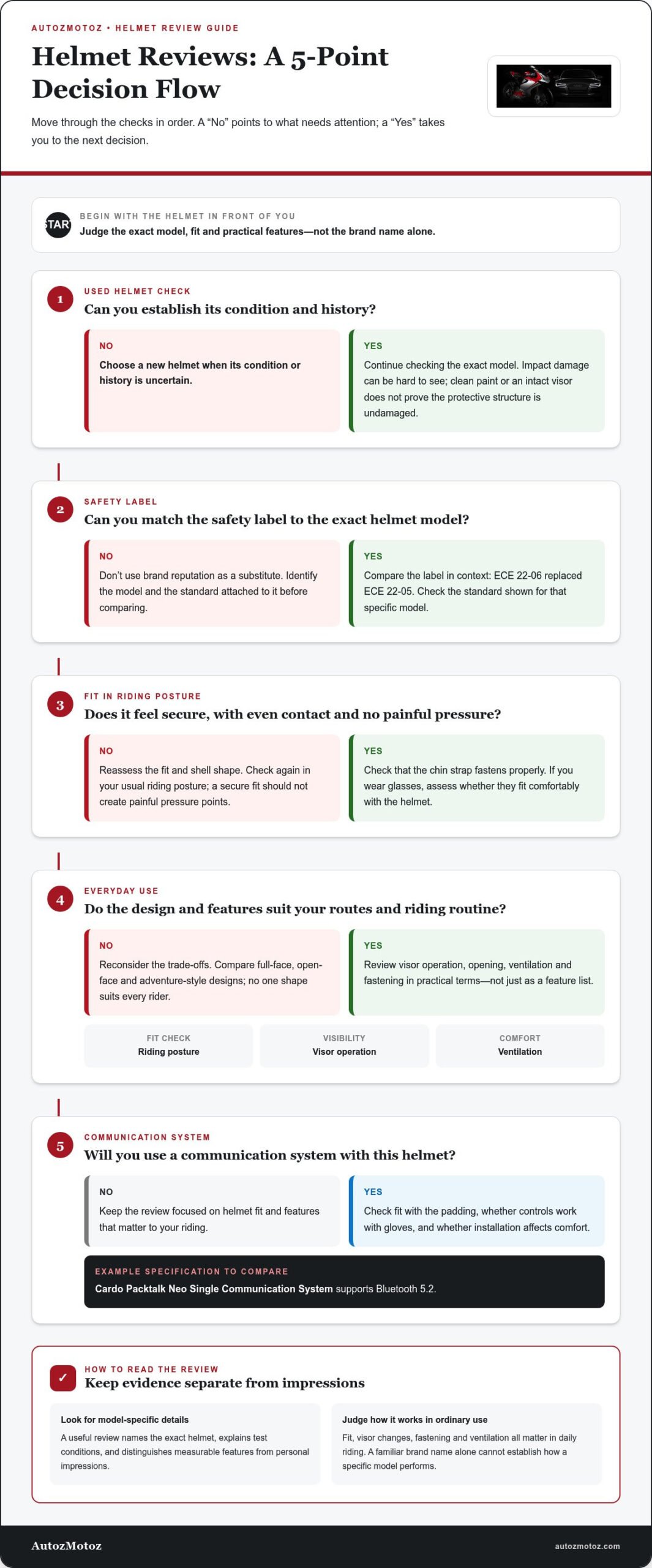
Compare the exact helmet model’s safety label, fit and features, not brand reputation alone. ECE 22-06 replaced ECE 22-05 a few years ago. A rating comparison is useful when it identifies the standard attached to each model and explains what that label means for your choice. Don’t treat a familiar badge as proof that every helmet from that brand performs identically.
For a comfortable fit, try the helmet in your usual riding posture and check for even contact around your head. It should feel secure without painful pressure points, and the chin strap should fasten properly. Reviews should explain shell shape, visor operation and ventilation in practical terms, since these details affect daily riding as much as a feature list.
Used helmets carry a particular risk: impact damage can be difficult to spot from the outside. A helmet may also have an unknown history or fit differently after previous use. Choose a new helmet when you can’t establish its condition and history, and don’t treat clean paint or an intact visor as proof that its protective structure is undamaged.
Read helmet reviews for the test conditions and the specific model name. A useful review separates measurable features from personal impressions, then explains how visor changes, fastening and ventilation work during ordinary use. For example, the Schuberth E2 Explorer Helmet is a named model to compare by fit, features and intended riding, rather than by its brand name alone.
Communication systems add another layer to the decision. Check how a unit fits with the helmet’s padding, whether its controls are manageable with gloves, and whether installation interferes with comfort. The Cardo Packtalk Neo Single Communication System supports Bluetooth 5.2, a concrete specification worth comparing with the connection features you need.
A motorcycle helmet review should explain the trade-offs between full-face, open-face and adventure-style designs without implying that one shape suits every rider. Assess the opening, visor and airflow against your usual routes. If you ride with glasses, consider whether the helmet accommodates them comfortably. A quick fit check can reveal pressure that a short product description misses.
Use this short review checklist before deciding:
- Match the label to the exact helmet model.
- Assess fit with your riding posture and eyewear.
- Compare visor, ventilation and fastening by everyday use.
- Choose communication features that work with your helmet and gloves.
- Avoid used helmets with an uncertain impact or ownership history.
This approach keeps safety labels in context and makes feature comparisons more useful. A helmet that fits securely and works with your riding routine is a more practical choice than one selected on branding alone.
Adventure suits and hot-weather riding
Choose gear for the expected weather, riding posture and route, then compare how each suit handles those demands. For hot rides, prioritize airflow; for changing conditions, consider layers and weather protection.
Adventure Suit Selection
An adventure suit has to work across changing surfaces and weather, so judge the complete setup rather than one feature. Check how the jacket and trousers move when you’re seated, standing on the pegs or reaching forward. These positions reveal whether panels pull, closures press or coverage shifts during active riding.
Compare construction as well as fit. The Merlin Akashi Pro Laminate Suit jacket has a CE EN 17092 garment rating of AA. That rating gives one useful comparison point, but it doesn’t describe every comfort trade-off. Reviews should also explain how the suit handles airflow, storage and layering, so you can match it to your own routes.
Consider how long you expect to ride in wet conditions. Laminated motorcycle garments generally become waterlogged only after a rider has been in heavy rain for four hours or more. Ride duration therefore matters when comparing a laminate suit with other constructions. A short commute and an all-day adventure ride place different demands on weather protection.
Weather and Riding Style Choices
How should riders choose motorcycle gear for different weather and riding styles? Start with the conditions you regularly face, then weigh ventilation, weather protection and freedom of movement against your riding posture. A ventilated jacket suits hot-weather priorities, while touring across changing conditions calls for a setup that accommodates layers.
On hot, dry routes, check where air can move through the garment and whether those areas remain useful in your riding position. A jacket that feels breezy while standing may behave differently when you lean forward. Match ventilation to your bike and posture, then consider whether the trousers provide compatible coverage and movement.
For variable weather, compare a layered setup with a laminate design. The Oxford Atmos layering system offers a named example of a separate layering approach. Traditional drop-liner clothing is a better proposition for 90% of motorcyclists. Consider how often you ride in sustained rain and how quickly conditions change, rather than choosing solely by construction label.
Use a simple review checklist: identify your usual route, note its weather demands, then assess fit in riding posture. For adventure riding, also consider movement while standing and how the jacket and trousers work together. This makes competing designs easier to compare, especially when one prioritizes airflow and another emphasizes adaptable weather coverage.
Airbag vests and hot-weather use
Motorcycle airbags have been around for over 30 years, yet regular use remains limited. Estimates put regular use below 1% in many markets and just over 2% in some markets. Those figures make practical questions worth asking: how does a vest fit, what does it add to your riding setup, and will you wear it in warm weather?
The Alpinestars Tech-Air 5 System is one named example to compare. A useful review should explain how the system is worn, what clothing it works with, and what the rider needs to do before and after a ride. Avoid judging an airbag by its name or feature list alone. Look for clear information about its operation and care.
Heat affects the decision. An airbag vest adds a layer, so check how it sits over your base clothing and beneath your jacket. Try the full combination in your normal riding posture. See whether the vest restricts movement, bunches at the waist or makes closures harder to use. These checks can reveal discomfort before a longer ride.
Reviews should distinguish the vest from the jacket around it. A ventilated outer jacket may help airflow, but the complete setup determines comfort. Compare the vest with your usual summer layers, then check whether the fit stays stable when you reach forward or turn. A review that assesses only the vest misses how riders actually wear it.
Before choosing, compare these practical points:
- Fit: Wear the vest with the jacket you plan to use, then check movement at the shoulders and waist.
- Heat: Assess the full clothing combination, including layers, rather than judging the vest alone.
- Use: Understand the system’s stated operating and care instructions before relying on it as part of your routine.
- Compatibility: Check whether the vest works with your riding jacket and preferred clothing layers.
Price isn’t the only trade-off. For example, the Tech-Air 5 System gives reviews a specific model to assess, but fit and daily comfort still depend on your gear combination. A vest that stays in the closet because it feels too hot cannot become a useful part of your routine.
Compare the complete setup, not the airbag in isolation. Start with your warm-weather jacket, add the vest and test the fit while seated on your motorcycle. Then review the system’s instructions and care requirements. This keeps comfort, compatibility and practical use in view alongside the product’s stated features.
Motorcycle and gear reviews
A motorcycle review and a gear review answer different questions, but riders need both. The bike shapes your posture, route and storage needs; gear affects comfort and protection in that setup. Read each review as part of one decision, not as a standalone verdict. On a touring motorcycle, for example, luggage access and long-distance comfort matter alongside jacket fit.
Good motorcycle gear reviews separate measurable details from personal preference. Look for the exact model, garment rating, armour level and intended use. The Klim Marrakesh is described as AA-rated with Level 1 armour, while the Spada Hanzo jacket has a AAA garment rating. Those labels help compare protection, but they don’t tell you whether either jacket suits your posture or climate.
Use a consistent checklist for gear and motorcycles. First, identify the ride you’re preparing for, such as commuting or touring. Next, compare how the motorcycle’s riding position works with your jacket, trousers and gloves. Then assess visibility, storage access and how the kit moves when you reach the controls. A detail that seems minor in a product description can matter on your bike.
- Fit the setup: Check the jacket and trousers while seated on the motorcycle, not only standing.
- Compare protection: Record each garment’s rating and armour details, such as Level 2 armour in Roadskin Spencer motorcycle jeans.
- Match the use: Compare airflow and coverage against your route and expected weather.
- Check compatibility: Assess how the helmet, communication system and jacket work together.
Reviews also need to explain compromises. The Oxford Dakar Dry2Dry Air 1.0 Textile Jacket offers a specific textile example for comparison, while the Goldtop 619 Rebel jacket has CE AAA approval. A reader can use those details to understand how products differ, then examine fit, movement and intended riding conditions before deciding. Avoid collapsing those distinctions into a single “best” label.
Motorcycle reviews deserve the same discipline. Separate ride impressions from specifications, and ask whether the test reflects your kind of use. A relaxed road ride reveals something different from a loaded touring trip. Pair that context with gear details, such as how a jacket’s cut affects reach or whether suit trousers stay comfortable on the bike’s seat.
The takeaway is simple: compare the complete riding setup. Use model names, ratings and fit checks to narrow your options, then assess each against your routes and priorities. This turns scattered product claims into a practical decision, considering protection, comfort and motorcycle use together.
These listings add concrete price points to that comparison.
AutozMotoz: Automotive and Motorcycle Gear Reviews
AutozMotoz publishes reviews and comparisons of automotive accessories and products to help you weigh practical differences before choosing riding gear. Turn to these comparisons when you’ve narrowed your options but still need to assess protection, fit, ventilation or compatibility with your riding setup. A useful review explains what a product is designed to do and where its trade-offs matter in everyday use.
Use this guide’s criteria to focus your comparison: match the gear to your riding style, consider the weather you face and compare specific features rather than relying on marketing language. The goal is a clearer choice, not a one-size-fits-all verdict.
Visit AutozMotoz.com to explore automotive product reviews and comparisons.
Make Your Next Ride a Better-Fitted One
Your next step isn’t finding the gear with the longest feature list. Decide what matters most for your riding: comfort over distance, airflow in warm conditions or protection that fits your routine. Then use those priorities to compare options and judge whether a product suits the way you actually ride. The most useful motorcycle gear reviews help you make that comparison without letting marketing language make the decision for you.
If you’re still weighing products, explore AutozMotoz’s automotive accessory and product reviews and comparisons. They can help you keep evaluating your options with a practical eye, so your choice reflects your riding needs rather than a passing trend. Explore AutozMotoz’s product reviews and comparisons, then choose your next piece of gear with confidence and ride your own way.
Frequently Asked Questions
What motorcycle helmets have the best reviews in 2026?
Choose a helmet with an ECE 22-06 label, then compare reviews for fit, visor usability and ventilation. No single model suits every head shape or riding position, so reviewer experience matters: look for comments from riders with similar needs. Check how the helmet behaves with your glasses or communication unit, too. A model that feels comfortable in a shop may press differently after a longer ride.
Which motorcycle jackets offer the best protection and value?
The best balance comes from a jacket whose protection, fit and features suit your regular rides. For a named comparison point, the RST IOM TT Brandish 2 leather jacket has a CE garment rating of AA. Treat that rating as one factor, then assess armour placement and movement on your bike. Value means getting useful coverage and comfort for your riding conditions, not simply choosing the lowest price or highest label.
What are the best motorcycle pants with armor?
Look for motorcycle pants that keep their armour in position when you sit, crouch and move your legs. For example, trousers that feel fine while standing may pull at the knees when you bend forward on a sport bike. Compare the garment’s protection information, fit over your riding boots and comfort at the waist. The right choice should work with your jacket and riding posture, rather than feel like ordinary trousers with added bulk.
What motorcycle gear certifications and safety standards should buyers look for?
For helmets, look for the ECE 22-06 label; it replaced ECE 22-05 a few years ago. For motorcycle clothing, compare the garment’s CE rating, such as AA or AAA, and check the exact item rather than relying on a brand name. An EN 17092 garment rating is another label you may see. Read the rating alongside fit and intended use, since certification alone cannot tell you how gear feels on your bike.