The accessory with the most features isn’t automatically the best buy. Useful motorcycle accessory reviews compare what matters on real rides: fit with your bike and gear, ease of use, durability, and the trade-offs behind the spec sheet. The right choice depends on how you ride and what problem you need to solve.
It’s easy to be drawn in by impressive camera specs, long-range communication claims, or a clever-looking mount. But a feature earns its place only if it works with your setup, fits your routine, and doesn’t add unnecessary hassle.
This guide helps you compare communications, cameras, GPS units and mounts, as well as maintenance products, luggage, and parts. See what to weigh in each category, which compromises deserve attention, and how to distinguish practical value from marketing noise before you buy.
Key Takeaways
- Match communication gear, cameras, navigation, and mounts to your riding habits and bike setup, not just the feature list.
- Choose luggage by how it carries your load and fits your trips, then consider access, stability, and weather protection.
- Check parts for fit and practical comfort so upgrades work with your motorcycle rather than creating new hassles.
- Compare maintenance products by the task they’re designed for and how they suit your bike’s materials and finish.
- Read helmet reviews alongside safety ratings, fit, and intended use to make a more informed shortlist.
Bluetooth communications, cameras, GPS, and mounts
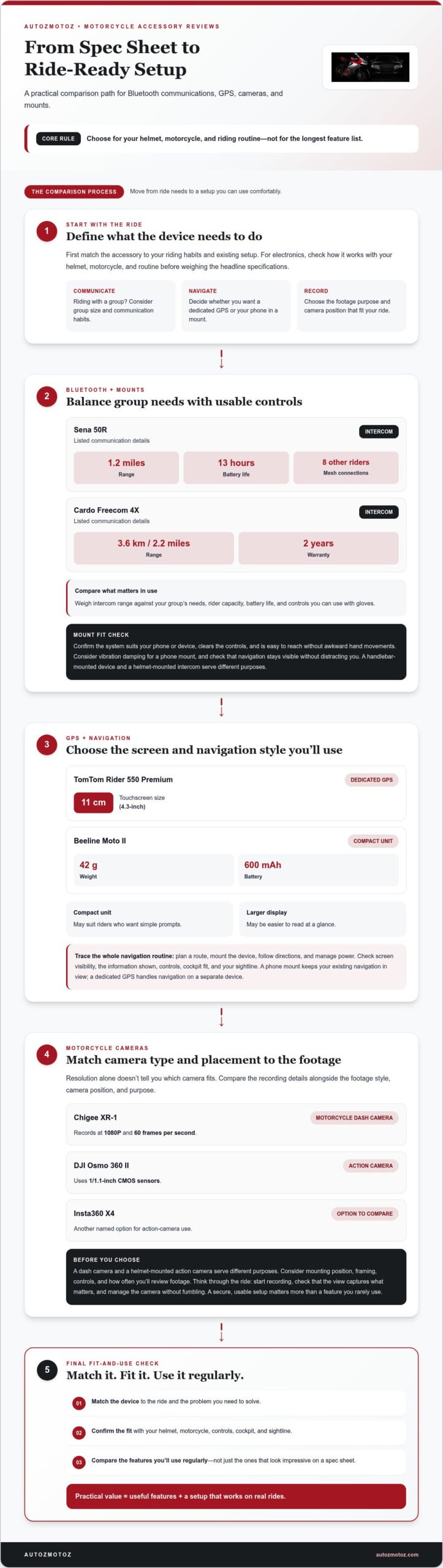
Electronics can make a ride easier, but a long feature list doesn’t guarantee a better fit. Compare communications, navigation, cameras, and mounts by how they work with your helmet, motorcycle, and riding routine.
Bluetooth Communications and Mounts
For group rides, compare intercom range, rider capacity, battery life, and controls you can use with gloves. The Sena 50R lists a 1.2-mile range, 13 hours of battery life, and Mesh connections with 8 other riders. The Cardo Freecom 4X lists a 3.6 km / 2.2-mile range and a two-year warranty. Those figures help narrow choices, but your group’s size and communication habits matter too.
Give mounts the same scrutiny as headsets. Check that the mounting system suits your phone or device, clears the controls, and is easy to reach without awkward hand movements. A handlebar-mounted device and a helmet-mounted intercom, for example, serve different purposes. Consider vibration damping for a phone mount, then check whether the setup keeps navigation visible without distracting you.
GPS and Electronics
A dedicated GPS and a phone-based setup solve different problems. The TomTom Rider 550 Premium has an 11 cm (4.3-inch) touchscreen, while the Beeline Moto II weighs 42 g and has a 600 mAh battery. Compare screen visibility, the information shown, and whether the controls make sense while riding. A compact unit may suit riders who want simple prompts; a larger display may be easier to read at a glance.
Before choosing, trace how you’ll use the device: plan a route, mount it, follow directions, and manage power. Check whether its size and position work with your cockpit and sightline. A phone mount keeps your existing navigation in view, while a dedicated GPS handles navigation on a separate device. The better choice depends on the setup you’ll actually use.
Motorcycle Action Cameras
Don’t judge an action camera by resolution alone. The Chigee XR-1 motorcycle dash camera records at 1080P and 60 frames per second, while the DJI Osmo 360 II uses 1/1.1-inch CMOS sensors. These specifications describe different aspects of recording, so compare the footage style and camera placement you need. A dash camera and a helmet-mounted action camera also serve different purposes.
For a motorcycle action camera, consider mounting position, framing, controls, and how often you’ll review footage. The Insta360 X4 is another named option to compare for action-camera use. Think through the whole ride: start recording, check that the view captures what matters, and manage the camera without fumbling. A secure, usable setup counts for more than a feature you rarely use.
Use a short checklist before deciding: match the device to your ride, confirm it fits, then compare the features you’ll use regularly. For intercoms, weigh range against your group’s needs; for GPS, assess screen size and navigation style; for cameras, prioritize placement and the purpose of the footage. That’s the practical value of motorcycle accessory reviews: separating useful specs from impressive-looking extras.
Luggage and backpacks
The right luggage carries your gear without making every ride a packing compromise. Start with the trip: a tank bag suits items you want close at hand, while panniers or a tail bag can carry bulkier loads. A backpack keeps belongings with you off the bike, but its comfort and fit matter throughout the ride.
Match the bag to the trip
For a commute, compare a backpack with a compact tail bag. A backpack is easy to carry after you park, while a tail bag keeps weight off your shoulders. For touring, panniers can separate clothing from tools, and a tank bag can keep maps or small essentials accessible. Choose based on what you actually carry, not the largest capacity available.
Make a sample packing list before comparing options. A laptop, rain layer, lock, and spare gloves need different amounts of space and different access. Check the bag’s shape against those items, then consider whether its opening lets you retrieve them without unpacking everything. A wide opening may suit clothing, while smaller compartments can keep keys or documents from disappearing under larger gear.
Check fit, fastening, and access
Fit depends on both the motorcycle and the bag. A tank bag must suit the tank’s shape and leave the controls unobstructed; a tail bag needs a stable mounting area. For panniers, inspect how the supports attach and where the cases sit beside the bike. Compare the installation steps and make sure straps or fasteners won’t interfere with moving parts.
Next, assess access while parked. Try the zippers, buckles, and closures with gloves if you expect to use them on the road. A roll-top backpack, for example, closes differently from a zippered tail bag, and each design affects how quickly you can reach your gear. Check the interior dividers too. They’re useful when items need separate spaces, but extra pockets add little if your packing list is simple.
- Stability: Check how the loaded bag attaches and whether it shifts during normal handling.
- Weather protection: Compare the closure design and any included cover for the conditions you ride in.
- Daily use: Consider whether the bag is easy to remove, carry, and store after parking.
These checks reveal practical trade-offs that a capacity label alone can’t show. A large backpack may carry more, but its straps and shape affect comfort; a fitted luggage system keeps the load on the bike, but may take longer to remove. Compare the whole routine, from packing at home to unloading at your destination.
Before choosing, picture one real trip. Pack what you’d take for a commute or overnight ride, place it in the candidate bag, and check access and balance while parked. This simple step can reveal awkward shapes, hard-to-reach pockets, or excess bulk before the bag becomes part of your regular setup.
Mirrors, grips, handlebars, and other parts
A small part can change how your motorcycle feels every day. Compare mirrors, grips, handlebars, and controls by fit, position, and purpose. Start with your current setup: note what feels awkward, then look for a part that addresses that specific issue instead of chasing a cosmetic upgrade.
Mirrors: prioritize a useful view
Mirror shape and mounting position affect what you can see from the riding position. Compare the mirror’s stem length, adjustment range, and mounting point with your motorcycle’s existing hardware. A mirror that looks tidy in a product photo may sit too close to a handguard or show more of your shoulder than the road behind. Check that you can adjust it without fighting the joint.
Think about how you use the bike, too. If you often carry luggage, compare the view with the load fitted, since bags can change what appears behind you. A bar-end mirror also sits differently from a standard stem design. Match the style to your cockpit and preferred view rather than assuming one layout suits every bike.
Grips and handlebars: check compatibility first
Grip choice is about shape, texture, and control feel, not appearance alone. Compare the grip surface with the gloves you usually wear, then consider whether its diameter feels natural in your hands. Heated grips add another compatibility check: the Oxford HotGrips Pro – Sports fit 7/8-inch (22 mm) handlebars. That dimension makes handlebar sizing a practical first filter.
Handlebars influence reach and wrist position. Compare the bend and width with your current bars, and consider how a change affects your posture and access to switches. Before choosing replacement bars, inspect the space available for controls, cables, and brake lines. A different shape can require adjustments elsewhere, so assess the whole cockpit rather than treating the bar as an isolated part.
Other parts: follow the fit through
Levers, bar ends, and control mounts also need a careful fit check. Compare attachment points and clearance from nearby components. For example, a replacement lever should move freely through its range without contacting a handguard. For a bar-end weight, check that its mounting arrangement suits the handlebar end. Compatibility matters; a polished finish won’t fix a mismatch.
- Mirrors: Compare mounting position and view from your normal riding posture.
- Grips: Match the handlebar size, surface, and feel with your gloves.
- Controls: Check clearance and movement alongside nearby parts.
Use that checklist before comparing finishes or extra features. A mirror should give you a usable view, grips should suit your hands, and handlebars should work with the controls already fitted. The Oxford HotGrips Pro – Sports sizing is one example of why checking the measurement comes before choosing by appearance.
Motorcycle accessory categories
Each accessory category calls for different checks, so one review checklist won’t cover every purchase. A cleaner, a luggage system, and a replacement control solve different problems. Start by defining the job, then compare the factors that determine whether the item suits your motorcycle and riding routine.
What safety standards and laws apply to motorcycle accessories in the United States? Requirements depend on the accessory and the state where you ride, so identify both before judging a product. A review can describe fit or function, but it isn’t a substitute for understanding the rules that apply to that item and location.
How can you check whether motorcycle accessories fit your make and model? Use your motorcycle’s exact year, make, and model to compare the product’s compatibility details, then check mounting points, dimensions, and clearance against your setup. For example, a grip’s handlebar diameter matters, while luggage needs suitable attachment points and space around the bike.
What common problems and risks do motorcycle accessory reviews report? Look for recurring complaints about poor fit, unclear instructions, difficult installation, loose mounting, or performance that falls short of the intended use. A single review may describe one rider’s setup; repeated reports of the same issue deserve closer attention.
Think in categories before comparing specific products. Maintenance products need to match the cleaning task and the surface; a motorcycle cleaner roundup reviewed 69 products, ranging from dish soap to S100 and Muc-Off. That spread shows why “cleaner” is too broad a label. Compare what each product is intended to clean, and how it fits your routine.
- Protection: Compare coverage, fit, comfort, and how gear works with the rest of your riding kit.
- Storage: Match luggage capacity and attachment style to your usual load and motorcycle.
- Controls and parts: Check dimensions, mounting points, and clearance with nearby components.
- Maintenance: Match the product to the task and the materials you need to clean.
Reviews are more useful when they explain the rider’s motorcycle, use case, and specific issue. A complaint about shifting luggage has more context when the reviewer describes the mounting arrangement and load. Likewise, a cleaner review should explain what the product was used for rather than simply calling it effective.
For a practical comparison, write down the task, fit requirements, and likely trade-offs before narrowing your choices. Check product-specific details against your motorcycle, then look for repeated, concrete examples in reviews. This helps distinguish a genuine mismatch from a difference in preference, whether you’re choosing storage, cleaning products, protective gear, or replacement parts.
Which motorcycle helmets have the best safety ratings and customer reviews?
No single helmet earns the “best” label for every rider. Compare safety information for the exact model, then weigh fit and useful owner feedback. Customer reviews can reveal comfort or usability issues, but a positive rating alone doesn’t establish a helmet’s safety performance.
Start with the helmet’s safety label and the rating information for its specific model. Make sure the model name and version match, since similar names can refer to different products. Then assess fit: the helmet should sit securely, feel even around your head, and stay comfortable as you move naturally. A loose or painful fit can undermine an otherwise promising shortlist.
Customer reviews are most useful when they describe a real wearing experience. The HJC i31 Helmet has a customer review dated 01/25/25, and the Icon Airform Counterstrike MIPS Helmet has a customer review dated 01/23/25. Those dates identify individual reviews, not safety ratings. Read comments for specific details about fit, ventilation, visor use, noise, and daily comfort.
Separate safety evidence from rider opinion
Use a two-part comparison. First, compare the safety information for each exact helmet model. Then read rider feedback for day-to-day strengths and drawbacks. A review saying a helmet feels comfortable can help you assess wearability, but it doesn’t replace information about its safety rating. Likewise, a safety label won’t tell you whether the shape suits your head.
- Model match: Confirm that the review and safety information name the exact helmet version.
- Fit details: Look for comments describing pressure points, movement, and comfort during longer rides.
- Practical use: Compare observations about the visor, ventilation, and controls.
- Review quality: Give more weight to specific examples than broad praise or complaints.
Don’t turn a star average into a ranking without context. A handful of comments about fit may reflect different head shapes, while repeated, detailed notes about the same feature can reveal a pattern. Compare review dates, too: newer comments may reflect current ownership, while older ones can still offer useful experience with that model.
Build a shortlist by checking the safety information, trying the fit, and comparing concrete review details. The HJC i31 and Icon Airform Counterstrike MIPS are examples with dated customer reviews, not automatic winners. To keep comparing gear with the same practical lens, explore motorcycle accessory comparisons.
AutozMotoz: Reseñas y comparativas de accesorios y productos automotrices
AutozMotoz publishes reviews and comparisons of motorcycle accessories and automotive products to help you narrow your options before buying. Use its reviews to compare categories, weigh product features, and understand which trade-offs matter for your riding. The goal is practical: get a clearer picture of what a product does and how it may suit your needs, without treating a long feature list as proof of value.
Use the comparisons alongside your own checklist: identify the job, check compatibility with your motorcycle, and focus on details that affect everyday use. This approach helps you compare communications, luggage, parts, protective gear, and other products with greater confidence.
Explore AutozMotoz’s accessory reviews and comparisons at autozmotoz.com.
Make your next accessory choice with purpose
The best next step is to define what you want your motorcycle to do better. Choose one priority, such as easier navigation, more usable storage, or a cockpit that feels right, then compare options against that goal. Motorcycle accessory reviews can help you build a shortlist, but your riding routine and bike setup should guide the final decision.
Before buying, write down the feature you need, the fit details that matter, and the trade-off you’re willing to accept. That keeps a tempting extra from overshadowing the reason you started shopping. AutozMotoz publishes reviews and comparisons of accessories and automotive products to help you weigh options practically.
Explore AutozMotoz’s accessory reviews and comparisons, then choose the upgrade that makes sense for your next ride. A focused decision beats a crowded wish list, and you’re ready to make yours.
Frequently Asked Questions
What are the best motorcycle phone mounts, and how do they compare?
The best mount is one that securely suits your phone and cockpit. The Quad Lock Motorcycle Vibration Dampener and Wireless Charger combines those functions in its product name, making it an option for riders who want both. Compare it with simpler mounts by considering phone-case compatibility, charging needs, and how easily you can remove the device after parking. Let your daily route and device setup guide the choice.
Which motorcycle luggage systems are best for commuting and touring?
For commuting, prioritize luggage that’s easy to carry indoors and keeps work items organized. For touring, choose a setup that separates frequently used essentials from clothing and other packed gear. A rider commuting with a tablet may prefer a bag that transfers easily off the bike; an overnight traveler may value separate storage areas. Try your regular packing routine before choosing, especially if you’ll need quick access during fuel or rest stops.
What are the best motorcycle cameras, GPS units, and communication systems?
The best device depends on the task: an Insta360 X4 suits action-camera comparisons, while the Chigee XR-1 is a dash-camera option. For navigation, compare the TomTom Rider 550 Premium with the compact Beeline Moto II. For rider communication, consider the Sena 50R or Cardo Freecom 4X. Pick by intended use first: documenting a ride, following routes, or talking with riding companions calls for different equipment.
Which motorcycle jackets and protective gear offer the best value?
The best value in motorcycle gear depends on finding a balance between abrasion-resistant materials, certified impact armor, and seasonal comfort. Trusted brands offer textile and leather jackets that provide high-grade protection without requiring you to pay top-tier luxury prices. When reading motorcycle accessory reviews, look for gear that features removable thermal liners, proper ventilation, and CE-rated armor to ensure you get lasting protection and everyday usability for your investment.
How much do popular motorcycle accessories cost in the United States?
Prices for motorcycle accessories vary widely depending on the category, brand reputation, and build quality. Basic items like phone mounts generally range from $40 to $100, while premium camera systems and dedicated GPS units can cost anywhere from $300 to over $600. Luggage systems and protective jackets typically fall into a mid-to-high tier range between $150 and $500. Establishing a realistic budget before browsing allows you to focus on the features that matter most to your riding style.