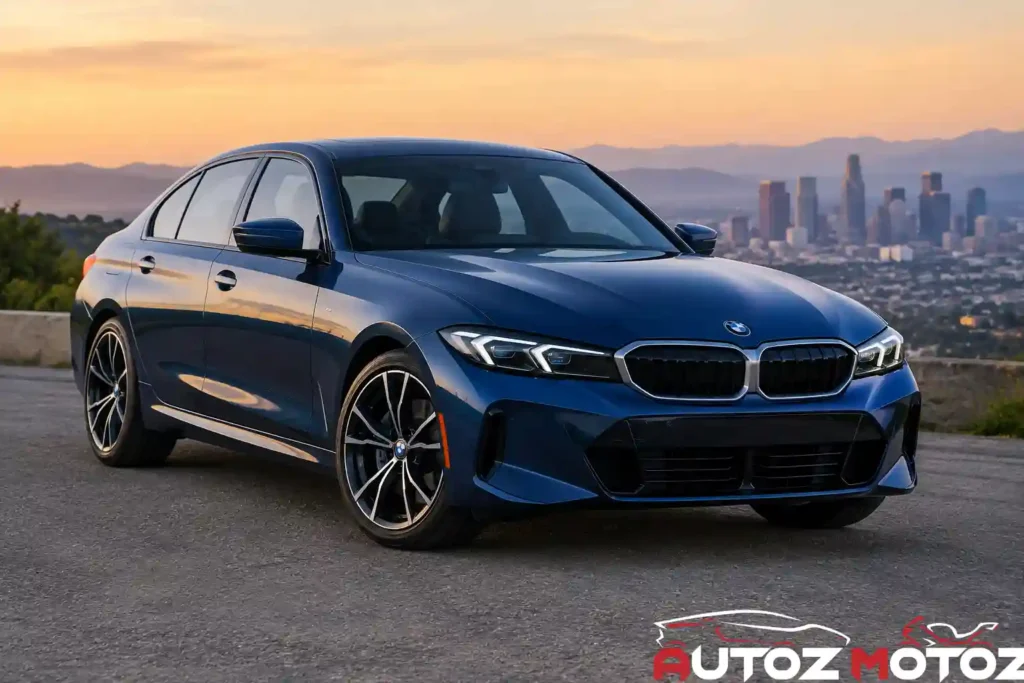
BMW just pulled the sheet off the new 3 Series, and it’s not a small update. This is the eighth generation of a car that’s been the benchmark for small luxury sedans since the 1970s, and BMW didn’t play it safe this time around. New look, new engines, a new electric sibling, and a cabin that barely resembles the old one.
If you’ve been driving a 3 Series for years, or you’re just now cross-shopping one, here’s the plain-English rundown of what’s actually different, what it costs, and whether it’s worth waiting for.
What Is the 2027 BMW 3 Series, and Why Is Everyone Talking About It
The short version: BMW hasn’t touched the 3 Series this heavily since the switch from the E46 to the E90 body style, and car folks have been waiting a long time for a change like this. Internally, BMW calls the new sedan the G50, with a wagon version called the G51 landing a bit later. Alongside it, BMW is launching a fully electric sedan called the i3, which shares design cues with the gas car but sits on a completely different platform.
That’s the detail that trips people up. The gas 3 Series still rides on an updated version of BMW’s familiar CLAR platform, the same underlying architecture the outgoing car uses. The electric i3, on the other hand, is built on BMW’s brand new Neue Klasse platform, which was designed from scratch for electric cars. They look like siblings because BMW wants them to, not because they share bones underneath.
One more thing worth knowing upfront: for the first time ever, there’s no manual transmission offered anywhere in the 3 Series lineup. If you were hoping to row your own gears in a new 3er, that chapter’s closed.
The Big Redesign: What’s New With the Neue Klasse Look
BMW’s calling this the Neue Klasse design language, and it’s a real departure from the last few generations. The kidney grilles are noticeably slimmer, the overall shape is cleaner and less fussy, and the car borrows some of its rear-end styling from the current 7 Series flagship. You’ll still spot the Hofmeister kink, that little bend at the base of the rear window that’s been a 3 Series signature since the 1960s, so it’s not a total reinvention. It’s more like BMW trimmed the fat and modernized the silhouette without losing what made the car recognizable.
One quirky new feature that’s already causing debate: the door handles are flush with the body and pop out automatically when you approach. It looks sleek, but plenty of early reviewers have pointed out that it adds a layer of complexity to something that used to just work, no motors involved. Time will tell how that holds up after a few cold winters.
BMW is also offering 11 exterior colors at launch, including a shade called Le Castellet Blue that’s exclusive to the 3 Series and the i3. If you want a color nobody else on your street has, that’s probably your pick.
Gas or Electric: Meet the 2027 3 Series and the New BMW i3
This might be the single biggest shift for the nameplate. For the first time, BMW is selling two versions of the 3 Series side by side, one gas, one fully electric, and they’re not just trim levels of the same car.
The gas version keeps the 3 Series name and the traditional turbocharged engine lineup buyers already know. The electric version is badged as the i3, and yes, that name previously belonged to BMW’s quirky little electric city car from over a decade ago. This is a completely different vehicle wearing a recycled name, so don’t go looking for carbon-fiber tubs or scissor doors this time.
The i3 comes as a dual-motor all-wheel-drive setup called the i3 50 xDrive, with roughly 463 horsepower and an EPA-estimated range BMW pegs between 446 and 468 miles, depending on configuration. That range figure, if it holds up in real-world testing, would put it ahead of most electric sedans currently on sale in the U.S. A more powerful version, expected to wear an M60 badge, is planned to follow later in 2027 for buyers who want even more punch.
Both cars are built in Germany, but not in the same factory. The gas 3 Series comes out of BMW’s long-running Dingolfing plant, while the i3 is built in Munich. It’s a small detail, but it underlines just how differently BMW is treating these two cars under the hood, even with nearly identical sheet metal on top.
Engine Options and Performance Numbers You Should Know
For gas buyers, the lineup is straightforward: two engines, three trims to start.
The base 330 and 330 xDrive keep the familiar turbocharged 2.0-liter four-cylinder, rated at 255 horsepower and 295 pound-feet of torque, paired with an eight-speed automatic. BMW quotes a 0-60 mph time of 5.9 seconds for that combination, with a limited top speed of 155 mph.
Step up to the M350 xDrive and you get a turbocharged 3.0-liter inline-six making 437 horsepower and 428 pound-feet of torque, again through an eight-speed automatic. BMW says that combination will hit 60 mph in 3.9 seconds, which is quick enough to embarrass plenty of cars that cost twice as much. Top speed is electronically capped at 155 mph as well.
Weight has crept up across the board, a trend that’s honestly true of almost every new car these days. The rear-drive 330 comes in around 3,827 pounds, the 330 xDrive adds all-wheel-drive hardware and lands closer to 3,909 pounds, and the six-cylinder M350 xDrive tips the scales at roughly 4,169 pounds. None of these numbers are shocking for the segment, but if you’ve been driving an older, lighter 3 Series, you’ll notice the difference in how substantial the new one feels.
The M350 xDrive: BMW’s New Answer to the M340i
If you’ve owned or shopped a 3 Series in the last few years, you know the M340i as the performance flagship below the full-on M3. That car is retiring, and the M350 xDrive is stepping into its spot, with a genuinely meaningful bump in output.
BMW gave the M350’s chassis some real attention beyond just the engine swap. Steering has a quicker ratio and is supposed to feel more connected than before. The optional setup includes wider 275-millimeter rear tires for extra grip, and the car can send 100 percent of engine torque to the rear axle even with all-wheel-drive hardware onboard, which is what makes a proper drift mode possible down the line. BMW has confirmed a factory drift mode is coming, though it wasn’t part of the car at launch.
It’s worth being clear about one thing: the M350 is not a replacement for the M3. BMW has already confirmed a new, more hardcore M3 is still coming later, separate from this car. Think of the M350 as the seriously quick middle child, not the top dog.
Inside the Cabin: BMW’s New Screen-Heavy Interior
Open the door and the interior will look almost nothing like the outgoing 3 Series. BMW has carried over the dashboard layout from its i3 and X3 lineup almost wholesale, which means a large 17.9-inch, oddly-shaped central touchscreen (BMW describes it as a “free-cut” hexagonal display) angled slightly toward the driver, running a new operating system BMW calls Operating System X, which is reportedly built on the Android Open Source Project.
Above that sits something BMW calls the Panoramic Vision display, a thin strip of screen that runs the full width of the windshield’s base, showing speed, navigation prompts, and other essentials directly in your line of sight. It’s a genuinely different way of laying out a dashboard compared to the traditional gauge cluster and center screen setup buyers are used to.
The steering wheel is getting attention too, and not all of it positive. BMW has carried over its unconventional wheel design with spokes positioned at the top and bottom rather than the usual three-spoke layout. Some early reviewers who’ve sat in prototypes say it looks odd in photos but actually feels fine in hand. Buyers who care about that detail should plan on test-driving before they judge it from pictures.
Rear seat space is still a bit of a question mark. BMW hasn’t published official legroom numbers yet, and the early impression from people who’ve sat in prototypes is that back seat room looks tight, particularly the middle position, which has honestly never been the 3 Series’ strong suit anyway.
How Much Does the 2027 BMW 3 Series Cost
Pricing lands close to where you’d expect for a redesign, with a modest bump over the outgoing model.
The base 330 starts at $49,900 including destination. Add all-wheel-drive with the 330 xDrive and you’re looking at $51,900. The performance-oriented M350 xDrive tops the gas lineup at $65,900.
On the electric side, the i3 50 xDrive starts somewhere in the $61,500 to $62,850 range depending on configuration, which actually undercuts BMW’s existing i4 sedan slightly, an interesting move considering the i3 is the newer, more advanced car.
Compared to the outgoing 2026 3 Series, which started closer to $49,350, the price increase across most trims is fairly small, just a few hundred dollars on the base models and a bit more on the six-cylinder cars. That’s a relatively gentle price hike for a full redesign with this much new technology packed in.
Driver Assistance Tech: What’s Changed for Safety
BMW has reworked its driver-assistance suite for this generation, and the stated goal is to make it feel less naggy day-to-day. The system, bundled under BMW’s Driving Assistant Plus name, combines adaptive cruise control with stop-and-go functionality and lane centering assistance, working together rather than as separate features you have to toggle individually.
There’s also a new feature BMW is calling Symbiotic Drive, which is meant to blend the car’s inputs with the driver’s more smoothly, though BMW hasn’t released full technical details on exactly how it works yet. Buyers who want additional driver and parking assistance features beyond what comes standard will reportedly be able to add them through BMW’s ConnectedDrive Store, essentially an app-store approach to unlocking extra driver aids after purchase.
The general philosophy BMW is pushing here is that these systems should intervene only when genuinely necessary, rather than constantly beeping or nudging the wheel. Whether that holds up in daily use is something we won’t know for certain until independent reviewers spend real time behind the wheel outside of a controlled first-drive event.
When Can You Actually Buy One
Production on the gas-powered 3 Series is set to begin at BMW’s Dingolfing plant before the end of 2026, with the electric i3 already in production in Munich as of earlier this year due to strong early demand. Both versions are expected to reach U.S. showrooms in early 2027.
If you’re the type who likes to place an early reservation, BMW opened reservations for the i3 on September 29, right around the official reveal. The gas 3 Series doesn’t appear to have a separate reservation program at this point, so your best bet there is talking to a dealer once allocations start showing up.
Given how popular the outgoing 3 Series has been for decades, don’t be surprised if desirable configurations, especially the M350 xDrive, see limited early availability and minimal negotiating room right after launch.
Is the 2027 BMW 3 Series Worth the Wait
Here’s the honest take. If your current 3 Series or another compact luxury sedan is aging out and you can wait a few months, this redesign brings enough real change to justify holding off, rather than buying an outgoing model at a discount. The performance jump on the M350, the genuinely competitive electric range on the i3, and a fairly gentle price increase all make a decent case for patience.
That said, this is still a first-model-year redesign, and first-year cars from any manufacturer tend to carry a few rough edges that get ironed out over time, whether that’s software quirks in the new infotainment system or small mechanical issues that show up once thousands of these are actually on the road. If you’re someone who prefers to let a new generation mature for a year before buying, that instinct isn’t unreasonable here either.
Either way, this is the most significant update the 3 Series has seen in a long time, and it’s worth cross-shopping seriously against its usual rivals before you sign anything, gas or electric.
related : AutozMotoz

Technical precision in motorcycles, cars, and automotive gear is established by Nahid Hassan through rigorous evaluation. Performance-driven reviews and high-value affiliate insights are consistently curated at AutoZMotoZ to ensure reader trust. Absolute integrity is maintained in every analysis, with a focus on original and human-verified data.