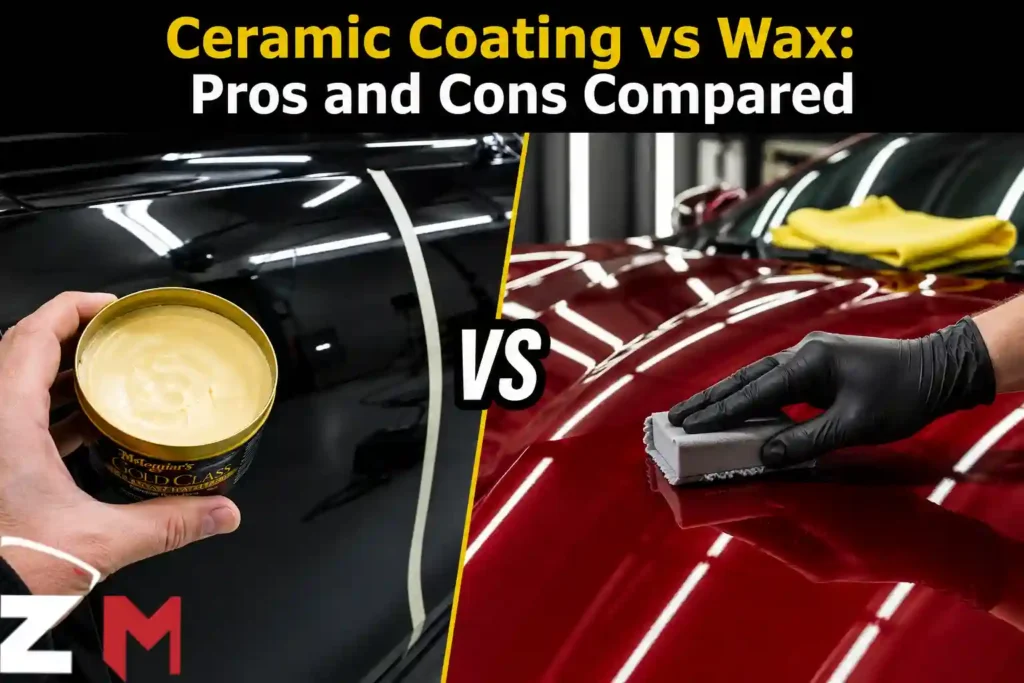
Ceramic coating provides longer-lasting paint protection, while wax offers a more affordable and simple maintenance option. A ceramic coating can last for years and provides better resistance against water, UV exposure, and contaminants, while car wax typically lasts weeks to a few months and requires more frequent reapplication.
For most owners looking for long-term protection and lower maintenance, ceramic coating is the better choice. Wax is still a practical option for drivers who want an affordable way to improve shine and protect their paint.
In this guide, We will take a closer look at ceramic coating vs wax and help you understand which option fits your car, your budget, and the way you actually use your vehicle.
Ceramic Coating vs Wax: A Quick Comparison
The biggest difference between ceramic coating vs wax comes down to how long the protection lasts and how strongly it bonds with your vehicle’s paint. Ceramic coating is designed as a long-term paint protection solution, while car wax is a temporary protective layer focused mainly on shine and surface enhancement. For more practical vehicle care tips, explore our latest AutozMotoz guides.
| Category | Ceramic Coating | Car Wax |
|---|---|---|
| Protection lifespan | Typically lasts 2–5+ years depending on product quality, preparation, and maintenance | Usually lasts a few weeks to several months |
| Paint bonding | Chemically bonds with the clear coat to create a durable protective layer | Sits on top of the paint surface as a temporary layer |
| UV protection | Provides strong resistance against UV exposure and oxidation | Offers some UV protection but fades faster |
| Chemical resistance | Better protection against road contaminants, bird droppings, acidic substances, and harsh cleaners | Limited resistance and requires more frequent reapplication |
| Water repellency | Creates strong hydrophobic properties that help water bead and roll off | Provides water beading but reduces as the wax wears away |
| Gloss | Produces a deep, reflective finish with a glass-like appearance | Creates a warm, traditional shine often preferred by detailing enthusiasts |
| Maintenance | Requires less frequent application after proper installation | Needs regular reapplication to maintain protection and shine |
| Cost | Higher upfront cost due to product quality and professional installation | Lower initial cost and accessible for DIY users |
| Application | Requires paint preparation, polishing, and careful application | Easier to apply at home with minimal preparation |
For drivers looking for long-term protection, easier maintenance, and better resistance against environmental damage, ceramic coating has the advantage. For those who want an affordable way to improve shine and protect their paint occasionally, car wax remains a practical choice.
Understanding Car Paint Protection Before Comparing Wax and Ceramic Coating
Before choosing between car wax vs ceramic coating, it helps to understand what vehicle paint is actually protecting. A car’s exterior is constantly exposed to elements that can slowly degrade its appearance, including sunlight, road debris, moisture, chemicals, and environmental contaminants.
Modern paint protection products are designed to reduce this damage by adding an extra barrier between the vehicle’s clear coat and the outside environment. However, not all protection methods work the same way. Traditional wax and modern ceramic coatings use completely different approaches to protect automotive paint.
Why Vehicle Paint Needs Protection
A vehicle’s paint system is more than just a color layer. Most modern cars use a multi-layer finish that includes a clear coat designed to provide gloss and protect the underlying paint from damage.
Over time, exposure to harsh conditions can affect this clear coat. Common threats include:
- UV rays: Prolonged sunlight can break down paint protection and contribute to fading or oxidation.
- Road contaminants: Dirt, brake dust, salt, and industrial fallout can stick to the surface and cause staining or corrosion over time.
- Chemical exposure: Bird droppings, bug residue, and acidic substances can damage unprotected paint if left untreated.
- Environmental conditions: Rain, moisture, and temperature changes can accelerate surface wear.
Paint protection does not make a vehicle completely damage-proof, but it helps slow down deterioration and makes regular maintenance easier.
How Traditional Wax Became Popular
Wax has been a trusted paint protection method for decades because it delivers two things drivers immediately notice: shine and a smoother-looking finish. Early automotive waxes were often made from natural ingredients such as carnauba wax, which became popular among enthusiasts because of its warm gloss and rich appearance. Wax created a thin protective layer over the paint, helping reduce direct exposure to contaminants while improving the vehicle’s finish.
Through the 1950s, 60s, and 70s, waxing your car was a Saturday ritual across America. It was part of car culture — not just maintenance. Paste wax, liquid wax, and eventually synthetic polymer waxes all followed, each one slightly easier to apply and slightly longer-lasting than the last.
Its affordability and simple application made wax a common choice for everyday car owners and professional detailers. However, wax protection has always been temporary because the protective layer gradually wears away from washing, weather exposure, and daily driving.
The Evolution From Wax to Ceramic Technology
As automotive technology advanced, drivers began looking for longer-lasting protection with less frequent maintenance. This demand led to the development of ceramic coating technology. In the 1980s and 90s, paint sealants emerged as a synthetic alternative to natural wax.
Unlike wax, which mainly sits on the surface, ceramic coatings use advanced chemical compounds designed to bond with a vehicle’s clear coat. These coatings create a stronger protective layer with improved durability, chemical resistance, and water-repelling properties. In the early 2000s, researchers began developing silicon dioxide (SiO2) based coatings that could bond directly to automotive clear coat at a molecular level.
The shift from wax to ceramic coating represents a change in how owners approach vehicle care. Wax remains popular for its simplicity and traditional shine, while ceramic coatings focus more on long-term protection and easier maintenance. By the 2010s, ceramic coating had moved from professional detailing shops into mainstream automotive care.
Understanding this difference provides the foundation for comparing ceramic coating vs wax and deciding which option better matches your vehicle, budget, and maintenance preferences.
What Is Car Wax?
The Car wax is a traditional automotive protection product designed to enhance a vehicle’s appearance while adding a temporary protective barrier over the paint. For decades, wax has been one of the most popular choices among car owners because it is affordable, easy to apply, and capable of creating a deep glossy finish.
Most automotive waxes work by covering the paint surface with a thin protective layer that helps reduce direct exposure to contaminants, moisture, and environmental elements. While modern products have introduced newer protection technologies, car wax remains widely used by detailing enthusiasts who value its shine, simplicity, and hands-on application process.
How Car Wax Works
A Car wax works by creating a sacrificial layer between the vehicle’s clear coat and the outside environment. Instead of allowing contaminants to directly interact with the paint surface, the wax layer takes much of the exposure and gradually wears away over time. After application, wax fills small surface imperfections and creates a smoother finish that improves light reflection. This is why a freshly waxed vehicle often appears deeper, cleaner, and more glossy.
However, wax does not chemically bond with the paint like a ceramic coating. The protection mainly depends on the thickness of the wax layer and how well it withstands washing, weather conditions, and daily driving.
- Fills in microscopic surface imperfections
- Creates a hydrophobic barrier
- Shields the clear coat from UV rays, light contaminants, and oxidation
Common benefits of how wax works include: Adds temporary protection against contaminants, Improves paint smoothness and shine, Helps water bead on the surface, Makes the vehicle easier to clean.
Carnauba Wax vs Synthetic Wax
When discussing carnauba wax vs ceramic coating, it is important to understand that carnauba wax and synthetic wax are different types of traditional paint protection products.
Carnauba wax is derived from the leaves of the Brazilian carnauba palm tree and has long been popular in automotive detailing because of its warm, natural-looking gloss. Many enthusiasts prefer it for show cars or vehicles where appearance and depth of shine are the main priorities.
Synthetic wax, sometimes called a paint sealant, is engineered using polymers and artificial compounds. Compared with natural carnauba wax, synthetic waxes generally provide longer durability and improved resistance to environmental conditions.
| Feature | Carnauba Wax | Synthetic Wax |
|---|---|---|
| Source | Natural wax from carnauba palm leaves | Artificial polymer-based formula |
| Appearance | Warm, deep gloss | Cleaner, sharper shine |
| Durability | Usually shorter-lasting | Generally lasts longer |
| Best for | Show-quality appearance and enthusiasts | Everyday drivers wanting longer protection |
While both types provide surface protection, neither typically matches the long-term durability and chemical resistance offered by a professionally applied ceramic coating.
Advantages of Using Wax
Despite newer technologies, car wax continues to offer several benefits for vehicle owners:
Cost-effective entry point
A quality car wax costs $15-$50. No professional installation required. No prep work beyond a clean surface. For budget-conscious drivers, there’s no cheaper way to add a layer of protection and shine.
Beginner-friendly application
Wax is forgiving. Apply too much buff it off, miss a spot go back over it. There’s no narrow application window, no risk of high spots bonding permanently to your paint. Anyone can learn it in one session.
Immediate results
Apply in the morning, drive a glossy car by afternoon. Wax delivers visible results fast – no curing time, no waiting period before the car gets wet.
Easy to remove and reapply
Because wax doesn’t chemically bond to paint, switching products or correcting mistakes is simple. No professional removal needed.
Enhances existing paint correction
After a polish or clay bar treatment, wax seals and enhances the corrected surface beautifully – making it a natural final step in any detail job.
Affordable protection:
Wax is one of the most budget-friendly ways to protect automotive paint without a large upfront investment.
Excellent shine enhancement:
Wax is known for producing a rich, glossy appearance that many car enthusiasts enjoy.
Good option for occasional detailing:
Drivers who enjoy maintaining their vehicle regularly may prefer waxing because the process itself becomes part of their car care routine.
Limitations of Wax
Although car wax provides valuable protection, it has limitations compared with modern ceramic coatings.
Shorter lifespan:
Wax gradually wears away from washing, weather exposure, and everyday driving, requiring frequent reapplication.
Limited chemical resistance:
Wax can reduce exposure to contaminants but offers less resistance against harsh chemicals, acidic substances, and environmental damage.
Less durable protection:
Because wax does not form a strong chemical bond with the clear coat, its protective ability decreases faster than ceramic-based solutions.
Requires regular maintenance:
To maintain the shine and protection, owners need to repeat the waxing process several times throughout the year.
For drivers who enjoy frequent detailing and want an affordable way to enhance their vehicle’s appearance, wax remains a practical choice. However, those seeking longer-lasting protection with reduced maintenance often consider ceramic coating as the next step in paint protection technology.
What Is Ceramic Coating?
Ceramic coating is an advanced automotive paint protection product designed to create a durable protective layer over a vehicle’s clear coat. Unlike traditional wax, which sits on top of the paint as a temporary barrier, a ceramic coat uses chemical bonding technology to attach more closely to the vehicle’s surface.
Most modern ceramic coatings are made with silicon-based compounds that improve durability, water repellency, and resistance against environmental contaminants. When properly applied, a ceramic coating can help preserve a vehicle’s appearance while reducing the amount of maintenance required.
Although ceramic coating provides strong protection, it is important to understand that it does not make paint completely immune to scratches, rock chips, or physical damage. Instead, it works as a protective enhancement that helps defend the clear coat from many common environmental challenges.
How Ceramic Coating Protects Paint
Ceramic coating protects automotive paint by forming a hardened protective layer over the vehicle’s clear coat. This layer acts as an additional shield between the paint and outside elements such as UV rays, dirt, chemicals, and moisture.
The protection process begins with proper surface preparation. Before applying a ceramic coat, detailers typically remove contaminants, correct paint imperfections, and ensure the surface is clean. This allows the coating to bond effectively with the paint.
Once cured, ceramic coating provides several protective benefits:
- UV resistance: Helps reduce paint degradation caused by prolonged sun exposure.
- Chemical resistance: Provides better defense against contaminants such as bird droppings, bug residue, and road chemicals.
- Hydrophobic properties: Causes water and liquids to bead and roll away more easily.
- Easier maintenance: Reduces how strongly dirt and contaminants stick to the surface.
The coating does not replace proper washing and maintenance, but it can make keeping a vehicle clean and protected significantly easier.
Understanding SiO2-Based Protection
The science behind ceramic coating is what separates it from every other paint protection product on the market. Many automotive ceramic coatings use silicon dioxide (SiO2) as a primary ingredient. SiO2 is a compound commonly associated with glass-like structures and is valued in detailing products because of its ability to create a durable, chemically resistant surface layer.
SiO2 — silicon dioxide — is the active ingredient in most professional-grade ceramic coatings. In its natural form, it’s the same compound found in quartz and glass. In liquid coating form, it’s engineered at the nanoscale — particles small enough to penetrate the microscopic texture of automotive clear coat and cure into a continuous, uniform layer.
When SiO2 nanoparticles bond to the clear coat and cure, they form a crystalline matrix — rigid, transparent, and chemically inert. That matrix doesn’t react to most environmental contaminants. Bird droppings can’t etch through it quickly. Road salt can’t break it down. UV rays can’t penetrate it effectively. Some premium formulas add TiO2 (titanium dioxide) to the mix — enhancing UV resistance and self-cleaning properties even further. Others layer in SiC (silicon carbide) for additional scratch hardness.
The concentration of SiO2 matters too. Consumer-grade DIY ceramic coatings typically run 50–70% SiO2 concentration. Professional-grade products often exceed 85–90% — which is a significant part of why professional application lasts years longer than a DIY kit.
Looking for an Affordable Tesla?
Explore the cheapest Tesla models, pricing details, and what to know before buying your first Tesla.
Advantages of Ceramic Coating
Ceramic coating has become popular among vehicle owners who want long-term paint protection with less frequent maintenance.
Long-lasting protection:
Compared with traditional wax, ceramic coatings can provide protection for several years when properly installed and maintained.
Improved resistance against contaminants:
The coating helps reduce the impact of environmental contaminants and makes it easier to remove dirt and buildup.
Strong water repellency:
The hydrophobic surface causes water to bead, helping reduce water spots and making washing easier.
Enhanced appearance:
Ceramic coatings can add depth, gloss, and a clean reflective finish to properly prepared paint.
Reduced maintenance effort:
Because contaminants are less likely to bond strongly with the surface, routine cleaning often becomes easier.
Limitations of Ceramic Coating
Despite its benefits, ceramic coating is not the perfect solution for every vehicle owner.
Higher upfront cost:
Professional ceramic coating installation can be significantly more expensive than applying traditional wax.
Requires proper preparation:
The coating works best when applied to properly cleaned and corrected paint. Existing scratches, swirl marks, or imperfections may need paint correction first.
Application requires skill:
Incorrect installation can lead to uneven curing, high spots, or an inconsistent finish.
Does not prevent all damage:
Ceramic coating can help protect against environmental factors, but it cannot completely prevent deep scratches, rock chips, dents, or accident damage.
For drivers who prioritize long-term protection, easier maintenance, and preserving their vehicle’s finish, ceramic coating can be a valuable investment. However, those looking for a low-cost and simple detailing solution may still find traditional wax suitable for their needs.
Ceramic Coating vs Wax: 10 Major Differences
When comparing ceramic coating vs wax, the biggest differences are not just about shine. The real comparison comes down to durability, protection level, maintenance needs, application process, and overall value. Wax remains a popular choice because it is affordable and easy to apply, while ceramic coating is designed for vehicle owners who want longer-lasting protection and reduced maintenance. Understanding these differences makes it easier to choose the right option for your car.
1. Durability: Which Lasts Longer?
The biggest difference in the ceramic coating vs wax debate is how long each product can protect your vehicle’s paint. Traditional wax typically provides protection for several weeks to a few months, depending on the product quality, weather conditions, washing habits, and how often the vehicle is driven. A ceramic coating, on the other hand, is designed to last significantly longer. Quality ceramic coatings can protect paint for multiple years when properly applied and maintained.
| Protection Type | Typical Lifespan |
|---|---|
| Car wax | Weeks to several months |
| Ceramic coating | Several years depending on product and maintenance |
2. Protection Against UV Rays and Oxidation
Sun exposure is one of the biggest long term threats to automotive paint. Continuous UV exposure can break down the clear coat, reduce gloss, and contribute to oxidation. Recently Autozmotoz posted an article where our team concerned about sun shade for you car windshield.
It provides a temporary protective barrier that helps reduce UV exposure, but the layer gradually fades with time. Wax provides a moderate UV buffer, but because it degrades so quickly – especially in direct sunlight and heat that protection fades fast.
Ceramic coating offers stronger and longer-lasting resistance because it forms a more durable protective layer over the clear coat. This helps reduce the impact of sunlight and environmental exposure over extended periods. Ceramic coating creates a semi permanent UV barrier at the surface level. The SiO2 layer blocks UV penetration consistently across years not weeks. Vehicles in hot, sun-heavy climates like Texas, Arizona, or Florida see some of the biggest return on ceramic coating investment precisely because UV damage is so aggressive there.
3. Water Repellency and Dirt Resistance
Wax can create water beading and improve surface slickness, but the effect decreases as the wax layer wears away. Fresh wax beads water well. It looks impressive right after application. But within weeks, especially after a few washes, that beading weakens.
Ceramic coatings create a stronger water-repelling surface that helps water, dirt, and contaminants slide away more easily. This does not mean the vehicle stays completely clean, but it can make washing and maintenance easier.
The dirt resistance is just as significant. Because the ceramic surface is non-porous and slick at a microscopic level, mud, dust, and road grime don’t adhere the way they do on bare or waxed paint.
4. Scratch and Chemical Resistance
Wax offers essentially zero scratch resistance. It’s a soft, thin film. Anything sharp enough to cause damage goes straight through it. Chemically, wax breaks down rapidly when exposed to bird droppings, tree sap, road salt, bug splatter, and harsh car wash soaps. These contaminants sit on the surface and etch into the clear coat if not removed quickly.
Ceramic coating adds a measurably harder layer to the surface – typically rating 9H on the pencil hardness scale. Light swirl marks from improper washing, minor abrasion from dust and debris, and surface-level contact that would damage bare paint are significantly reduced. Chemically, the SiO2 matrix is inert – it doesn’t react to most environmental contaminants, giving you a much wider window to clean up bird droppings or sap before etching occurs.
5. Gloss, Shine, and Paint Appearance
Car wax, especially high-quality carnauba wax, is known for producing a warm, deep glow that many detailing enthusiasts appreciate. Ceramic coating creates a sharper, glass-like reflection that enhances the clarity and depth of properly prepared paint.
The better choice depends on personal preference:
- Choose wax for a traditional warm shine.
- Choose ceramic coating for a high-gloss, reflective finish with longer-lasting results.
6. Application Process and Difficulty
The difference between waxing vs ceramic coating becomes obvious during application. The Wax application is relatively simple. Most car owners can apply wax at home with basic tools and a few hours of effort. The Ceramic coating requires much more preparation. The paint usually needs thorough cleaning, decontamination, and sometimes paint correction before application. The coating must also be applied carefully to ensure proper bonding and curing.
| Process | Wax | Ceramic Coating |
|---|---|---|
| Preparation | Basic cleaning | Detailed preparation required |
| Skill level | Beginner-friendly | Requires more experience |
| Application time | Shorter | Longer |
| Professional installation | Optional | Often recommended |
7. Maintenance Requirements
Wax requires consistent attention. Reapplication every 4-8 weeks to maintain any meaningful level of protection. Between applications, harsh car wash soaps, automatic brushes, and prolonged sun exposure all accelerate degradation. You’re also more limited on wash methods – aggressive cleaning strips wax faster.
Ceramic coating flips the maintenance equation. Regular two-bucket hand washes or touchless washes are generally all it needs. The hydrophobic surface releases dirt so effectively that wash frequency itself can decrease. No reapplication schedule. No seasonal retreatment. An annual inspection and occasional ceramic-specific detail spray to refresh the top layer keeps the coating performing at its best.
8. Initial Cost Comparison
The upfront cost difference between wax and ceramic coating is significant. Wax is inexpensive and accessible, making it suitable for drivers who want basic protection without a large investment. Ceramic coating costs more because the process often includes paint preparation, specialized products, and professional installation.
| Option | Initial Cost |
|---|---|
| Car wax | Lower upfront cost |
| Ceramic coating | Higher upfront cost |
9. Long-Term Ownership Cost
Waxing over 5 years:
- Quality wax product: $30 every 6 – 8 weeks = roughly $240 – $300 per year
- Time investment: 2 hours per application × 8 – 10 applications per year = 16 – 20 hours annually
- 5 year total product cost alone: $1,200 – $1,500
- 5 year time investment: 80-100 hours
Ceramic coating over 5 years:
- Professional installation (one time): $800 – $1,200
- Annual maintenance detail spray: $30 – $50/year = $150 – $250 over 5 years
- 5 year total cost: $950 – $1,450
- Time investment: minimal ongoing – a few wash sessions per year
| Factor | Wax | Ceramic Coating |
|---|---|---|
| Initial expense | Lower | Higher |
| Reapplication frequency | Frequent | Less frequent |
| Maintenance time | Higher over years | Lower over years |
10. Value for Different Types of Vehicles
Ceramic coating makes the most sense for:
- New vehicles or recently paint-corrected cars – protect the investment from day one
- Daily drivers kept 3+ years – long-term protection pays off faster than it seems
- Vehicles in harsh climates – UV-heavy, salty, or wet environments accelerate paint damage
- Luxury, unfamiliar, or high-value vehicles – resale value preservation justifies the cost easily
- Drivers who want protection without ongoing maintenance commitment
Wax makes more sense for:
- Older vehicles where the paint condition doesn’t justify a premium coating investment
- Short-term ownership – selling within 12 months makes ceramic coating hard to recoup
- Weekend or show cars driven infrequently – reapplication is manageable when the car rarely faces real-world conditions
- Budget-conscious drivers who enjoy the detailing process as a hobby
- Temporary protection after paint correction while saving for a ceramic coating installation
The best choice depends on the vehicle, ownership habits, and personal priorities: Daily drivers, Luxury and performance cars, Weekend cars and classics, Budget vehicles or short-term ownership. Ultimately, the choice between wax vs ceramic coating depends on whether you prioritize convenience and long-term protection or affordability and traditional detailing.
How Much Does It Cost to Tint a 4-Door Car?
Thinking about upgrading your vehicle protection? Learn how window tint pricing varies by film type, installation, and vehicle size before making a decision.
Ceramic Wax vs Ceramic Coating: What Is the Difference?
Mainly the difference between ceramic wax vs ceramic coating comes down to formulation, durability, and how the product interacts with your vehicle’s paint. Although both products are marketed as paint protection solutions, they are not the same technology.
The term “ceramic” has become common in automotive detailing, and many products now use it in their names. However, a ceramic wax, ceramic spray, and true ceramic coating provide different levels of protection. Understanding these differences helps prevent confusion when choosing the right product for your vehicle.
What Is Ceramic Wax?
Ceramic wax is a hybrid detailing product that combines traditional wax ingredients with ceramic based additives, often including SiO2 (silicon dioxide) or similar protective compounds.
The ceramic ingredient is real — but the concentration is low, typically 3-10% SiO2 compared to 85–95% in a professional-grade ceramic coating. The SiO2 particles in a ceramic wax are also significantly larger and less refined than the nanoparticles used in true ceramic coatings meaning they sit on the surface rather than penetrating and bonding to the clear coat at a molecular level. The goal of ceramic wax is to provide some benefits associated with ceramic coatings, such as improved water repellency and enhanced gloss, while maintaining the easy application process of traditional wax.
Compared with regular wax, ceramic wax can offer:
- Improved hydrophobic properties
- Longer lasting shine
- Better surface slickness
- Easier application than a true ceramic coating
What Are Ceramic Spray Products?
Ceramic spray products, often called ceramic sprays or spray coatings, are designed for quick application and convenience. These sprays typically contain a higher SiO2 concentration than ceramic wax, and some do form a light bond with the clear coat surface. They’re faster and easier to apply than both wax and true ceramic coatings – spray on, wipe off, done in minutes.
The result is genuinely better than traditional wax in several ways:
- Stronger hydrophobic beading out of the gate
- Better gloss and surface slickness
- Slightly improved chemical resistance
- Easier application with no buffing required
But the protection lifespan still maxes out at 3–6 months under real-world conditions – and that’s optimistic. The bond formed is nowhere near the depth or permanence of a true ceramic coating. Heat, UV exposure, and regular washing break it down on a similar timeline to a quality synthetic wax.
What Is a True Ceramic Coating?
A true ceramic coating is a specialized paint protection product designed to chemically bond with a vehicle’s clear coat. Professional grade ceramic coatings use highly refined SiO2 nanoparticles at concentrations of 85 – 95%. When applied correctly to a properly prepared surface, those nanoparticles penetrate the microscopic pores of the clear coat and cure into a rigid, glass like crystalline layer that becomes part of the surface itself.
A true ceramic coating provides:
- Permanent bond: doesn’t wash off, wipe away, or degrade under normal environmental exposure
- Measurable hardness: 9H pencil hardness rating that resists light scratching and abrasion
- Years of protection: 2 – 5 years professionally applied, not weeks or months
- Consistent hydrophobic performance: water sheeting behavior stays strong across the full lifespan of the coating
- Professional prep required: paint correction and full decontamination before application is non-negotiable
Ceramic Wax vs Ceramic Coating: Quick Comparison
| Category | Ceramic Wax | True Ceramic Coating |
|---|---|---|
| Protection type | Wax-based protection with ceramic additives | Advanced bonded protective layer |
| Durability | Usually months | Often years depending on product and maintenance |
| Application | Easy DIY application | Requires careful preparation and application |
| Cost | Lower | Higher upfront investment |
| Hydrophobic effect | Good | Stronger and longer-lasting |
| Maintenance | Requires more frequent reapplication | Requires less frequent protection |
Ceramic Wax vs Ceramic Coating vs Ceramic Spray
| Feature | Ceramic Wax | Ceramic Spray | True Ceramic Coating |
|---|---|---|---|
| SiO2 Concentration | 3 – 10% | 10 – 30% | 85 – 95% |
| Bonds to Clear Coat | No | Partial surface bond | Yes – chemically permanent |
| Protection Lifespan | 4 – 8 weeks | 3 – 6 months | 2 – 10 years |
| Scratch Resistance | None | Minimal | Significant – 9H hardness |
| Hydrophobic Performance | Moderate | Good initially | Excellent and consistent |
| Application Difficulty | Easy | Very easy | Complex – prep intensive |
| Cost | $15 – $50 | $20 – $60 | $500 – $2,000 , professional |
| Best Used For | Budget shine and short-term protection | Maintenance layer or quick refresh | Long-term paint investment |
Which One Should You Choose?
Choose ceramic wax if you want an affordable product that improves shine, adds some water repellency, and is easy to apply at home.
Choose a ceramic spray product if you want a quick upgrade from traditional wax or a maintenance booster for an existing ceramic coating.
Choose a true ceramic coating if your priority is long-term paint protection, easier maintenance, and preserving your vehicle’s finish for years.
AutozMotoz Recommendation for Ceramic Coating Protection for Your Car

01. Meguiar’s Ultimate Ceramic Coating Spray, Ultra-Durable Ceramic Protection (8 oz)
- Brand: Meguiar’s
- Product Type: DIY ceramic paint coating
- Technology: Advanced ceramic protection formula
- Size: 8 oz
- Compatible Surfaces: Glossy automotive paint, exterior plastic trim, decals, PPF, and wheels
- Best For: DIY car owners looking for long-lasting paint protection without professional installation
Ultimate Meguiar’s Ceramic Coating is a DIY-friendly ceramic protection product designed to provide durable paint protection, increased gloss, slickness, and strong water-beading performance. It offers a simpler application process compared with professional ceramic coatings while helping improve the vehicle’s exterior appearance and protection.
Advantages
- Provides durable ceramic based protection for automotive paint.
- Creates strong water beading and hydrophobic properties.
- Enhances paint gloss, smoothness, and surface slickness.
- Helps visually conceal minor paint imperfections.
- Easy spray, spread, and wipe application process.
- Can be used on glossy paint, exterior trim, PPF, decals, and wheels.
Our Recommendations
The Meguiar’s Ultimate Ceramic Coating is a good choice for DIY detailers who want ceramic-style protection without the complexity of professional coatings. It works well for daily drivers, new vehicles, and enthusiasts who want better durability than traditional wax while maintaining an easy application process. For the best results, proper paint cleaning and preparation before application will help maximize performance.

02. Turtle Wax Hybrid Solutions Ceramic and Graphene Interior Detailer
The Turtle Wax Hybrid Solutions Inside Job is an all-in-one interior care product designed to clean, condition, deodorize, and protect vehicle interiors. Its ceramic and graphene formula helps reduce dust attraction, improve surface protection, and maintain a clean natural finish on common interior materials.
- Brand: Turtle Wax
- Product Type: Interior cleaner, conditioner, deodorizer, and protectant
- Formula: Ceramic + Graphene technology
- Compatible Surfaces: Leather, vinyl, plastic, rubber, and interior surfaces
- Size: 16 fl oz
Hybrid Turtle Wax Solutions Inside Job is an all-in-one interior care product designed to clean, condition, deodorize, and protect vehicle interiors. Its ceramic and graphene formula helps reduce dust attraction, improve surface protection, and maintain a clean natural finish on common interior materials.
Advantages
- Cleans, conditions, deodorizes, and protects interior surfaces in one product.
- Works on leather, vinyl, plastic, rubber, and other common automotive materials.
- Ceramic and graphene formula helps provide UV protection and reduce dust buildup.
- Leaves a smooth, non-greasy finish instead of a heavy glossy look.
- Helps maintain leather seats and interior plastics with regular use.
- Simple spray-and-wipe application for DIY car care.
Our Recommendations
The Turtle Wax Hybrid Solutions Inside Job is a practical choice for drivers who want a simple solution for regular interior maintenance. It works well for daily drivers, family vehicles, and anyone who wants to keep leather seats, dashboards, and interior plastics looking clean without using multiple products. It is best suited for routine cleaning and protection rather than heavy stain removal or deep restoration.
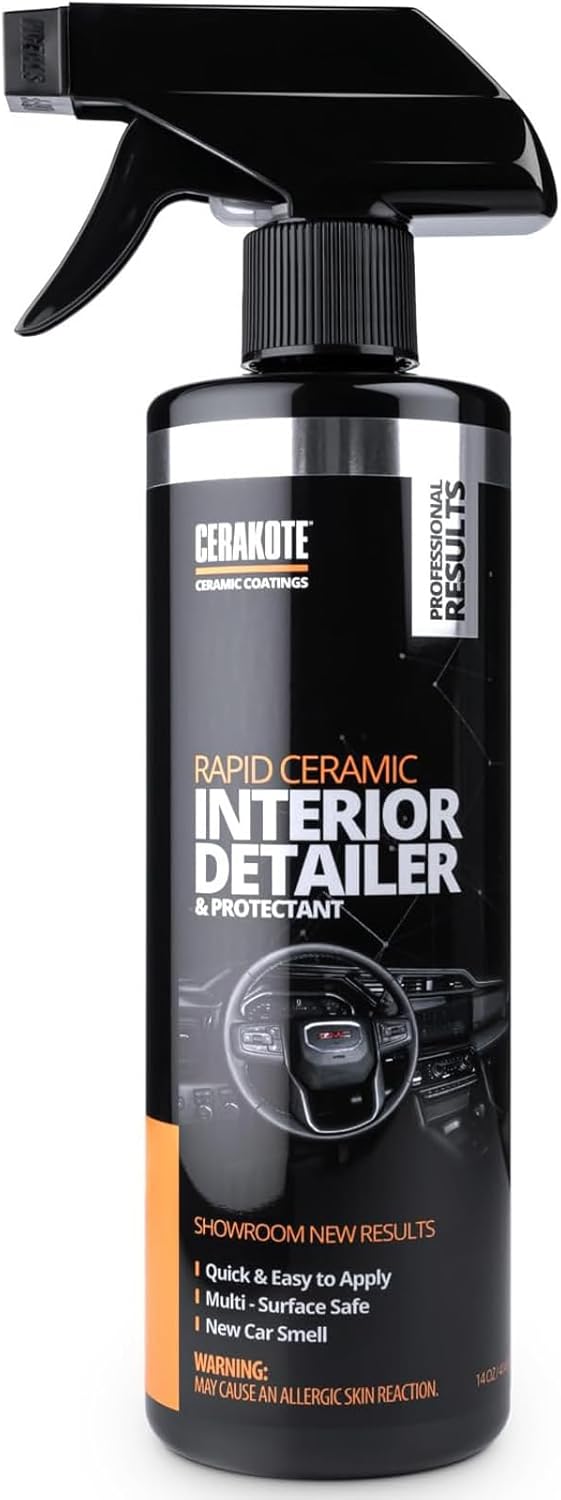
03. CERAKOTE Rapid Ceramic Interior Detailer and Protectant (14 oz)
- Brand: CERAKOTE
- Product Type: Interior cleaner, detailer, and protectant
- Formula: Ceramic technology
- Size: 14 fl oz
- Compatible Surfaces: Dashboard, door panels, vinyl, plastic, and interior surfaces
- Best For: Cars, trucks, and SUVs interior maintenance
Rapid Ceramic CERAKOTE Interior Detailer is an easy to use interior care spray designed to clean and protect vehicle surfaces while leaving a dry, non greasy finish. Its ceramic technology helps protect interior materials from UV exposure while maintaining a fresh, like new appearance.
Advantages
- Cleans and protects interior surfaces in one simple application.
- Ceramic technology helps provide UV protection.
- Leaves a dry to the touch finish without an oily residue.
- Safe for multiple interior surfaces including dashboards and door panels.
- Quick spray and wipe application for regular maintenance.
- Helps keep interiors looking fresh with a clean finish.
Our Recommendations
The CERAKOTE Rapid Ceramic Interior Detailer is a good option for drivers who want a simple product for regular interior upkeep. It works well for daily drivers, family vehicles, and anyone who prefers a clean factory-style finish instead of a shiny or greasy dashboard look. It is best for maintaining already-clean interiors rather than replacing deep cleaning or restoration products.

04. Chemical Guys | Hydro Interior Ceramic and Quick Detailer for Car
- Brand: Chemical Guys
- Product Type: Interior cleaner, detailer, and ceramic protectant
- Formula: SiO₂-infused ceramic technology
- Size: 16 oz
- Compatible Surfaces: Plastic, vinyl, rubber, painted plastics, imitation leather, and interior trim
- Best For: Dashboard, door panels, and interior maintenance
Hydro-Interior Ceramic Chemical Guy – Interior Protectant is an all-in-one interior detailing product designed to clean light dust, fingerprints, and grime while adding ceramic based protection. Its SiO₂ infused formula helps repel dust, water, and UV exposure while leaving a clean matte finish without a greasy appearance.
Advantages
- Cleans and protects interior surfaces in one application.
- Ceramic technology helps repel dust, water, and everyday contaminants.
- Provides UV protection to help reduce fading and surface damage.
- Leaves a factory style matte finish without oily residue.
- Safe for multiple interior materials including plastic, vinyl, rubber, and imitation leather.
- Easy spray and wipe application for regular maintenance.
Our Recommendations
The Chemical Guys Hydro Interior is a good choice for drivers who want a simple interior maintenance product instead of using separate cleaners and protectants. It works well for daily drivers, SUVs, and family vehicles where dashboards, trims, and interior panels need frequent cleaning. The biggest advantage is its clean, non greasy finish that helps maintain a fresh factory appearance.
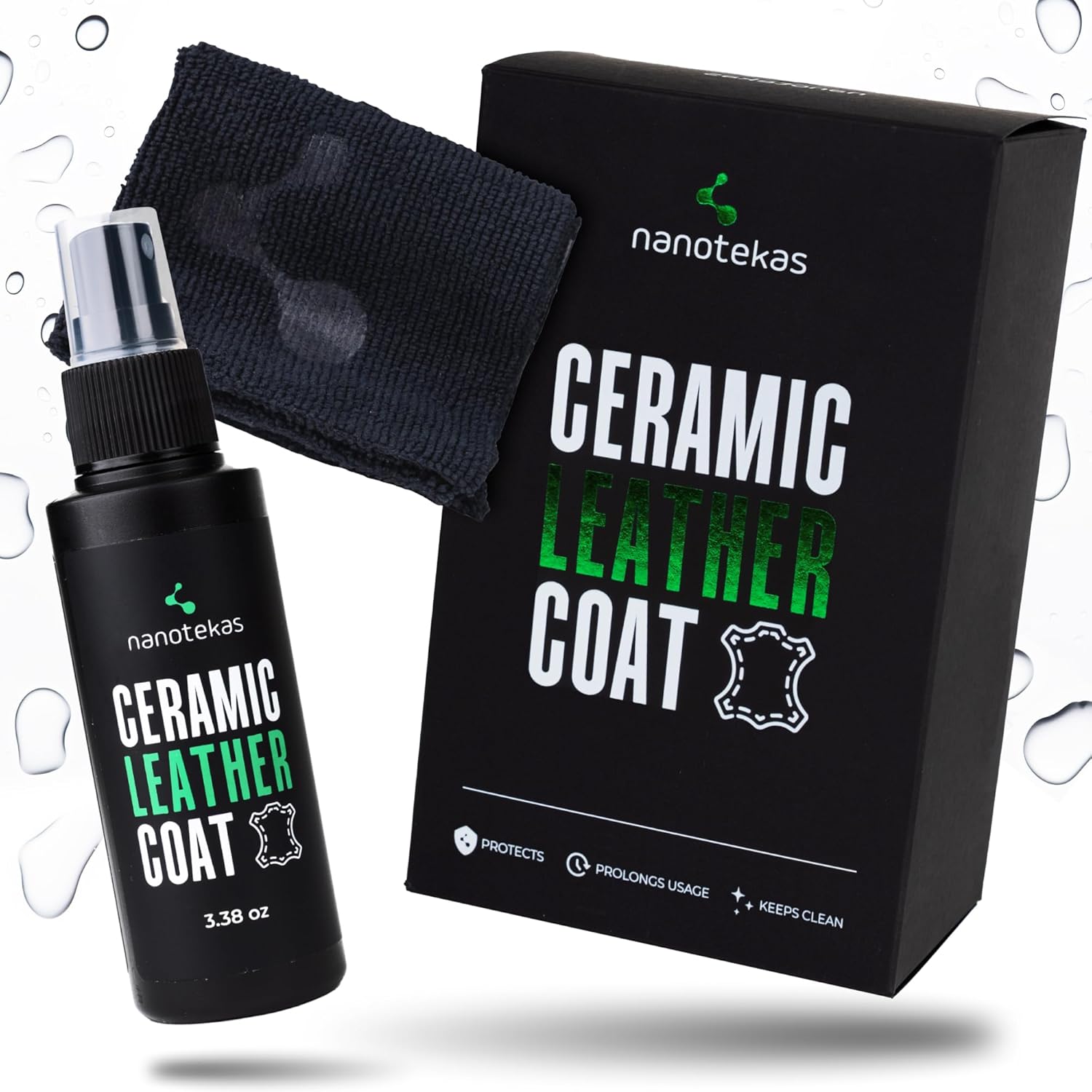
05. Nanotekas Professional Leather Ceramic Coating for Car Interior
- Brand: Nanotekas
- Product Type: Leather ceramic coating and protector
- Technology: Nano ceramic protection
- Compatible Surfaces: Smooth leather, car seats, steering wheels, furniture, shoes, and leather accessories
- Best For: Automotive leather interior protection
Professional Nanotekas Leather Ceramic Coating is designed to protect leather surfaces from daily wear, dirt, stains, spills, and color transfer. Its nano coating formula helps create a protective barrier while maintaining the natural look and feel of leather interiors. It is especially useful for light-colored leather seats where preventing discoloration and contamination is important.
Advantages
- Helps protect leather seats from dirt, stains, and everyday contamination.
- Reduces color transfer from clothing such as dark jeans.
- Helps maintain the original appearance and texture of leather.
- Creates a protective barrier against spills and surface buildup.
- Suitable for modern smooth leather and automotive interiors.
- Easy application without requiring professional equipment.
Our Recommendations
The Nanotekas Professional Leather Ceramic Coating is a good option for vehicle owners who want to preserve their leather interior and reduce regular cleaning effort. It is especially suitable for newer cars, luxury interiors, and vehicles with light-colored leather seats that are more vulnerable to stains and discoloration. For the best results, apply it on properly cleaned leather surfaces and maintain the interior with regular care.
Ceramic Coating vs Traditional Waxing Cost Comparison
Price is usually the first objection to ceramic coating and it’s a fair one. The upfront number is real. But upfront cost and total cost are two completely different conversations, and most car owners only run half the math.
First-Year Cost
Traditional Waxing — Year One
| Waxing — Year One | Low Estimate | High Estimate |
|---|---|---|
| Wax product (×3 purchases) | $60 | $150 |
| Applicator pads and microfibers | $25 | $35 |
| Total product cost | $85 | $185 |
| Time investment | 12–20 hours | 12–20 hours |
And that’s assuming you’re doing it yourself. A professional hand wax at a detailing shop runs $150–$300 per session — making professional waxing one of the most expensive protection options available when calculated annually.
Ceramic Coating – Year One
| Ceramic Coating – Year One | Low Estimate | High Estimate |
|---|---|---|
| Professional installation | $500 | $2,000+ |
| Paint correction (if needed) | $200 | $800 |
| Maintenance spray (annual) | $30 | $50 |
| Total first – year cost | $730 | $2,850 |
| Time investment | 2–4 hours (drop-off/pick-up) | 2–4 hours |
DIY ceramic coating brings first-year cost down considerably – product runs $50–$150, plus $100 – $200 in prep supplies but the application risk and reduced longevity compared to professional installation are real tradeoffs worth factoring in.
Three – Year Value
Traditional Waxing – Three Years
| Waxing – 3 Years | Low Estimate | High Estimate |
|---|---|---|
| Annual product cost ×3 | $180 | $450 |
| Tools and supplies | $50 | $100 |
| Total 3 – year cost | $230 | $550 |
| Total time investment | 36 – 60 hours | 36 – 60 hours |
That time investment is the number most people overlook. 36–60 hours of active maintenance across three years – weekends, evenings, mornings before work. Time has value. And protection quality drops every time reapplication gets delayed even slightly.
Ceramic Coating – Three Years
| Ceramic Coating – 3 Years | Low Estimate | High Estimate |
|---|---|---|
| Professional installation (one – time) | $500 | $2,000 |
| Paint correction (one – time) | $200 | $800 |
| Annual maintenance spray ×3 | $90 | $150 |
| Total 3 – year cost | $790 | $2,950 |
| Total time investment | 4 – 6 hours | 4 – 6 hours |
We can say when at three years, ceramic coating still costs more in raw dollars at the high end – but it has delivered superior protection every single day of that period, required minimal ongoing attention, and preserved paint condition in a way that wax simply cannot match consistently.
Five – Year Value
Traditional Waxing – Five Years
| Waxing – 5 Years | Low Estimate | High Estimate |
|---|---|---|
| Annual product cost ×5 | $300 | $750 |
| Tools and supplies | $75 | $150 |
| Paint correction (likely needed by year 3–4) | $300 | $800 |
| Total 5-year cost | $675 | $1,700 |
| Total time investment | 60 – 100 hours | 60 – 100 hours |
That paint correction line is important. Five years of waxing – with inevitable gaps in coverage, missed applications, and the contaminants that slip through – almost always results in some degree of swirl marks, light oxidation, or surface etching that requires professional paint correction before the car looks its best again. That’s a real cost most waxing calculations conveniently leave out.
Ceramic Coating – Five Years
| Ceramic Coating – 5 Years | Low Estimate | High Estimate |
|---|---|---|
| Professional installation (one-time) | $500 | $2,000 |
| Paint correction (one-time, pre-install) | $200 | $800 |
| Annual maintenance spray ×5 | $150 | $250 |
| Coating refresh or reapplication (if needed) | $0 | $500 |
| Total 5-year cost | $850 | $3,550 |
| Total time investment | 6 – 10 hours | 6 – 10 hours |
At the low end: ceramic coating costs more over five years. At the mid-range: where most real-world scenarios land, the numbers are remarkably close where ceramic coating has maintained stronger, more consistent paint protection across the entire five-year window, preserving resale value in a way that wax-maintained paint simply cannot.
Which Option Is More Cost-Effective?
Cheaper upfront does not always mean cheaper long term. Wax remains the better budget option for drivers who enjoy regular detailing or only need short term paint protection. Ceramic coating often provides better long-term value for owners who plan to keep their vehicle for several years and want stronger protection with less frequent maintenance.
The right choice depends on your ownership style:
- Choose wax if you want the lowest initial cost and enjoy hands on detailing.
- Choose ceramic coating if you want long-term protection, easier maintenance, and better value over time.
When Car Wax Is Still the Better Choice
Although ceramic coating offers longer-lasting protection, car wax is still the better choice for many vehicle owners. Not every driver needs a multi-year paint protection solution, and traditional waxing continues to provide real benefits for people who prefer affordability, flexibility, and hands-on vehicle care.
The right choice depends on how you use your vehicle, how often you enjoy detailing, and how much you want to invest in paint protection.
Budget Owners Who Want Affordable Protection
- Older vehicles where maximum paint preservation is not the main priority
- Money is genuinely tight and protection needs to cost under $50
- Drivers who plan to sell their vehicle soon
- Owners who prefer spending less on cosmetic maintenance
- People who enjoy doing their own detailing at home
Hobby Detailers Who Enjoy the Process
- The traditional detailing process
- Experimenting with different wax formulas
- The warm appearance of carnauba wax
- Frequent paint care sessions
Seasonal Drivers and Weekend Vehicles
- Classic cars used occasionally
- The vehicle is driven fewer than 5,000 miles annually
- Collector vehicles
- Weekend sports cars
- Seasonal vehicles stored indoors
When Wax Makes More Sense Than Ceramic Coating
- You prefer a low-cost maintenance routine
- Enjoy detailing your vehicle regularly
- Your vehicle is driven occasionally
- You want flexibility to change products frequently
- Do not need multi-year protection
AutozMotoz Recommendation for Best WAX for Your Car
1 |
Top Pick | Check Latest Price |
2 |
Best Quality | Check Latest Price |
3 |
Recommended | Check Latest Price |
01. Mothers California Gold Pure Brazilian Carnauba Wax
- Brand: Mothers
- Product Type: Carnauba paste wax
- Size: 12 oz
- Wax Type: Pure Brazilian carnauba wax
- Best For: Automotive paint and clear coats
Gold Pure Brazilian Carnauba Mothers California Wax is a traditional car wax designed to enhance paint depth, gloss, and provide a protective layer over automotive finishes. It is the finishing step of the Mothers Ultimate Wax System and works on most paint and clear coat surfaces.
Advantages
- Delivers deep shine and rich paint appearance.
- Uses pure Brazilian carnauba wax for a warm gloss finish.
- Helps protect automotive paint and clear coats.
- Non-abrasive formula safe for regular use.
- Good choice for classic car owners and detailing enthusiasts.
Our Recommendations
The Mothers California Gold Pure Brazilian Carnauba Wax is a great option for drivers who prefer traditional waxing and want a deep, natural-looking shine. It works best for weekend cars, classic vehicles and enthusiasts who enjoy maintaining their paint by hand. For maximum durability, it requires regular reapplication compared with modern ceramic coatings.
02. Turtle Wax Super Hard Shell Paste Wax
- Brand: Turtle Wax
- Product Type: Paste car wax
- Size: 9.5 oz
- Wax Type: Traditional protective wax
- Best For: Budget-friendly paint protection and classic detailing enthusiasts
The Turtle Wax Super Hard Shell Paste Wax is a classic automotive wax designed to add shine and provide a protective layer over vehicle paint and clear coats.
Advantages
- Helps protect paint from UV exposure and environmental contaminants.
- Safe for clear coat and base coat finishes.
- Easy on-and-off paste application for DIY users.
- Budget-friendly alternative to premium detailing products.
Our Recommendations
Turtle Wax Super Hard Shell Paste Wax is a solid option for drivers who want simple, affordable paint protection without moving to ceramic coatings. It works well for daily drivers, older vehicles, and enthusiasts who enjoy traditional hand waxing. While it delivers good shine and protection, it requires more frequent reapplication compared with modern ceramic protection products.
03. Meguiar’s Ultimate Wash & Wax Car Wash
- Brand: Meguiar’s
- Product Type: Car wash soap with wax protection
- Size: 1 Gallon (128 fl oz)
- Formula: Carnauba wax and synthetic polymer technology
- Best For: Regular washing, paint maintenance, and added shine
Advantages
- Enhances paint gloss with a fresh, just-waxed appearance.
- Carnauba wax and synthetic polymers help maintain shine.
- pH-balanced formula is safe for regular paint washing.
- Produces rich foam to help lift contaminants safely.
Our Recommendations
Meguiar’s Ultimate Wash & Wax is a two-in-one car wash solution designed to clean exterior paint while adding extra gloss and wax protection during regular washing.
When Ceramic Coating Is Worth the Investment
A ceramic coating is not necessary for every vehicle, but it can be a smart investment for owners who want long-term paint protection, easier maintenance, and better preservation of their vehicle’s appearance. The value of ceramic coating depends less on the product itself and more on the vehicle, driving conditions, and ownership goals. For some drivers, the convenience and protection justify the higher upfront cost.
New Cars That Need Long-Term Paint Preservation
Maintain the factory paint appearance, reduce the impact of environmental contaminants, make regular washing easier, preserve resale appeal over time. However, proper preparation is still important. Even a new vehicle may require paint inspection and surface preparation before coating application.
Expensive and Luxury Vehicles
For premium vehicles, paint protection becomes more than just cosmetic maintenance. Luxury cars, performance vehicles, and specialty models often have higher-quality finishes and greater ownership value. Protecting the exterior can help maintain the vehicle’s appearance and reduce long-term detailing needs.
Daily Drivers Exposed to Road Conditions
Daily drivers experience constant exposure to conditions that can affect paint quality. Regular commuting can expose a vehicle to: road dust and debris, traffic pollution, rain and moisture, bird droppings and insect residue, road chemicals and salt. For vehicles driven every day, ceramic coating can provide practical benefits by creating a more durable protective layer and making routine cleaning easier.
Vehicles Parked Outdoors
Outdoor parking is one of the situations where ceramic coating can provide significant value. Vehicles parked outside experience continuous exposure to: direct sunlight, UV rays, rain, temperature changes, environmental contaminants. Although ceramic coating cannot completely prevent weather-related damage, it provides an additional layer of protection that helps reduce the impact of daily exposure.
When Ceramic Coating Makes the Most Sense
Ceramic coating is often worth considering if you: plan to keep your vehicle for several years, drive daily in changing weather conditions, park outside regularly, own a high-value vehicle, want to reduce frequent detailing work, prefer long-term protection over repeated applications. The best candidates are not simply people who own expensive cars, they are owners who value maintaining their vehicle’s appearance and want a lower maintenance protection solution.
Brake Cylinder Problems: Signs, Costs, and Replacement Guide
Learn how a brake cylinder works, common failure symptoms, repair costs, and when replacement may be necessary to keep your vehicle safe.
Can You Use Wax and Ceramic Coating Together?
Using wax over ceramic coating is generally unnecessary because ceramic coating already provides a durable protective layer. Applying traditional wax on top may reduce the coating’s hydrophobic behavior or change the surface characteristics. Instead, many owners use ceramic maintenance sprays or SiO2 based toppers designed specifically for coated vehicles. These products help refresh gloss, water repellency, and surface protection without interfering with the ceramic coating.
A common mistake is treating ceramic coating like regular wax by repeatedly adding layers of products. Proper washing, compatible maintenance products, and avoiding abrasive cleaners are more important for maintaining coating performance.
Ceramic Coating vs Wax: Which Tool Should You Choose?
The best choice depends on your vehicle, budget, and how you use your car.
| Situation | Better Choice |
|---|---|
| New vehicle | Ceramic coating |
| Budget protection | Wax |
| Weekend car | Wax |
| Daily driver | Ceramic coating |
| Maximum gloss | Depends on preference |
| Low maintenance | Ceramic coating |
Therefore, Ceramic coating is the better option for owners who want long-term protection, easier maintenance, and stronger resistance against daily environmental exposure. Wax remains a practical choice for drivers who prefer lower costs, frequent detailing, or the traditional shine of car care. There is no universal winner between ceramic coating vs wax. The right choice depends on whether you value convenience and durability or affordability and hands-on maintenance.
Frequently Asked Questions
Q: Is ceramic coating better than wax?
A: The Ceramic coating is generally better than wax for long-term paint protection, durability, chemical resistance, and easier maintenance. Wax is still a good option for drivers who want affordable protection, quick shine, and a simple DIY detailing solution.
Q: How long does ceramic coating last compared to wax?
A: A quality ceramic coating can last several years with proper maintenance, while car wax typically lasts from a few weeks to several months depending on the product, weather conditions, and washing habits.
Q: Does ceramic coating replace wax completely?
A: For most vehicle owners, ceramic coating replaces the need for traditional wax because it provides longer-lasting protection. However, wax can still be preferred by enthusiasts who enjoy regular detailing or want a specific type of gloss.
Q: Can I apply wax over ceramic coating?
A: You can apply wax over ceramic coating, but it is usually unnecessary. Many detailers recommend using ceramic-compatible maintenance sprays or SiO2 based products instead because they are designed to support the coating’s performance.
Q: Is ceramic coating worth the money?
A: Definitely, Ceramic coating can be worth the investment for owners who keep their vehicles for several years, drive daily, park outdoors, or want lower maintenance. For short-term ownership or budget-focused protection, wax may provide better value.
Q: What is the difference between ceramic coat vs wax?
A: The main difference between ceramic coat vs wax is how they protect paint. Wax creates a temporary surface layer that enhances shine, while ceramic coating chemically bonds with the clear coat to provide longer-lasting protection and stronger resistance against contaminants.
Q: Which protects better: wax vs ceramic coat?
A: When comparing wax vs ceramic coat, ceramic coating generally provides better long-term protection because it lasts longer, offers stronger chemical resistance, and requires less frequent reapplication. Wax remains useful for affordable short-term protection and appearance enhancement.
Conclusion
Ceramic coating wins on protection, durability, and long-term value. Wax wins on cost and simplicity.
If you own a vehicle worth protecting and plan to keep it, ceramic coating is the smarter investment. If budget is the priority right now, quality wax still gets the job done. Either way, unprotected paint is never the right answer.

Technical precision in motorcycles, cars, and automotive gear is established by Nahid Hassan through rigorous evaluation. Performance-driven reviews and high-value affiliate insights are consistently curated at AutoZMotoZ to ensure reader trust. Absolute integrity is maintained in every analysis, with a focus on original and human-verified data.