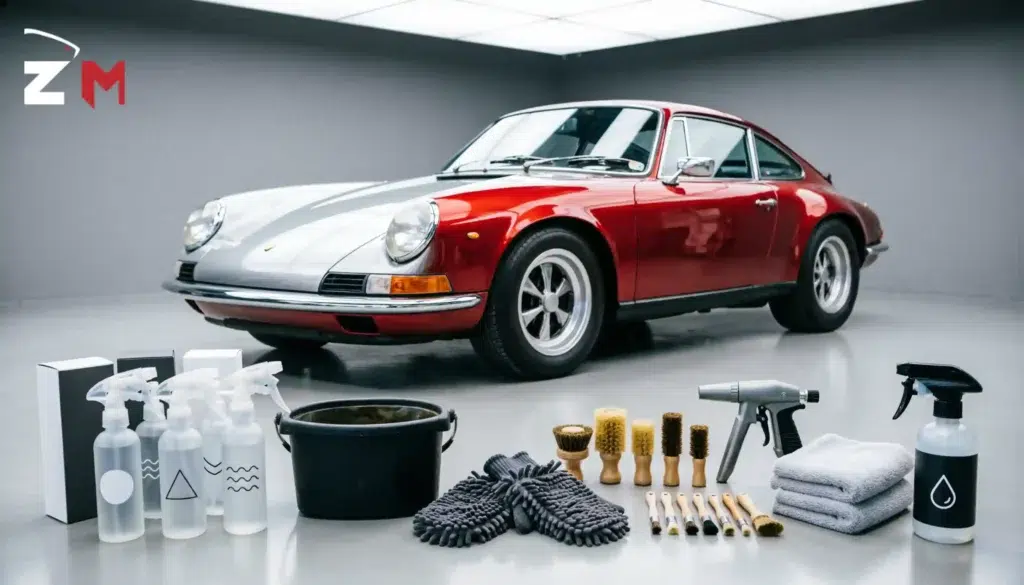
Most car care lists don’t say this part out loud: you probably don’t need more products. You need to stop using the two or three that are quietly marring your clear coat every time you wash. A kitchen sponge. A bath towel. One bucket for both washing and rinsing. Between them, those habits cause most of the swirl marks drivers end up blaming on cheap paint.
Here are the 8 products actually worth buying for a home car wash in 2026 — all sold in the US through Amazon, with most also available at AutoZone or Walmart. This is what held up in regular driveway use, not just what looks good in a photo.
“For years my wash routine was a dollar-store sponge, whatever towel was in the garage, and one bucket. The swirl marks I kept blaming on the car wash down the street were coming from my own driveway.” — Nahid Hassan, AutozMotoz
This page contains affiliate links. If you buy through them, autozmotoz.com earns a small commission at no extra cost to you. We only recommend gear we’ve actually used. Full disclosure policy →
Quick Picks by Category
| What You Need | Best Pick | Jump To |
|---|---|---|
| Best overall kit | Chemical Guys Complete Car Detailing Kit | See details ↓ |
| Best budget upgrade | Chemical Guys Cyclone Dirt Trap | See details ↓ |
| Best wash mitt | AIDEA Chenille Microfiber Wash Mitt (2-Pack) | See details ↓ |
| Best for interior detailing | 7-Piece Car Interior Detailing Brush Set | See details ↓ |
| Best for deep cleaning | Chemical Guys TORQ Foam Blaster 6 | See details ↓ |
| Best for wheels & tight spots | MVEQRRN 6-Piece Detailing Brush Set | See details ↓ |
| Best for drying | SMINDER 1200 GSM Drying Towels (2-Pack) | See details ↓ |
| Best between washes | Meguiar’s Quik Detailer Spray | See details ↓ |
The 8 Best Car Wash Products for Home Use

Chemical Guys Complete Car Detailing Kit
If you’re starting from zero and don’t want to spend a Saturday researching individual bottles, this bundle covers the basics in one purchase: wash soap, a wheel and tire cleaner, an interior cleaner, a bucket with a built-in dirt trap, brushes, a mitt, and several microfiber towels.
A matched kit solves a problem people don’t think about until it happens — mixing an unrelated cleaner with a wax-based spray can cause streaking or adhesion issues on paint. When everything in the kit is designed to work together, that risk mostly goes away.
Good fit for: Anyone building a wash routine from scratch, or replacing a mess of half-used bottles under the garage shelf.
One thing to check: Kit contents have varied across production runs, so confirm the current listing includes a wash mitt and drying towels before buying — some versions lean more toward chemicals than accessories.
Check Price on Amazon
Chemical Guys Cyclone Dirt Trap
This is the most underrated item on the list. It’s a ridged plastic insert that sits at the bottom of your rinse bucket, using close to 300 small cone-shaped funnels to trap grit as you agitate your mitt against it. Without one, dirt you just picked up off the car floats loose in the bucket — the next dip drags it straight back onto the paint.
It costs less than a fast food combo and does more to prevent wash-induced scratches than any soap or spray on this list. If you buy nothing else from this guide, buy this before your next wash.
Good fit for: Every driveway wash, no exceptions — works with any standard 3.5 to 5-gallon bucket.
Check Price on Amazon
AIDEA Chenille Microfiber Wash Mitt (2-Pack)
Ditch the sponge. A flat sponge holds grit against the paint and drags it across the surface with every stroke. A chenille microfiber mitt works differently — the long “noodle” fibers lift dirt up into the pile and hold it away from direct contact with the surface. Less abrasive contact per stroke adds up to noticeably less swirling over months of washing.
This AIDEA mitt comes as a 2-pack, which matters more than it sounds: keep one dedicated to paint and the other for wheels. Brake dust and iron particles from wheels are abrasive and will scratch paint if the same mitt touches both surfaces.
Good fit for: Every car, every wash. There’s no situation where a sponge outperforms a proper chenille mitt on painted surfaces.
Check Price on Amazon
7-Piece Car Interior Detailing Brush Set
A wash mitt and a vacuum handle the obvious surfaces. They don’t handle dashboard vents, cupholder gaps, seat seams, or the grime that collects around door handles and buttons. This 7-piece set includes a boar hair brush, a soft synthetic brush, a fiber brush, a dual-head vent brush, and a cleaning gel that presses into crevices and lifts dust and crumbs back out.
The boar hair brush is gentle enough for dashboards and door panels, while the stiffer synthetic option handles floor mats and carpet without shredding. Everything packs into a small zip case, so it’s realistic to actually keep in the car rather than buried in a garage drawer.
Good fit for: Anyone who does a full interior detail more than once or twice a year, or drives with kids, pets, or a commute that tracks in a lot of dust.
Check Price on Amazon
Chemical Guys TORQ Foam Blaster 6
This foam gun connects to a standard garden hose and coats the whole car in thick soap foam before your mitt ever makes contact. That foam sits and loosens most of the surface dirt on its own, which means far less scrubbing once you do pick up the mitt — and less scrubbing means less friction against the clear coat.
Unlike a true foam cannon, it doesn’t need a pressure washer, which makes it a realistic option for anyone washing on a normal driveway hose bib. An adjustable dial controls how thick the foam comes out, so you can dial in soap use rather than guessing.
One thing to know: It needs a higher soap concentration than a bucket wash — around 2 oz of shampoo per fill is typical, but check your specific soap’s foam-gun ratio since it varies by brand.
Check Price on Amazon
MVEQRRN 6-Piece Detailing Brush Set
A wash mitt does a great job on flat panels but can’t get into every corner of a car’s exterior. Wheel spokes, emblems, grille slats, badges, and the gap around door handles all trap grime that a mitt just glides over. This 6-piece set mixes boar hair, ultra-soft synthetic, and multicolor bristle brushes sized for exactly those spots.
Use the stiffer boar hair brushes on wheels and grilles, and save the ultra-soft synthetic pair for anything closer to painted or plastic trim. None of the bristles are metal, so there’s no realistic scenario where these mark up a wheel finish or emblem the way a stiff wire brush can.
Good fit for: Multi-spoke wheels, badge-heavy trim, and any exterior detail that goes beyond a quick rinse-and-dry.
Check Price on Amazon
SMINDER 1200 GSM Drying Towels (2-Pack)
This is where a lot of otherwise careful washes get undone. People wash correctly, rinse well, and then reach for whatever bath towel or shop rag is nearby to dry off. Regular cotton towels are far more abrasive than they feel wet — dragging one across paint is a common source of the fine swirl marks that show up in direct sunlight.
These SMINDER towels are 1200 GSM with an edgeless, double-twist pile — dense enough that one towel can pull most of the water off a sedan in a couple of passes. At 36 x 24 inches each, the 2-pack gives you enough surface area to dry a full-size car or SUV without constantly wringing out one small towel.
Good fit for: Every vehicle, every wash. Keep one for the body and one strictly for wheels — the same rule as the wash mitt applies here.
Check Price on Amazon
Meguiar’s Quik Detailer Spray
Not every session needs to be a full wash. Between washes, cars pick up light dust, pollen, and the occasional fingerprint near the door handle. A quick detail spray handles that in about two minutes: spray onto a clean microfiber, wipe the panel, done. It lifts light contamination and leaves a thin layer of added slickness at the same time.
Meguiar’s Quik Detailer is a long-standing, easy-to-find option that works well on gloss paint and won’t leave the greasy residue some cheaper sprays do. Keeping a bottle in the garage turns a five-minute wipe-down into a habit instead of an errand.
One note: If your car has a matte or satin wrap, skip standard gloss-boosting quick detailers — they can create an uneven sheen on flat finishes. Look for a product specifically labeled safe for matte paint.
Check Price on AmazonHow to Choose Based on Where You’re At
You don’t need all eight products right away. Here’s where to start depending on your situation:
Starting Out on a Budget
Grab the Cyclone Dirt Trap, the AIDEA chenille mitt, and the SMINDER drying towels. Under $50 total, and these three fix the most common causes of wash-related paint damage. See our full under-$50 kit guide for the exact setup.
Want Noticeably Better Results
Add the TORQ Foam Blaster and the MVEQRRN brush set. Foam cuts down contact time during the wash, and the brushes handle every corner the mitt skips — wheels, emblems, grilles. Together they take a wash from functional to genuinely thorough.
Daily Driver, Frequent Washer
Prioritize the interior brush set and the Quik Detailer spray alongside your exterior kit. At higher weekly mileage, interior upkeep and quick between-wash touch-ups matter more than nailing one perfect weekend wash.
Washing Mistakes That Slowly Damage Your Paint
- ✕ Washing with dish soap. It’s made to strip grease — which it does, right along with any wax or sealant on your paint. Use a pH-neutral car wash soap every time.
- ✕ Washing with one bucket. Without a separate rinse bucket, you’re reintroducing dirt to the paint with every stroke. The two-bucket method with a dirt trap in the rinse bucket is how this is supposed to work. Full technique here →
- ✕ Using a mitt after it hits the driveway. The second it touches the ground, it picks up grit. Using it after that is functionally the same as rubbing fine sandpaper across your clear coat. Set it aside and grab a clean one.
- ✕ Washing in direct sun. Heat dries soap onto the surface before you can rinse it off, leaving water spots and residue behind. Wash in the shade or early morning when the panels are cool to the touch.
- ✕ Drying with whatever’s nearby. Paper towels, bath towels, and old cotton rags all scratch wet paint. Keep microfiber drying towels dedicated to the car and use nothing else.
Frequently Asked Questions
Is cheap car wash gear worth buying?
For some items, yes. A $10 dirt trap insert does its job just as well as a pricier version, and a $10 chenille mitt beats an expensive sponge every time. Picking the right type of tool matters more than the price tag attached to it.
How often should I wash my car?
Roughly every one to two weeks works for most drivers. After winter road salt, coastal salt air, or a long stretch of pollen season, wash within a day or two — leaving salt or heavy grime sitting on paint and undercarriage components speeds up corrosion.
What actually causes scratches when washing a car?
Three things account for most wash-induced scratches: reusing dirty wash water on the paint, abrasive tools like sponges or rough towels making direct contact, and scrubbing pressure that drags grit across the clear coat instead of lifting it away. Fixing those three drops the risk dramatically.
Do I need a pressure washer to wash a car at home?
No. A garden hose with a spray nozzle and a foam gun handles the job fine for most vehicles. If you do use a pressure washer, stay under roughly 1,200–1,500 PSI and keep distance from seals, badges, and anything electrical. Our pressure washer technique guide covers the safe approach in more detail.
How do I wash a car with matte or satin wrap?
Most tools on this list work fine on matte finishes. The one thing to skip is any product labeled as adding gloss or shine, including many standard quick detail sprays and some wash soaps. Use products made specifically for matte or satin wraps to avoid an uneven, patchy sheen.
Can I use Windex or glass cleaner on my car windows?
On the glass itself, it’s fine in a pinch, though ammonia-based cleaners aren’t ideal on tinted windows over time. A dedicated automotive glass cleaner is a better routine choice. We covered this in more detail here: Can You Use Windex on Car Windows? →
How does car washing fit into overall vehicle maintenance?
Washing is one of the few maintenance tasks that doubles as an inspection. Every wash is a chance to notice a slow tire leak, a cracked wiper blade, or fresh road-debris damage on paint before it becomes a bigger repair. It’s worth building a routine that includes a quick walk-around, not just soap and a towel.
From AutozMotoz — related car wash and maintenance guides
More on Car Wash and Care from AutozMotoz
What is the best way to wash a car without scratching the paint?
The products on this page are only part of the answer — the other part is order of operations. How you move the mitt, when you rinse it, and how you dry the car afterward matter just as much as what you’re using. We wrote a full step-by-step guide: How to Wash a Car Without Scratching the Paint →
What is the two-bucket method and why does it matter?
The two-bucket method keeps one bucket for clean soapy water and a second for rinsing the mitt, so dirty water never reaches the paint directly. Paired with a dirt trap insert in the rinse bucket, it’s the single biggest factor in preventing wash-induced swirl marks. More detail in our full wash technique guide →
What are the best car cleaning solutions to use in 2026?
The right solution depends on the surface — paint, glass, wheels, and interior plastics each need something different, and the wrong product on the wrong surface can cause real damage. Our 2026 guide covers each category with specific picks: Best Car Cleaning Solutions 2026 →
Is it safe to use a pressure washer on a car?
Yes, with the right technique and PSI range. Damage generally comes from pointing high pressure directly at seals, badges, or electrical connectors — not from the water pressure itself when used correctly. We explain the safe approach and the areas to avoid: How to Use a High-Pressure Car Wash Gun Without Causing Damage →
Can you use Windex on car windows?
On plain glass, it’s generally fine in a pinch. On tinted windows, ammonia-based glass cleaners used repeatedly over time are best avoided in favor of an ammonia-free automotive glass cleaner. We break down the alternatives here: Can You Use Windex on Car Windows? →
What is included in a car oil change and how often should it be done?
An oil change is one of the few maintenance tasks with immediate consequences if you skip an interval. Beyond swapping the oil, the process should include a filter replacement, a drain plug inspection, and a level check against your owner’s manual spec. Full breakdown here: What Is Included in an Oil Change? →
What’s the best complete car wash kit to buy under $50?
A fully functional setup — bucket, dirt trap, wash mitt, drying towels, and soap — doesn’t need to cost more than $50 if you buy the right individual pieces instead of an overpriced all-in-one bundle. We put together the best setup at that budget: Best Car Wash Kit Under $50 →
Disclosure: This page contains Amazon affiliate links. As an Amazon Associate, autozmotoz.com earns from qualifying purchases at no extra cost to you. Prices shown are approximate and subject to change. Last verified July 2026.

Technical precision in motorcycles, cars, and automotive gear is established by Nahid Hassan through rigorous evaluation. Performance-driven reviews and high-value affiliate insights are consistently curated at AutoZMotoZ to ensure reader trust. Absolute integrity is maintained in every analysis, with a focus on original and human-verified data.